
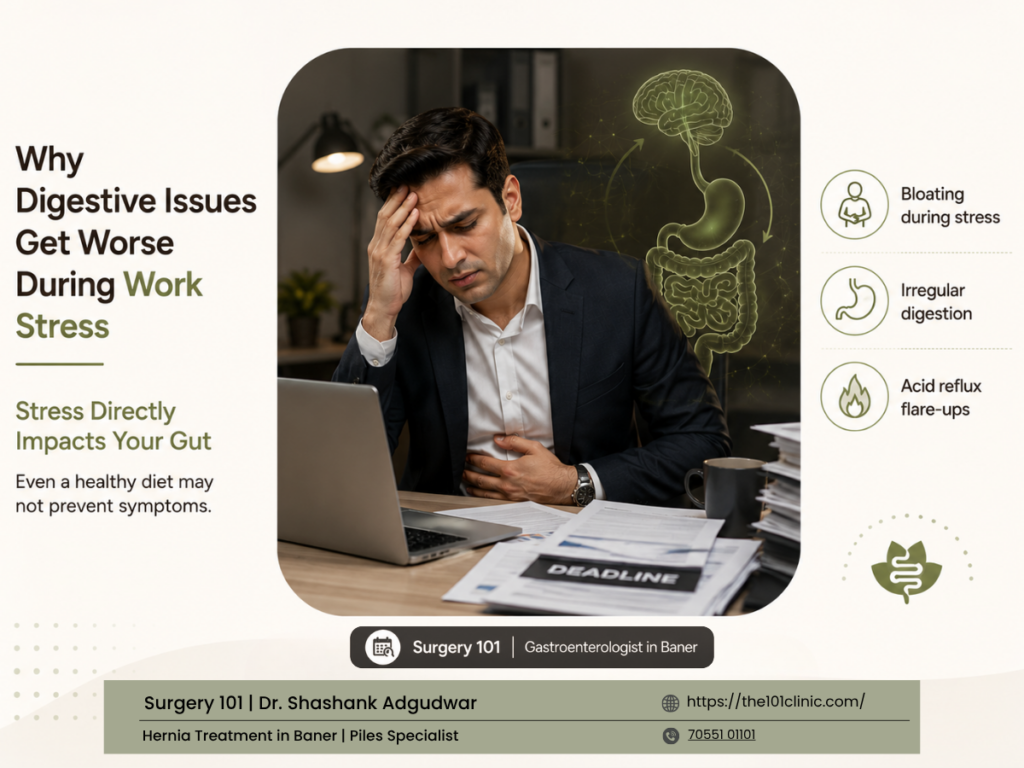
Many people believe that maintaining a healthy diet is enough to keep digestive problems away. While nutrition certainly plays a major role in gut health, it is not the only factor that affects your digestive system. If you have ever experienced bloating, acidity, stomach cramps, constipation, or frequent bowel changes during stressful periods at work despite eating healthy meals, you are not alone.
Research increasingly shows that stress can significantly influence digestive health. The connection between the brain and the gut is so strong that emotional stress can trigger physical symptoms throughout the digestive tract. This explains why some professionals develop digestive issues during demanding projects, tight deadlines, workplace conflicts, or long working hours.
According to Dr. Shashank Adgudwar, understanding the relationship between stress and digestion is crucial for managing symptoms effectively. Individuals experiencing persistent digestive discomfort may benefit from consulting a stomach specialist in Baner to identify underlying causes and receive appropriate treatment.
The Powerful Connection Between Your Brain and Gut
The digestive system and the brain communicate constantly through what experts call the “gut-brain axis.” This communication network involves nerves, hormones, and immune system signals that allow both organs to influence each other.
When you experience stress, your body activates the “fight or flight” response. During this process, stress hormones such as cortisol and adrenaline are released. While this response is helpful during emergencies, chronic workplace stress can disrupt normal digestive functions.
The Harvard Medical School explains that the brain and gastrointestinal system are closely linked, which is why psychological stress can trigger or worsen digestive symptoms.
Source: https://www.health.harvard.edu/diseases-and-conditions/the-gut-brain-connection
As a result, even people who follow a balanced diet may notice worsening digestive problems during stressful periods.
How Work Stress Affects Digestion
Stress influences multiple aspects of digestive health, often in ways that are not immediately obvious.
Changes in Gut Motility
Gut motility refers to the movement of food through the digestive tract. Stress can either accelerate or slow down this process.
This may lead to:
- Diarrhea
- Constipation
- Irregular bowel habits
- Abdominal discomfort
The National Institute of Diabetes and Digestive and Kidney Diseases (NIDDK) notes that stress can affect digestive functioning and contribute to gastrointestinal symptoms.
Source: https://www.niddk.nih.gov
Increased Stomach Acid Production
When stress levels rise, some individuals produce more stomach acid. Excess acid can irritate the digestive tract and contribute to symptoms such as:
- Acid reflux
- Heartburn
- Indigestion
- Burning sensation in the chest
Even when food choices are healthy, stress-induced acid production may still trigger discomfort.
Increased Sensitivity to Pain
One lesser-known effect of stress is that it can make the digestive tract more sensitive.
This means minor digestive disturbances that would normally go unnoticed may suddenly feel painful or uncomfortable. As a result, bloating, gas, or mild indigestion may seem much worse during stressful periods.
Why Healthy Eating Alone May Not Be Enough
Many professionals become frustrated when digestive symptoms persist despite eating nutritious meals. The reason is that gut health depends on more than diet alone.
Factors that can worsen digestion during work stress include:
- Poor sleep quality.
- Long working hours.
- Lack of physical activity.
- Irregular meal timings.
- Excessive caffeine consumption.
- Chronic anxiety and mental fatigue.
According to the American Psychological Association, chronic stress can impact multiple body systems, including digestion, immunity, and metabolism.
Source: https://www.apa.org/topics/stress
A healthy diet remains important, but addressing stress is equally necessary for long-term digestive wellness.
Common Digestive Problems Triggered by Work Stress
Irritable Bowel Syndrome (IBS)
IBS is one of the digestive conditions most strongly associated with stress.
Symptoms may include:
- Bloating
- Abdominal pain
- Constipation
- Diarrhea
- Excessive gas
The International Foundation for Gastrointestinal Disorders reports that emotional stress does not directly cause IBS but can significantly worsen symptoms.
Source: https://iffgd.org
Functional Dyspepsia
Functional dyspepsia refers to recurring indigestion without an obvious structural cause.
People often experience:
- Early fullness during meals
- Upper abdominal discomfort
- Nausea
- Bloating
Stress frequently acts as a trigger for symptom flare-ups.
Gastroesophageal Reflux Disease (GERD)
Many office workers notice worsening reflux symptoms during stressful periods.
Stress may contribute to:
- Increased acid production
- Greater sensitivity to reflux episodes
- Poor dietary habits during busy workdays
This can lead to persistent heartburn and throat irritation.
Signs You Should Consult a Gastroenterologist
Occasional digestive discomfort during stressful periods is common. However, persistent symptoms should never be ignored.
Consider consulting a gastroenterologist if you experience:
- Ongoing abdominal pain
- Frequent bloating
- Persistent constipation or diarrhea
- Recurrent acid reflux
- Unexplained weight loss
- Blood in the stool
- Difficulty swallowing
A gastroenterologist can evaluate your symptoms, identify underlying digestive conditions, and recommend appropriate treatment.
Practical Ways to Protect Your Gut During Stressful Work Periods
Managing workplace stress can significantly improve digestive health.
Focus on Stress Management Habits
Simple strategies that support both mental and digestive health include:
- Daily physical activity
- Deep breathing exercises
- Meditation or mindfulness
- Short breaks during work
- Adequate sleep
Studies published by the National Center for Complementary and Integrative Health suggest that mindfulness practices may help reduce stress and improve gastrointestinal symptoms in some individuals.
Source: https://www.nccih.nih.gov
Maintain Consistent Eating Patterns
Skipping meals and eating at irregular times can place additional strain on the digestive system.
Try to:
- Eat meals at consistent times
- Avoid rushing through meals
- Chew food thoroughly
- Stay hydrated throughout the day
These habits help support smoother digestion even during busy schedules.
When Digestive Symptoms Signal Something More Serious
While stress is a common contributor to digestive issues, it should not automatically be blamed for every symptom.
Conditions such as:
- Gallstones
- Peptic ulcers
- Inflammatory bowel disease
- Gastritis
- Colon disorders
can produce symptoms similar to stress-related digestive problems.
A proper medical evaluation is essential when symptoms become frequent, severe, or persistent.
Read More –
- https://the101clinic.com/frequent-acidity-bloating-or-stomach-pain-signs-you-should-see-a-gastroenterologist/
- https://the101clinic.com/gastroenterology-services-comprehensive-care-at-surgery-101/
- https://the101clinic.com/exploring-treatment-options-for-gastroesophageal-reflux-disease-gerd/
Conclusion
Work stress affects far more than your mental well-being. Through the gut-brain connection, chronic stress can alter digestion, increase stomach acid production, change bowel habits, and worsen existing digestive conditions. This is why digestive symptoms may persist even when you are following a healthy diet.
Taking care of your digestive health requires a balanced approach that includes proper nutrition, stress management, quality sleep, and professional medical guidance when needed.
If you are experiencing ongoing digestive discomfort, Dr. Shashank Adgudwar at Surgery 101 Clinic offers expert evaluation and personalized treatment for a wide range of gastrointestinal concerns. As a trusted gastroenterologist in Baner, he can help identify the root cause of your symptoms and create a treatment plan that supports long-term digestive health and overall well-being.
#DigestiveHealth #GutHealth #WorkStress #Gastroenterologist #IBS #AcidReflux #HealthyGut #GastroenterologistInBaner #DigestiveCare #StressManagement
.