
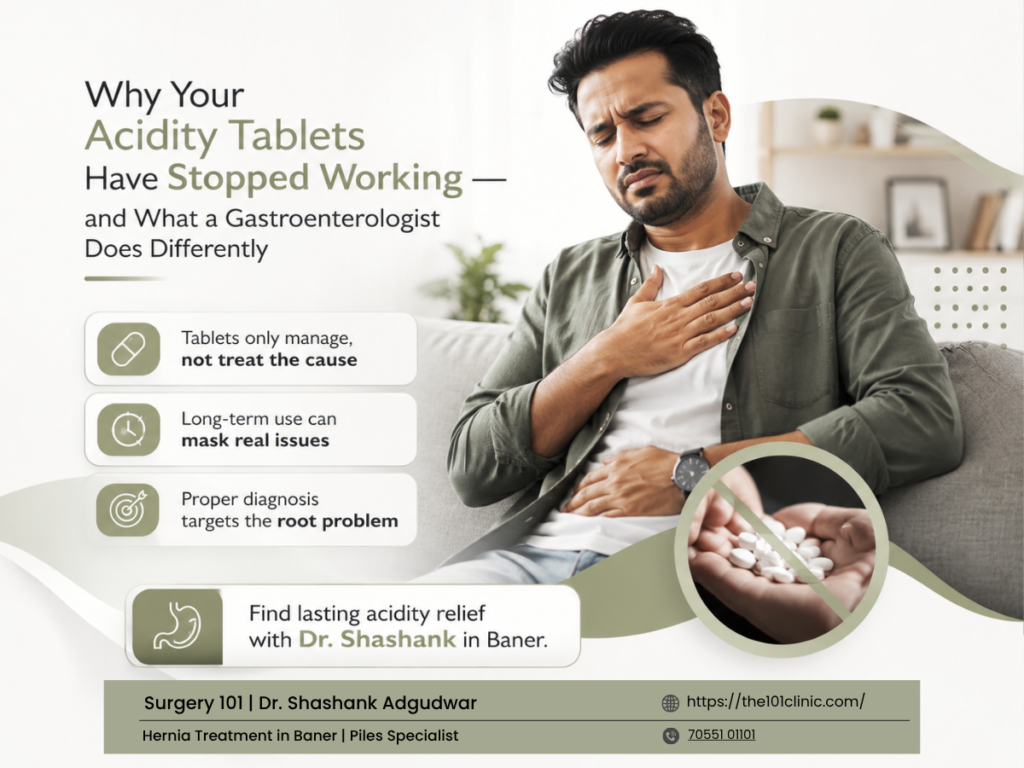
If you’ve been popping antacid tablets like candy and still feel that familiar burn creeping up your chest, you’re not imagining things. It’s one of the most common complaints heard in a gastroenterologist’s clinic: “Doctor, this tablet used to work in minutes. Now I need three of them and it barely helps.”
This isn’t a sign that your acidity has simply “gotten worse.” It’s usually your body telling you that the medicine is only managing a symptom, not the actual problem underneath it.
Why Acidity Tablets Stop Giving Relief Over Time
Most over-the-counter acidity tablets fall into two categories: antacids that neutralize acid instantly, and proton pump inhibitors (PPIs) that reduce how much acid your stomach produces. Both are effective for occasional discomfort, but they were never designed to be a permanent fix.
According to Yale Medicine, antacids like Tums and Rolaids work fast but wear off quickly, sometimes requiring up to seven doses a day to keep symptoms under control, and they tend to be far less effective for more serious acid damage in the food pipe. A few reasons tablets stop delivering the same relief include:
- Rebound acid hypersecretion: When acid suppression is used regularly, the stomach can respond by producing even more acid once the effect wears off, creating a cycle where you need the tablet more often just to feel normal.
- The root cause is untouched: Antacids and PPIs address the burning sensation, but they don’t fix a weak lower esophageal sphincter, delayed stomach emptying, or an imbalanced gut, which are often the real drivers of reflux.
- Tolerance and dose creep: Many people gradually increase their dose or frequency without realizing it, which can mask worsening symptoms instead of resolving them.
- Underlying conditions going undiagnosed: Persistent acidity can sometimes point to H. pylori infection, hiatal hernia, or GERD, none of which respond fully to a tablet alone.
Yale Medicine also notes that while PPIs were once considered dramatically more effective than older H2 blockers, long-term reliance on any acid-suppressing medication without addressing why the reflux is happening in the first place often leads to diminishing returns.
The Hidden Cost of Long-Term Self-Medication
This is where things get more serious than just “the tablet doesn’t work anymore.” Repeated, unsupervised use of acidity medication over months or years has downstream effects that most people never connect back to their morning antacid.
Research summarized by University Hospitals points out that extended PPI use may reduce absorption of vitamin B12, magnesium, and calcium, and has been associated with a higher risk of hip fractures in some studies. Other clinical reviews highlight that stopping these medications abruptly after long-term use can trigger a rebound effect, making heartburn feel worse than before you started treatment.
In short, self-treating chronic acidity with over-the-counter tablets can quietly:
- Mask a more serious underlying digestive condition
- Lead to nutrient deficiencies that build up gradually
- Create dependency where stopping the medication feels impossible
- Delay the point at which effective, targeted treatment could have prevented complications
This is precisely why doctors recommend that acidity lasting more than two to three weeks, or acidity that keeps returning despite medication, should be evaluated by a professional rather than managed indefinitely with tablets from the pharmacy counter.
What a Gastroenterologist Does Differently
A gastroenterologist doesn’t just hand you a stronger version of the same tablet. As a stomach specialist trained specifically in diagnosing and treating conditions of the digestive tract, their approach starts with understanding why your acid symptoms exist in the first place, not just suppressing them.
Here’s how the process typically differs from self-medicating:
- Proper diagnosis first: A gastroenterologist may recommend an endoscopy, breath test for H. pylori, or pH monitoring to identify the actual source of the problem instead of guessing.
- Personalized treatment plans: Depending on the diagnosis, treatment could involve a short, monitored course of medication combined with dietary and lifestyle changes, rather than open-ended tablet use.
- Safe tapering strategies: If you’ve been on PPIs for a long time, a gastroenterologist can guide a gradual dose reduction to avoid the rebound acid effect, something that’s difficult to manage safely on your own.
- Monitoring for complications: Conditions like Barrett’s esophagus or ulcers need regular follow-up that a tablet alone simply cannot provide.
As Dr. Shashank Adgudwar often explains to patients, acidity that keeps coming back despite regular medication is a signal, not a nuisance to be silenced. The goal of consulting a stomach specialist isn’t to complicate a simple problem, it’s to make sure a simple-looking symptom isn’t hiding something that needs real attention.
When Should You See a Gastroenterologist?
If your acidity tablets used to work but now barely touch the discomfort, if you’re taking them almost daily, or if you experience additional symptoms like unexplained weight loss, difficulty swallowing, or black stools, it’s time to stop self-treating and get evaluated properly.
Read More –
- Frequent Acidity, Bloating or Stomach Pain? Signs You Should See a Gastroenterologist
- Gastroenterology Services: Comprehensive Care at Surgery 101
- Exploring Treatment Options for Gastroesophageal Reflux Disease (GERD)
How Surgery 101 Clinic Can Help
At Surgery 101 Clinic, patients dealing with persistent acidity, GERD, and other digestive concerns get more than a prescription refill. Under the guidance of Dr. Shashank Adgudwar, a trusted gastroenterologist in Baner, the clinic focuses on accurate diagnosis, personalized treatment, and long-term digestive health rather than temporary symptom control. If your acidity tablets have stopped giving you relief, it may be time to consult a gastroenterologist in Baner who can look at the bigger picture and help you feel better for the long run, not just for the next hour.
Frequently Asked Questions
- Why do acidity tablets stop working after using them for a long time?
Long-term use of antacids or PPIs can lead to a phenomenon called rebound acid hypersecretion, where the stomach produces more acid once the medication’s effect wears off. This creates a cycle where the same dose feels less effective over time. A gastroenterologist can identify whether this is happening and recommend a safer, more sustainable treatment approach. - Is it safe to take acidity tablets every day?
Occasional use for mild, infrequent heartburn is generally considered safe, but daily use for weeks or months without medical supervision isn’t recommended. Studies have linked long-term PPI use to reduced absorption of nutrients like B12, calcium, and magnesium. If you find yourself needing tablets daily, it’s best to consult a stomach specialist rather than continuing on your own. - When should I see a gastroenterologist for acidity instead of just taking tablets?
If your symptoms persist for more than two to three weeks, keep returning after stopping medication, or come with warning signs like difficulty swallowing, unintended weight loss, or vomiting blood, it’s important to see a gastroenterologist promptly. These could indicate an underlying condition that needs proper diagnosis rather than continued self-medication.
#GutHealth #AcidReflux #GERDAwareness #DigestiveHealth #GastroenterologistInBaner #HeartburnRelief #StomachHealth #Gastroenterologist #HealthyDigestion #Surgery101Clinic