
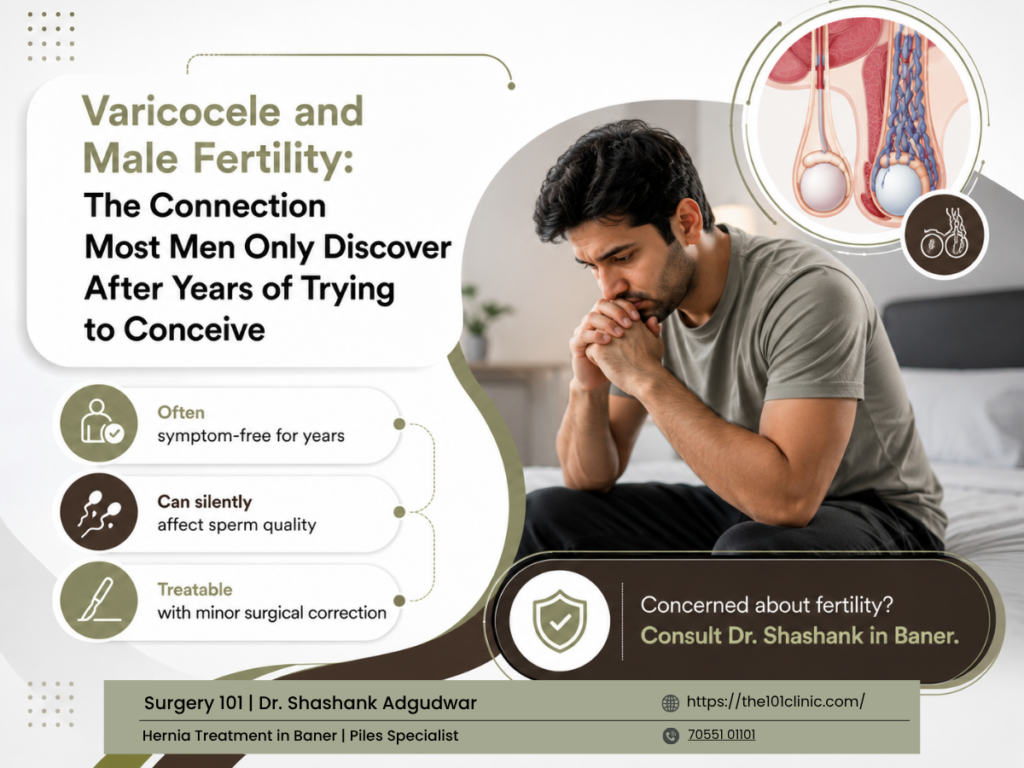
For most couples, the fertility conversation starts with the woman. Scans, hormone panels, ovulation tracking, and months of appointments usually come first. It is often only after years of unexplained delay that someone finally suggests a semen analysis, and that is when many men hear the word “varicocele” for the very first time. By then, they have usually spent years wondering what was wrong, without realising the answer may have been sitting quietly in their own body the entire time.
As a urologist who sees this pattern regularly in clinic, I want to walk you through what a varicocele actually is, why it gets missed for so long, and why timely varicocele treatment can change the entire trajectory of a couple’s fertility journey.
What Exactly Is a Varicocele
A varicocele is essentially a varicose vein in the scrotum. It develops when the valves inside the veins draining the testicle stop working properly, causing blood to pool and the veins to become enlarged and twisted. It sounds minor, but the impact on fertility can be significant.
Varicocele is not a rare condition. Research shows it is present in around 15 percent of the general male population, but that number climbs to nearly 40 percent among men experiencing infertility. The connection becomes even clearer in men who previously had no trouble conceiving. Among men facing secondary infertility, meaning they already have a child but are struggling with a second pregnancy, a varicocele is found to be the underlying cause in as many as 70 percent of cases.
Despite how common it is, a varicocele rarely causes obvious symptoms. Many men describe nothing more than a dull ache or heaviness after long hours of standing or physical exertion, if they notice anything at all. This is exactly why it tends to go undiagnosed for years, quietly affecting sperm health while couples pursue every other explanation first.
How a Varicocele Affects Sperm Quality
The exact biological pathway is still being studied, but researchers generally agree it comes down to a combination of factors that disrupt the delicate environment sperm need to develop normally. These include:
- Increased scrotal temperature, since pooled blood raises the local temperature around the testicle, and sperm production is highly sensitive to heat
- Oxidative stress caused by a buildup of reactive oxygen species, which can damage sperm DNA integrity
- Reflux of hormone byproducts from the kidney and adrenal gland into the testicular blood supply
- Reduced oxygen supply to testicular tissue due to poor blood flow
Clinical studies back up how serious this can be. One recent cohort study found that high-grade varicoceles were strongly associated with both azoospermia and oligozoospermia, with varicocele confirmed as an independent predictor of azoospermia. In simpler terms, the higher the grade of varicocele, the greater the chance it is meaningfully lowering sperm count and quality, not just marginally affecting it.
Why Varicocele Treatment Can Change the Outcome
The encouraging part of this story is that varicocele is one of the few correctable causes of male infertility. Unlike many fertility factors, this one can often be physically fixed. According to data compiled by UNC Department of Urology, semen quality improves in close to 70 percent of patients after varicocele correction, with pregnancy rates reaching as high as 40 percent, and improvements are seen not just in sperm count but also motility, shape, and DNA integrity.
That said, varicocele treatment is not an overnight fix. It typically takes patience, since visible improvements in semen parameters usually take five to six months to appear, and in some cases up to a year. This is one of the biggest reasons men are advised to get evaluated early rather than waiting until they have already spent years trying to conceive naturally.
A few practical points worth knowing before considering treatment:
- Varicocele treatment is usually recommended when semen parameters are abnormal and the varicocele is clinically significant on examination or ultrasound, not simply because a varicocele exists.
- The two main treatment approaches are microsurgical varicocelectomy and varicocele embolization, and a specialist will recommend the right one based on your anatomy and overall fertility workup.
- Treatment outcomes tend to be better when addressed sooner, since prolonged exposure to oxidative stress can have a cumulative effect on sperm DNA quality over time.
When Should You Get Checked
If you and your partner have been trying to conceive for over a year without success, or if there is a history of secondary infertility, a semen analysis and a scrotal examination should ideally happen alongside, not after, the female partner’s fertility workup. Male factor infertility contributes to roughly half of all infertility cases among couples, so treating it as an equal part of the conversation from the start can save years of unnecessary waiting.
Get Evaluated at Surgery 101 Clinic
Under the care of Dr. Shashank Adgudwar, Surgery 101 Clinic offers a thorough, judgment-free approach to diagnosing and managing varicocele, with a clear focus on fertility outcomes rather than just symptom relief. If you or your partner have been trying to conceive without answers, a proper evaluation for varicocele treatment in Baner could be the missing piece of the puzzle. The clinic’s approach combines detailed diagnostic assessment with personalised treatment planning, so you are not just told you have a varicocele but given a clear, realistic path forward based on your specific fertility goals.
Frequently Asked Questions
- Can a varicocele really cause male infertility? Yes. Varicocele is considered the most common correctable cause of male infertility, affecting sperm count, motility, and DNA quality through increased scrotal temperature and oxidative stress. It is found in a significantly higher percentage of infertile men compared to the general male population, which is why it is now a standard part of any male fertility workup.
- What are the signs that I might have a varicocele? Many men have no symptoms at all, which is why it often goes undiagnosed for years. When symptoms do occur, they usually include a dull ache or heaviness in the scrotum, especially after standing for long periods, or a visibly enlarged or twisted vein that some describe as feeling like a bag of worms. A clinical examination or scrotal ultrasound is the only reliable way to confirm a diagnosis.
- How soon can I expect results after varicocele treatment? Most men see measurable improvement in semen parameters within five to six months after treatment, though it can take up to a year in some cases. Because sperm production is a gradual process, patience and follow-up semen analyses are an important part of tracking progress after varicocele treatment.
#MaleFertility #Varicocele #FertilityJourney #MensHealth #TryingToConceive #UrologyCare #Surgery101Clinic #BanerHealthcare #FertilityAwareness #MaleInfertility