
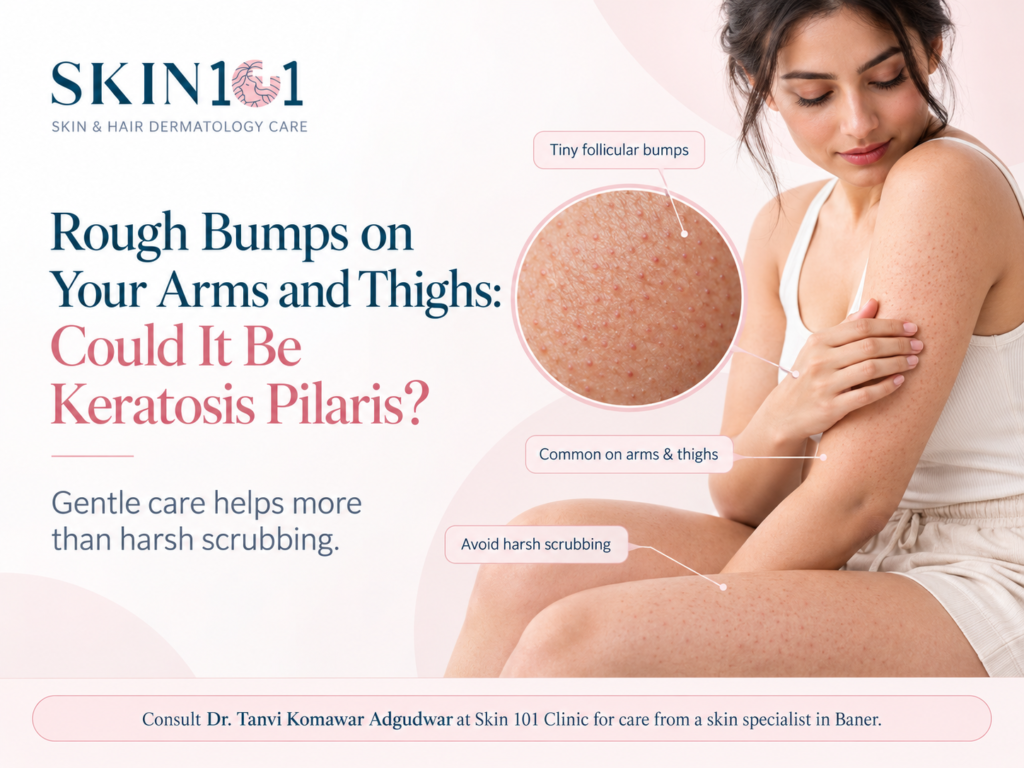
Small, rough bumps on the upper arms and thighs may be keratosis pilaris, a common, harmless condition involving blocked hair follicles. Harsh scrubbing can irritate the skin and make the bumps more noticeable. Gentle skincare and suitable moisturisers can help, while a skin specialist can confirm whether the bumps are actually keratosis pilaris. NHS
What causes these rough bumps?
Keratosis pilaris, often shortened to KP, develops when keratin collects inside hair follicles. Keratin is a protein found in the skin, hair and nails. These small plugs can leave the skin feeling like persistent goosebumps. They are not dirt that needs to be scrubbed away.
The exact reason this happens is not fully understood. KP often runs in families and commonly starts during childhood or adolescence. It can occur alongside dry skin or eczema. Dry weather may make the texture more obvious, although the condition can remain noticeable throughout the year. bad.org.uk
Having KP does not mean you are unclean, and it cannot spread to someone else through skin contact. NHS
How can you recognise keratosis pilaris?
Typical KP appears as groups of tiny, fairly similar bumps, especially on the outer upper arms and thighs. The buttocks and other areas can also be affected. The skin usually feels dry or rough and may occasionally itch.
The bumps can match your skin colour, look reddish, or appear brown or darker than the surrounding skin. On darker skin, colour changes may be more noticeable than redness. Comparing your skin only with photographs showing pink bumps can therefore be misleading. DermNet
Appearance alone is not enough to diagnose yourself. Folliculitis, which involves inflamed hair follicles, and some forms of eczema can resemble KP. A dermatologist usually diagnoses KP by examining the skin; a biopsy is occasionally considered when the appearance is unusual. DermNet
Does scrubbing help or make it worse?
Forceful scrubbing can make KP worse. Repeated rubbing with rough gloves, abrasive scrubs or a stiff brush may leave the skin sore and irritated. Trying harder because the bumps have not disappeared can turn a mild texture concern into uncomfortable skin. aad.org
Gentle exfoliation is different. It removes some surface dead skin without deliberately making the area red or sore. Both NHS and American Academy of Dermatology guidance allow gentle exfoliation while warning against harsh scrubbing. Exfoliation does not have to be forceful to be useful. NHS
If your skin is already irritated, avoid trying to polish the bumps away. Discuss a gentler routine rather than adding stronger products. The goal is comfortable, smoother skin, not a stinging sensation after every shower.
What can a skin specialist recommend?
Moisturising and gentler washing
Short, warm showers, a mild cleanser and regular moisturising can reduce dryness. Apply moisturiser while the skin is still damp after bathing. A thicker cream may suit dry areas better than a light lotion. Avoid scratching or picking at individual bumps. aad.org
Ingredients that soften the plugs
Products containing urea, lactic acid or salicylic acid may soften rough skin and reduce the prominence of bumps. These ingredients help loosen accumulated skin cells. Some products combine this action with moisturising, so you may not need several separate treatments. aad.org
Product strength and frequency matter. More frequent application does not necessarily produce faster improvement and may cause irritation. Ask which product fits your skin, particularly if you also have eczema or are choosing treatment for a child. aad.org
Prescription treatments are sometimes considered when simpler care is insufficient. A clinician should explain their likely benefit and irritation risk. Procedures such as lasers are not a guaranteed solution; evidence and results vary, and ordinary skincare may be the more appropriate starting point. bad.org.uk
How long should you give a treatment plan?
Improvement takes time, and no treatment permanently cures KP. The American Academy of Dermatology suggests contacting your dermatologist if there is no improvement after four to six weeks of following the recommended plan. This is a review point, not a promise that everyone will have clear skin by then.
Once the skin improves, maintenance care may still be needed. Some people notice KP becoming less obvious with age, but others continue to have it. If the bumps are harmless and do not bother you, choosing not to treat them is also reasonable. aad.org
What should you mention at an appointment?
Bring the names or photographs of your body washes, scrubs, lotions and hair-removal products. Explain whether the bumps have always been present or appeared recently, and whether anyone in your family has similar skin.
Ask: “Is this definitely KP?”, “Which product should I use first?” and “When should we review it?” This gives you a clearer plan than buying another exfoliator each time the texture returns.
Frequently asked questions
Can I squeeze the bumps like pimples?
No. Picking or squeezing is not a treatment for KP. NHS guidance advises avoiding scratching, picking and rubbing because these habits can aggravate the skin. NHS
Can shaving or waxing make the bumps worse?
Yes, hair removal can trigger additional bumps in affected areas. Tell your dermatologist if flare-ups consistently follow shaving or waxing so the routine can be reviewed. aad.org
Do I need blood tests to confirm KP?
Usually not. Typical KP is diagnosed from its appearance. Further investigation depends on whether the clinician suspects a different condition. bad.org.uk
Choose care that suits your skin
If the bumps remain uncomfortable or you are unsure what they are, consult Dr. Tanvi Komawar Adgudwar at Skin 101 Clinic. An assessment with a skin specialist in Baner can help you understand the cause and choose a manageable skincare routine.