
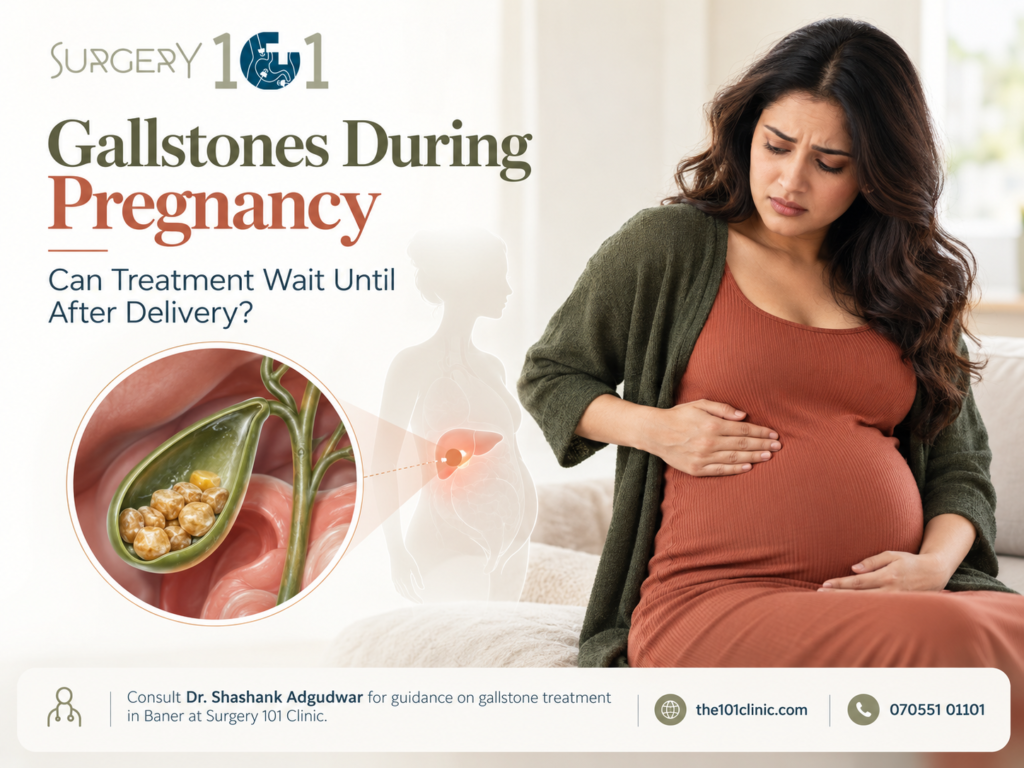
Finding out that you have gallstones during pregnancy can be worrying, especially if you are already experiencing pain or nausea. A common question is whether treatment can safely wait until your baby is born.
Sometimes it can, but waiting is not appropriate for everyone. Gallstones that cause no symptoms usually do not need treatment. Painful attacks, gallbladder inflammation or a blocked bile duct require a different approach. Your symptoms, test results and stage of pregnancy help your doctors decide what is safest.
Why Can Gallstones Develop During Pregnancy?
Gallstones are hardened deposits that form inside the gallbladder, a small organ beneath the liver that stores bile for digestion.
Pregnancy-related hormonal changes can increase the likelihood of developing gallstones. However, having stones does not necessarily mean you will develop symptoms or need surgery.
Problems usually arise when a stone blocks the flow of bile. This can cause upper abdominal pain and, in some cases, inflammation or infection. NIDDK
When Might Treatment Wait Until After Delivery?
Gallstones discovered on a scan without related symptoms generally do not require an operation, either during pregnancy or automatically after delivery.
If you have had a painful attack, your doctor needs to assess whether it was uncomplicated biliary colic, meaning pain from a temporary blockage, or something more serious.
For uncomplicated biliary colic in the third trimester, either monitoring or surgery may be considered. The decision depends on the frequency and severity of attacks, how close you are to delivery and the risks of further episodes.
Monitoring should include a clear follow-up plan and instructions about when to seek help. NIDDK
When Is Treatment During Pregnancy Recommended?
Repeated attacks, difficulty eating or drinking, and complications can make postponing treatment less suitable.
Acute cholecystitis means inflammation of the gallbladder. Current surgical guidance generally favours laparoscopic gallbladder removal over nonoperative treatment for this condition during pregnancy, although decisions remain individual because the evidence has limitations.
A stone causing symptoms in the common bile duct may require ERCP, an endoscopic procedure used to clear the duct. When needed during pregnancy, specialists take precautions to minimise radiation exposure. ERCP does not remove the gallbladder itself. A SAGES Publication
The surgeon, obstetrician and anaesthesia team should work together to weigh the risks of intervention against the risks of leaving the condition untreated.
Is Gallbladder Surgery Possible in Any Trimester?
Yes. Medically necessary surgery should not be withheld or delayed solely because of pregnancy, regardless of trimester. Procedures that are genuinely elective can usually be postponed until after delivery.
This means that “wait until the second trimester” or “wait until the baby is born” is not a universal rule.
Your team will explain the reasons for surgery, the anaesthesia plan and appropriate monitoring for you and your baby. Neither operating nor waiting is completely risk-free; the aim is to choose the safer option for your circumstances. ACOG
How Are Gallstones Assessed During Pregnancy?
Assessment starts with your symptoms, an examination and relevant tests. Tell your doctor when the pain began, how long it lasts, whether it follows meals and whether you have fever or vomiting.
An abdominal ultrasound is usually the first imaging test. It uses sound waves rather than radiation and can identify gallstones.
Blood tests can help look for infection, inflammation or problems involving the liver, bile ducts or pancreas. Further imaging may be needed if a duct stone is suspected. NIDDK
Which Symptoms Need Urgent Medical Attention?
Seek urgent assessment if you experience:
- Severe, worsening or persistent upper abdominal pain.
- Fever or chills with abdominal pain.
- Yellowing of the eyes or skin.
- Dark urine or unusually pale stools.
- Repeated vomiting or difficulty keeping fluids down.
These symptoms can indicate a complication and should not be managed by waiting for your next routine appointment. NIDDK
Upper abdominal pain during pregnancy also has other possible causes. Pain beneath the ribs, especially with a severe headache, visual changes or sudden swelling, needs immediate maternity assessment because it may indicate pre-eclampsia. Do not assume every episode is caused by known gallstones. NHS
What Can Help While You Are Being Monitored?
If your team recommends monitoring, ask for specific advice about meals, medicines and follow-up.
Avoid foods that reliably trigger symptoms; some people find lower-fat meals easier to tolerate. However, dietary changes do not remove existing stones or guarantee that another attack will not happen.
Maintain adequate pregnancy nutrition rather than starting a restrictive weight-loss diet. Use pain relief only as advised by your treating team, and avoid self-prescribed medicines or herbal remedies. NHS
Keep your scan reports and medicine list available, along with contact details for your maternity and surgical teams.
Frequently Asked Questions
If the pain stops, does that mean the gallstones have gone?
No. Pain can settle when a stone stops blocking bile flow, even though stones remain. Further attacks are possible, so arrange follow-up after a suspected episode.
Does everyone with gallstones need surgery after delivery?
No. Stones that remain symptom-free often need no treatment. If you had attacks during pregnancy, discuss whether gallbladder removal is appropriate and when it should be planned.
Can medicines dissolve the stones while I wait?
Stone-dissolving medicines are suitable only in selected circumstances and may take months or years to work. They are not a routine substitute for treating symptomatic gallstones during pregnancy. Do not start them without specialist advice. NIDDK
Make a Treatment Plan With Your Care Team
The safest timing depends on your symptoms and any complications, not pregnancy alone.
For guidance on Gallstone treatment in Baner, consult Dr. Shashank Adgudwar at Surgery 101 Clinic. Discuss your options in coordination with your obstetrician to plan appropriate care during pregnancy and after delivery.
#gallstonetreatmentinbaner #gallstonesduringpregnancy #gallbladderhealth #drshashankadgudwar #surgery101clinic