
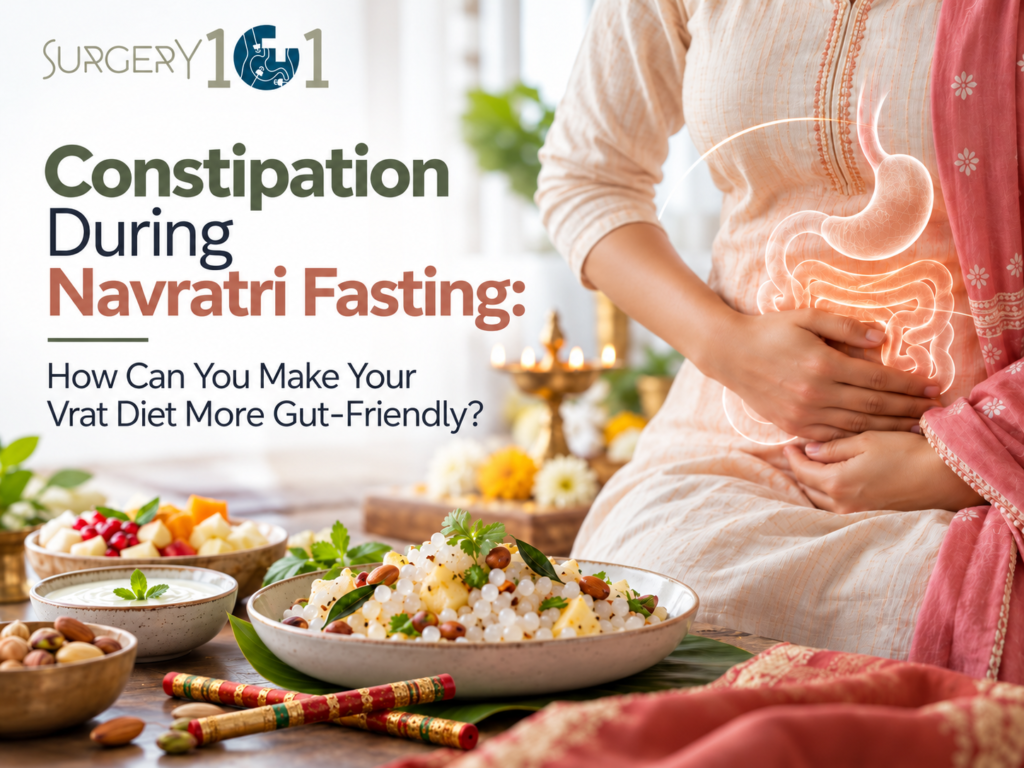
Navratri fasting can change more than your meal timings. Your usual roti, dal and vegetables may be replaced by sabudana, potatoes, milk or packaged fasting snacks. If this also means less fibre, fewer fluids and a disrupted routine, passing stools may become difficult.
A more comfortable vrat diet starts with variety, adequate hydration and regular movement. You do not need to depend on one “constipation-relief” food. Small changes across your meals can make a useful difference.
Why Can Constipation Develop During Navratri?
Fasting does not cause constipation in everyone. Problems may develop when changes to your diet reduce fibre or when you drink less than usual.
Eating mainly snacks, leaving out fruit and vegetables, sitting for long periods or ignoring the urge to use the toilet can contribute. Changes in daily routines can also affect bowel habits.
Constipation involves more than frequency. Hard, dry stools, straining, painful bowel movements or a feeling of incomplete emptying are important signs, even if you pass stool regularly. NHS
Include Fibre Within Your Fasting Traditions
Navratri food practices vary between families and communities. Choose foods permitted in your own tradition rather than following a fixed menu.
Whole fruits such as apples, pears and oranges can contribute fibre. Keep edible skins where suitable and wash produce thoroughly. Include permitted vegetables in your meals, and consider small portions of nuts if you tolerate them.
Increase fibre gradually. Suddenly eating large quantities of fruit, nuts or fibre supplements may leave you uncomfortable. Fluids help fibre soften stools and support easier bowel movements. NIDDK
Practical Ways to Improve Your Vrat Meals
The following combinations show how you can add variety without giving up familiar fasting foods. Adapt the ingredients to your religious practices, allergies and dietary needs.
| Usual meal or snack | A more varied option |
| Sabudana khichdi eaten alone | Add a serving of permitted cooked vegetables, such as lauki or pumpkin |
| Fried potatoes as the main meal | Choose boiled or roasted potatoes alongside vegetables and plain curd, if tolerated |
| Kuttu or rajgira roti without vegetables | Pair it with a vegetable preparation |
| Fruit juice instead of fruit | Choose a whole fruit and drink water separately |
| Milk as the only food | Include whole fruit or another permitted fibre-containing food alongside it |
These are meal-building ideas, not a prescription to eat every item. Whole fruit generally provides more fibre than strained juice, and a mixture of fibre sources is preferable to relying on one food. CVD
Drink Regularly Instead of Catching Up at Night
When your fasting practice allows fluids, drink water regularly through the day. Keeping a bottle nearby can help during work, travel or festival preparations.
Plain buttermilk or other permitted drinks may add variety if tolerated, but water remains a straightforward choice. Do not rely entirely on sweet drinks.
Fluid requirements differ with activity, weather and health. If you have a prescribed fluid restriction, follow your clinician’s advice. Drinking less while increasing fibre can make constipation harder to manage. NIDDK
If a fluid-free fast leaves you dizzy, markedly weak or passing very little urine, stop fasting and seek medical advice.
Keep Moving and Protect Your Toilet Routine
Gentle daily activity, such as walking, may help bowel regularity. Choose a comfortable level of movement rather than exercising intensely while under-fuelled.
Set aside unhurried time for the toilet, ideally after a meal. Eating stimulates bowel activity, which can make this a useful opportunity.
Respond when you feel the urge instead of postponing it. A small footstool that raises your knees above your hips may make passing stool easier. Avoid prolonged straining. NIDDK
Should You Take Isabgol or a Laxative?
If dietary changes are not helping, ask a doctor or pharmacist about an appropriate treatment.
Isabgol, also called psyllium or ispaghula husk, needs adequate fluid. Taking it without enough water can worsen constipation. Follow the product instructions and seek advice about suitability and timing around other medicines. NHS
Do not repeatedly combine laxatives or use herbal “cleanses” without advice. Also, do not stop prescribed medicines because you suspect they are causing constipation; discuss alternatives with your doctor.
When Should You Seek Medical Help?
Seek urgent assessment if constipation occurs with severe or persistent abdominal pain, vomiting, marked abdominal swelling or an inability to pass gas. These symptoms should not be treated by simply adding more fibre.
Blood in the stool, unexplained weight loss or a persistent new change in bowel habits also needs medical review.
Arrange a consultation if constipation keeps returning or does not improve with self-care. Do not assume ongoing symptoms are only related to fasting. NIDDK
Frequently Asked Questions
Do I need to pass stool every day during fasting?
Not necessarily. Eating less may change how often you pass stool. Pay attention to stool hardness, straining and discomfort as well as frequency. A missed day alone does not establish constipation.
Should I completely avoid sabudana?
Not automatically. Consider the overall meal pattern. Sabudana can be included alongside permitted vegetables, fruit and adequate fluids instead of becoming your main food throughout the day.
Can curd alone prevent constipation?
Curd can be part of your diet if tolerated, but it does not replace fibre-containing foods. Avoid depending on curd, milk or any single food as a guaranteed treatment.
Make Your Fasting Diet Work for Your Digestive Health
A varied vrat diet, regular fluids and a consistent routine can support more comfortable bowel movements.
For persistent constipation or recurring digestive discomfort, consult Dr. Shashank Adgudwar at Surgery 101 Clinic. A consultation with a Gastroenterologist in Baner can help identify contributing factors and guide suitable treatment.
#gastroenterologistinbaner #navrat fasting #constipationrelief #vratdiet #surgery101clinic