
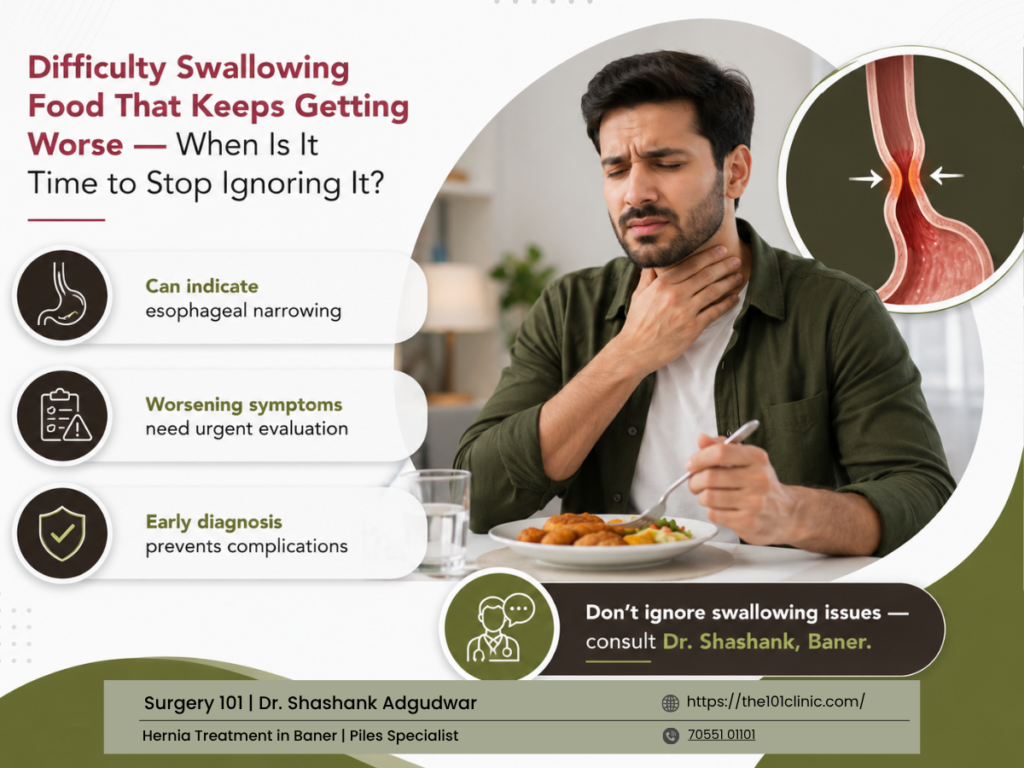
Most of us have choked on a bite of food that went down the wrong way, or felt a piece of bread get stuck for a second before finally moving along. It’s uncomfortable, but it passes, and we forget about it by the next meal. But what happens when that “stuck” feeling isn’t a one-time thing? What if it keeps happening, and each week it feels like it takes a little more effort to get food down? If you’re experiencing these symptoms regularly, consulting a gastroenterologist in Baner can help identify the underlying cause before it becomes more serious.
This is a symptom doctors call dysphagia, and it’s far more common than most people realise. According to Healthgrades, about 15 million American adults live with dysphagia, and roughly 1 in 25 people will experience some form of it in their lifetime. Yet because it often starts subtly, with someone simply cutting food into smaller pieces or avoiding certain textures, it’s one of those symptoms people quietly work around for months, sometimes years, instead of getting it checked.
Why Occasional Swallowing Trouble Isn’t the Same as a Pattern
There’s a real difference between choking once because you talked while eating, and noticing that swallowing solid food has become a recurring struggle. The first is normal. The second is your body sending a signal worth paying attention to.
Dysphagia generally falls into two broad categories, according to the NIH’s clinical literature on the subject:
- Oropharyngeal dysphagia, where the problem starts in the mouth or throat, often linked to nerve or muscle issues
- Esophageal dysphagia, where food feels like it’s sticking somewhere in the chest, usually related to narrowing, inflammation, or motility problems in the esophagus itself
Both types can range from mildly annoying to seriously disruptive, and both deserve proper evaluation, especially when the pattern is progressive rather than occasional.
The Warning Sign Doctors Take Most Seriously: It’s Getting Worse
Here’s the detail that matters most, and it’s right there in the topic of this article. A single episode of food catching in your throat is common and usually harmless. But dysphagia that steadily worsens, where solids that used to go down fine now require sips of water with every bite, or where you’ve slowly shifted to softer foods without really noticing, is a different story.
Multiple hospital and cancer-care sources describe this exact pattern as a hallmark warning sign. Difficulty swallowing that starts with solid foods and gradually progresses to include soft foods and eventually liquids is considered a classic red flag, one that clinicians associate with narrowing or obstruction somewhere along the esophagus. It’s also worth noting that early stage issues in the esophagus often cause no other clear symptoms, which is exactly why this gradual swallowing change tends to be the first thing people notice.
This progression doesn’t automatically mean something serious, dysphagia has plenty of non alarming causes too, such as acid reflux, esophageal spasms, or a benign stricture. But the pattern of steady worsening is precisely why it shouldn’t be brushed off as “just getting older” or “eating too fast.”
Signs That Mean It’s Time to See a Gastroenterologist
You don’t need to wait for a dramatic symptom to justify a visit. According to Healthgrades and Cleveland Clinic, you should see a doctor, and ideally a gastroenterologist, if you experience:
- Difficulty swallowing that happens regularly, not just once in a while
- A sensation that food is stuck in your throat or chest after swallowing
- Unexplained or unintentional weight loss alongside swallowing trouble
- Regurgitation, vomiting, or persistent drooling
- Pain when swallowing, or chest discomfort that appears with meals
- A swallowing problem that has clearly changed or worsened over the past few weeks or months
Weight loss paired with swallowing difficulty deserves particular attention. Losing more than 5 to 10 percent of your body weight without trying, especially alongside eating changes, is considered significant enough to need prompt medical evaluation. It doesn’t mean the worst case scenario is guaranteed, but it does mean this isn’t something to self manage with softer meals and smaller bites indefinitely.
What a Gastroenterologist Actually Does to Investigate This
A common reason people delay seeing a specialist is simply not knowing what the process involves. In reality, it’s more straightforward than most expect. A gastroenterologist typically starts with a detailed history: which foods trigger it, whether it’s getting worse, whether there’s pain, and how long it’s been going on.
From there, depending on what your symptoms suggest, they may recommend:
- An upper endoscopy (EGD), where a thin scope examines the throat, esophagus, and stomach directly, checking for narrowing, inflammation, or abnormal tissue
- A barium swallow test, an X-ray based study that shows how your esophagus functions while you swallow
- Additional motility or imaging studies if the initial findings suggest a functional or nerve related cause rather than a structural one
These tests are designed to pinpoint exactly where and why the problem is happening, which is the only way to get a treatment plan that actually addresses the cause instead of just the symptom.
Don’t Let a Gradually Worsening Symptom Become a Waiting Game
It’s easy to adapt around swallowing difficulty. You eat slower, choose softer foods, avoid certain textures at dinner parties, and life goes on. But when the trend is downward, when what used to feel manageable now takes real effort, that adaptation is actually a delay, and delaying evaluation of progressive dysphagia is one of the more common reasons underlying conditions get diagnosed later than they should be.
If you or someone you care about has noticed swallowing getting harder over recent weeks or months, the right move isn’t another home remedy, it’s a proper consultation with a gastroenterologist who can identify what’s actually going on.
How Surgery 101 Clinic Can Help
At Surgery 101 Clinic, persistent or worsening difficulty swallowing is taken seriously from the very first consultation. Dr. Shashank Adgudwar works with patients to understand the full pattern of their symptoms, from when it started to how it has changed, before recommending the right diagnostic path, whether that’s an endoscopy, a swallow study, or further specialist referral. If you’ve been searching for a reliable gastroenterologist in Baner to finally get answers instead of workarounds, Surgery 101 Clinic offers thorough evaluation, clear communication about what the findings mean, and a treatment plan built around your specific cause, not a generic protocol. Swallowing difficulty that keeps getting worse is not something to manage quietly for months on end. It’s worth one conversation with a specialist to find out why.
Frequently Asked Questions
- When should I actually worry about difficulty swallowing? Occasional trouble swallowing, like choking on food once, usually isn’t a concern. What warrants medical attention is a pattern: swallowing difficulty that happens regularly, keeps getting worse over weeks or months, or comes with unexplained weight loss, regurgitation, chest pain, or persistent drooling. If solid foods that used to be easy now require extra water or smaller bites, it’s time to see a gastroenterologist rather than keep adjusting your diet around it.
- What tests does a gastroenterologist use to find the cause of swallowing problems? The most common test is an upper endoscopy (EGD), where a thin scope examines the throat, esophagus, and stomach to check for narrowing, inflammation, or abnormal growths. A barium swallow test, which uses X-ray imaging while you swallow a contrast solution, is also frequently used to see how the esophagus functions. Depending on findings, additional motility testing may be recommended to check how well the esophageal muscles are working.
- Can difficulty swallowing be something other than a serious illness? Yes, dysphagia has many possible causes, ranging from acid reflux and esophageal spasms to benign strictures, inflammation, or even dry mouth and medication side effects. Not every case points to a serious underlying condition. However, because progressive dysphagia, difficulty that worsens over time and moves from solids to softer foods and liquids, can also indicate more significant issues, it should always be properly evaluated rather than assumed to be harmless.