
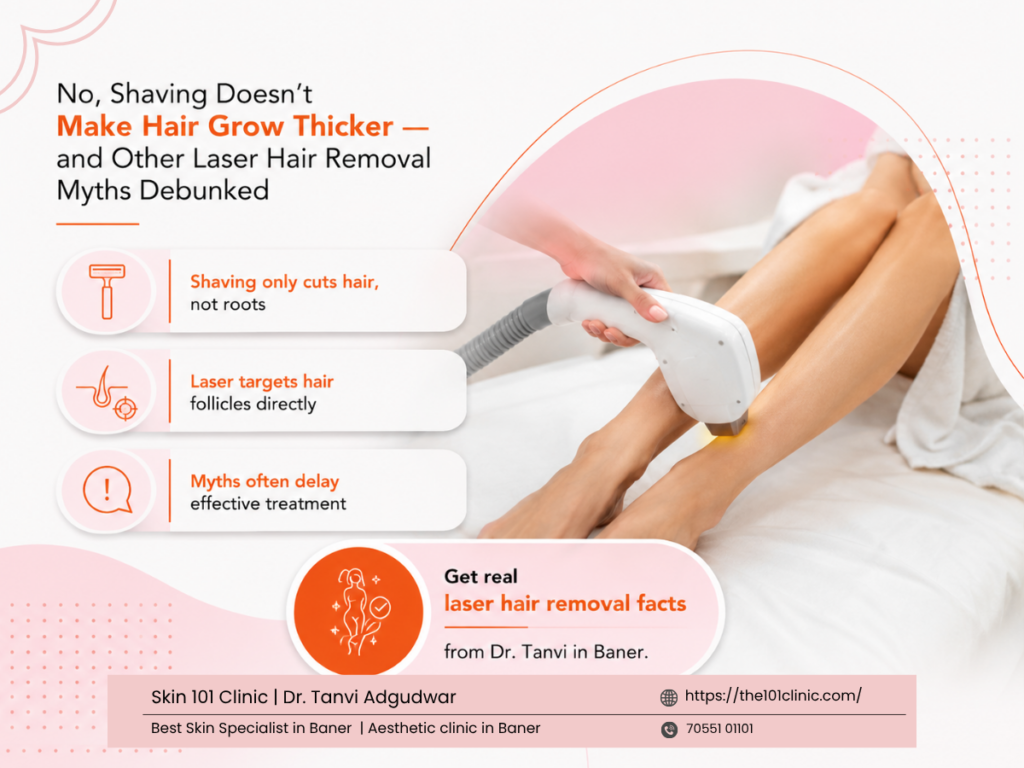
If you’ve grown up hearing that shaving makes your hair grow back thicker, darker, or faster, you’re not alone. It’s one of those pieces of advice that gets passed down so often, from mothers to daughters, that nobody stops to question it anymore. And it’s not just shaving. Laser hair removal, one of the most effective long term hair reduction methods available today, is surrounded by its own cloud of myths.
As more people in Pune explore options like laser hair removal treatment in Baner, it’s worth separating what’s actually backed by science from what’s simply salon folklore. Let’s go through the most common myths, one by one.
Myth 1: Shaving Makes Hair Grow Back Thicker
This is arguably the most persistent hair myth of all time, and it’s completely false. A foundational study published in the Anatomical Record back in 1928 found no measurable difference in hair regrowth after shaving, and that finding has been reaffirmed repeatedly since, including in the Journal of Investigative Dermatology.
Here’s why the myth refuses to die:
- Unshaved hair naturally tapers at the tip, so it feels soft and looks thin
- Shaving cuts the hair shaft straight across, leaving a blunt edge that feels coarser as it grows out
- New stubble sits closer to the skin, making it more visible and noticeable than longer hair
- Hormonal changes, especially the ones that coincide with when people typically start shaving, are often mistaken for a shaving effect
According to the Cleveland Clinic, shaving only removes hair above the skin’s surface. It never touches the follicle, which is the structure beneath the skin that actually determines hair colour, thickness, and growth rate. So no matter how many times you shave, you’re not changing your hair’s biology, you’re just changing how it looks for a few days.
Myth 2: Laser Hair Removal Works the Same Way for Every Skin and Hair Type
Not quite. Laser hair removal works through a process called selective photothermolysis, where the laser targets melanin (pigment) in the hair follicle, converts it to heat, and disables the follicle’s ability to produce hair. This means results genuinely vary depending on a few factors:
- Hair colour and thickness: dark, coarse hair absorbs laser energy best, while grey, white, or very light blonde hair often doesn’t respond well to traditional lasers
- Skin tone: older laser technology worked best on lighter skin, but modern devices like the Nd:YAG laser are specifically designed to work safely and effectively on medium to deeper skin tones, which is especially relevant for Indian skin
- Hormonal factors: conditions like PCOS can affect how hair responds to treatment and how quickly it may return
This is exactly why a proper consultation before treatment matters so much. A qualified dermatologist can assess your skin type, hair type, and medical history to set realistic expectations, rather than promising a one size fits all outcome.
Myth 3: One Laser Session Is Enough to Remove Hair Permanently
This myth causes a lot of disappointment, mainly because people expect instant, total results. In reality, hair grows in cycles, and laser treatment only works on hair that’s in its active growth phase (called anagen). Since not all your hair follicles are in that phase at the same time, one session simply can’t catch everything.
The American Academy of Dermatology notes that most patients need somewhere between two and six sessions, though many dermatologists recommend six to eight sessions for more thorough, lasting reduction, especially in areas with dense or hormonally influenced hair growth. A single session typically brings about a 10 to 25 percent reduction in hair, which is why the treatment is delivered in a planned series rather than a one time visit.
Myth 4: Laser Hair Removal Guarantees Permanent Hair Removal
This is more of a wording issue than an outright falsehood. Laser hair removal is widely recognised for producing long term, significant hair reduction, and follicles that are successfully treated can stay clear for months or even years. However, it’s more accurate to call it permanent hair reduction rather than permanent hair removal. Hormonal shifts, ageing, medication changes, and conditions like PCOS can occasionally trigger new hair growth even in previously treated areas.
That’s why most people who complete an initial course of sessions choose to come back for a maintenance session once or twice a year, simply to stay on top of any stray regrowth.
Myth 5: Laser Hair Removal Is Extremely Painful and Needs Long Recovery Time
Modern laser devices have come a long way from older, more uncomfortable technology. Most people describe the sensation as a mild snapping feeling, similar to a rubber band flick, rather than something unbearable. Side effects, when they occur, are usually mild and temporary, such as slight redness or swelling that resembles a light sunburn and settles within a few hours.
Downtime is minimal too. Most people return to their regular routine immediately after a session. The key to a smooth, low risk experience is having the treatment done by an experienced professional who understands how to calibrate laser settings correctly for your specific skin and hair type.
Getting Reliable Laser Hair Removal Treatment in Baner
Myths around hair removal thrive because they sound convincing on the surface, but real, science backed results come from proper technology, correct technique, and expert supervision, not guesswork or salon gossip.
If you’re exploring laser hair removal treatment in Baner, Skin 101 Clinic offers consultations led by Dr. Tanvi Komawar Adgudwar, who takes the time to assess your skin type, hair type, and goals before recommending a treatment plan that’s actually suited to you. Rather than following generic packages, Skin 101 focuses on using the right laser technology for different skin tones, transparent guidance on how many sessions you may realistically need, and honest aftercare advice so you know exactly what to expect at every stage. If unwanted hair and outdated myths have been holding you back, it might be time to book a consultation and get facts, not folklore.
Frequently Asked Questions
- Does shaving before a laser hair removal session affect the results? No, shaving before your appointment does not affect how laser hair removal works. In fact, most dermatologists recommend shaving the area a day before your session, since it allows the laser to target the hair follicle directly beneath the skin without burning hair on the surface. What you should avoid is waxing or plucking before treatment, as these methods remove the hair root that the laser needs to target.
- How many sessions of laser hair removal are usually needed to see visible results? Most people need between two and six sessions for noticeable reduction, though six to eight sessions are often recommended for more complete, longer lasting results, particularly for coarse or hormonally driven hair growth. Since hair grows in cycles, sessions are usually spaced four to six weeks apart to catch hair as it enters its active growth phase.
- Is laser hair removal treatment safe for Indian skin tones? Yes, when performed with the right laser technology and by a trained professional. Devices such as the Nd:YAG laser are specifically suited to medium and deeper skin tones because they target the hair follicle without affecting surrounding skin pigment, making them a safer choice for many Indian skin types compared to older laser systems.
#LaserHairRemoval #SkinCareFacts #DermatologistApproved #HairRemovalMyths #Skin101 #BanerPune #SmoothSkin #DermatologyIndia