
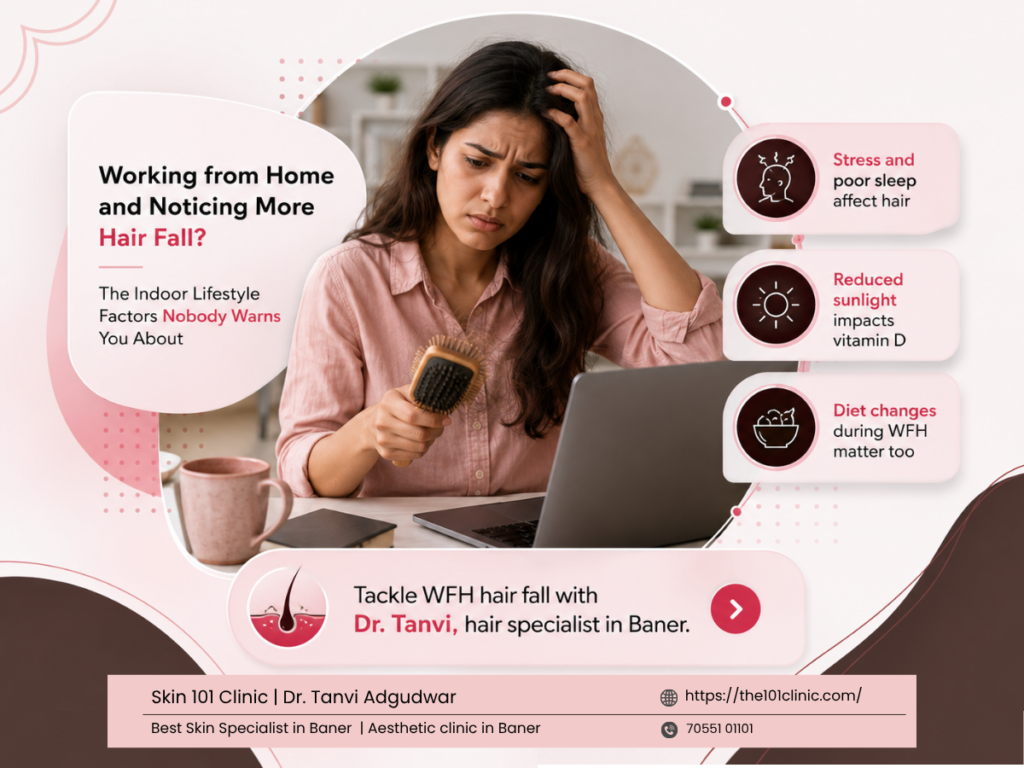
When remote work first became the norm, most people were thrilled about ditching the commute and working in pyjamas. Nobody warned us it might come with a side effect: fistfuls of hair in the shower drain. If you have been working from home for a while now and your hairbrush is looking scarier than usual, you are not imagining things, and you are definitely not alone.
The truth is, the indoor, sedentary, always-on lifestyle that WFH encourages is quietly working against your hair health in ways that have nothing to do with genetics. Let us break down what is actually happening, and why a visit to a hair specialist might be more useful than another round of “miracle” hair oil.
Why Working From Home Is Linked to Hair Fall
It is not the desk job itself that is the problem. It is everything that comes bundled with it.
- Chronic, low-grade stress adds up
Work from home often blurs the line between “office hours” and “personal time,” leading to longer working hours, back-to-back video calls, and a nagging feeling of always being on duty. This kind of prolonged stress raises cortisol levels in the body, and elevated cortisol has been directly linked to hair follicles being pushed into their resting phase prematurely. According to the Mayo Clinic, when significant stress affects the body, large numbers of hair follicles can shift into this resting phase together, causing noticeably increased shedding a few months later, a condition called telogen effluvium. A study published in the National Library of Medicine on workplace stress among healthcare professionals also found that constant stress raises cortisol levels, which can affect hair follicles and contribute to hair loss, while also disrupting sleep patterns and reducing blood flow to the scalp, both of which starve hair follicles of oxygen and nutrients.
- Less sunlight means lower Vitamin D
Think about your day honestly. Bed to desk, desk to kitchen, kitchen back to desk. For many remote workers, actual outdoor time has shrunk to almost nothing. This matters more than people realise, because Vitamin D plays a direct role in activating hair follicles. According to the Wimpole Clinic, people who spend most of their time indoors and limit their sun exposure are at higher risk of Vitamin D deficiency, and low Vitamin D levels have been linked to both male pattern baldness and female pattern hair loss in multiple studies. Health experts speaking to the National Council on Aging have also pointed out that the shift toward indoor work environments is a major reason so many adults are now Vitamin D deficient, simply because regular sun exposure has dropped off.
- Irregular sleep and screen-heavy routines
WFH often means fewer physical boundaries between work and rest. Late-night emails, binge-watching after “logging off,” and scrolling in bed all chip away at sleep quality. Poor sleep does not just leave you groggy, it also interferes with the hair growth cycle by disrupting the body’s natural repair processes, an effect that compounds with stress and nutrient gaps over time.
- Skipped meals and comfort eating
Working from a kitchen-adjacent desk changes eating patterns for most people, either through skipped meals during busy days or excessive snacking during idle ones. Hair follicles need a steady supply of protein, iron, zinc, and biotin to function properly, and fad diets or nutritional gaps have long been recognised by dermatologists as one of the common triggers of temporary, diffuse hair shedding.
- Reduced physical movement
Sitting for eight-plus hours a day slows circulation throughout the body, including blood flow to the scalp. Since hair follicles rely on this blood supply to receive oxygen and nutrients, a largely sedentary routine can quietly affect how well your hair grows and how thick it stays.
Signs Your Hair Fall Might Be Lifestyle-Related
Not all hair fall needs alarm bells, but a few patterns are worth paying attention to:
- You notice significantly more strands on your pillow, in the shower drain, or in your hairbrush than before.
- Your ponytail feels noticeably thinner, though there is no visible bald patch.
- Shedding seems to have started roughly two to three months after a stressful period, deadline crunch, or diet change.
- Your scalp looks otherwise healthy, with no redness, flaking, or itching.
It is worth remembering that losing between 50 and 100 hairs a day is completely normal. What is not normal is a sudden, sustained spike, and that is your cue to consult a hair specialist rather than guess your way through home remedies.
What You Can Actually Do About It
Small, consistent changes tend to work far better than drastic ones. A few starting points:
- Step outside daily. Even 15 to 20 minutes of morning sunlight can support your Vitamin D levels naturally.
- Set real work-end boundaries. Log off at a fixed time to protect your sleep and reduce cortisol buildup.
- Eat on a schedule. Prioritise protein, iron-rich foods, and leafy greens instead of relying on snacks.
- Move every hour. A short walk or stretch break improves circulation, including to your scalp.
- Get your levels checked. If shedding has lasted more than a couple of months, a simple blood test can reveal Vitamin D or iron deficiencies that are easy to correct once identified.
Lifestyle fixes help, but they are not always enough on their own, especially if the shedding has been going on for a while or the underlying cause is not immediately obvious. This is where seeing a qualified hair specialist makes a real difference. A proper diagnosis rules out other causes, such as thyroid imbalances or genetic thinning, and ensures you are treating the actual problem instead of guessing.
How Skin 101 Clinic Can Help
If your hair fall has gone from “a few extra strands” to “genuinely concerning,” it is time to stop self-diagnosing and get an expert opinion. At Skin 101 Clinic, Dr. Tanvi Komawar Adgudwar, a trusted hair specialist in Baner, takes a personalized, science-backed approach to hair fall linked to stress, nutritional gaps, and lifestyle changes like remote work. From detailed scalp assessments and vitamin D or thyroid screening to customized treatment plans, PRP therapy, and nutritional guidance, the clinic focuses on identifying the real root cause of your hair fall rather than offering a one-size-fits-all fix.
If working from home has quietly been working against your hair, book a consultation with Dr. Tanvi Komawar Adgudwar at Skin 101 Clinic and get a plan that actually addresses why it is happening, not just how to hide it.
Frequently Asked Questions
- Can working from home really cause hair fall? Yes. While WFH itself is not a direct cause, the lifestyle changes that come with it, including higher stress, disrupted sleep, reduced sunlight exposure, and irregular eating habits, can trigger a temporary condition called telogen effluvium, where more hair than usual shifts into the shedding phase.
- How long does stress-related or lifestyle-related hair fall last? Once the underlying trigger is addressed, whether it is stress, poor sleep, or a nutrient deficiency, most people see their hair growth normalise within three to six months. If shedding continues beyond this, it is best to consult a hair specialist for a proper evaluation.
- When should I see a hair specialist instead of trying home remedies? If you notice excessive shedding lasting more than two to three months, thinning that is visible in your ponytail or parting, or any scalp irritation alongside hair fall, it is time to consult a hair specialist. Early diagnosis at a clinic like Skin 101 Clinic can prevent minor shedding from turning into long-term thinning.
#HairFallCauses #WorkFromHomeLife #HairSpecialist #HairSpecialistInBaner #Skin101Clinic #HealthyHairTips #TelogenEffluvium #HairCareRoutine #RemoteWorkLife #ScalpHealth