
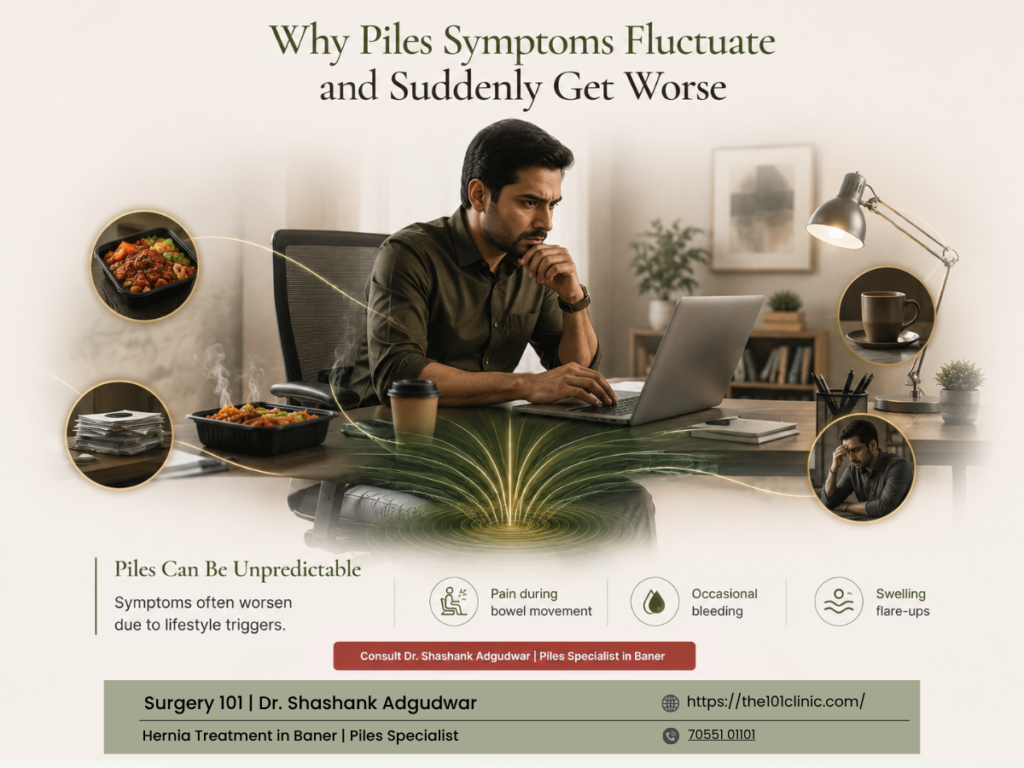
Piles, also known as hemorrhoids, are one of the most common anorectal conditions affecting adults worldwide. While many people experience mild symptoms that come and go, others notice sudden flare-ups that cause significant discomfort, pain, itching, swelling, or bleeding. This unpredictable nature of piles often leads patients to wonder why their symptoms seem manageable one week and much worse the next.
The reality is that piles are influenced by several lifestyle, dietary, and physical factors. Understanding these triggers can help patients manage symptoms more effectively and know when it’s time to consult a Piles specialist.
If you are experiencing recurring piles symptoms, seeking advice from a gastroenterologist in Baner can help identify the underlying cause and prevent the condition from progressing. At Surgery 101 Clinic, Dr. Shashank Adgudwar provides comprehensive evaluation and treatment for piles and other gastrointestinal conditions.
Understanding Piles and Why Symptoms Change
Piles occur when the veins in the lower rectum or anus become swollen and enlarged. Similar to varicose veins, these swollen blood vessels can become irritated due to increased pressure.
According to the National Institute of Diabetes and Digestive and Kidney Diseases (NIDDK), hemorrhoids affect millions of people and are particularly common among adults between the ages of 45 and 65.
Source: https://www.niddk.nih.gov
One reason piles symptoms fluctuate is that the amount of pressure placed on these veins can vary from day to day. When pressure increases, symptoms often worsen. When pressure decreases, symptoms may temporarily improve.
This explains why some individuals feel almost symptom-free at times, only to experience a sudden flare-up later.
Common Reasons Piles Symptoms Suddenly Get Worse
Several factors can trigger or aggravate hemorrhoids.
Constipation and Straining During Bowel Movements
Constipation is one of the most common causes of worsening piles symptoms.
When stools become hard and difficult to pass, individuals often strain excessively during bowel movements. This increases pressure inside the rectal veins, causing hemorrhoids to swell further.
Symptoms that may worsen include:
- Pain during bowel movements
- Bleeding
- Swelling
- Prolapse of hemorrhoids
The American Society of Colon and Rectal Surgeons identifies constipation and prolonged straining as major risk factors for hemorrhoid flare-ups.
Source: https://fascrs.org
Prolonged Sitting
Modern lifestyles often involve long hours of sitting at desks, in vehicles, or while working from home.
Extended sitting can place additional pressure on the anal and rectal veins, contributing to worsening symptoms. Many patients notice increased discomfort after spending long periods seated without movement.
Low Fiber Diet
A diet lacking adequate fiber can contribute to irregular bowel movements and constipation.
Fiber helps soften stool and promotes easier passage through the digestive tract. Without sufficient fiber intake, bowel movements may become difficult, increasing pressure on hemorrhoids.
According to the Mayo Clinic, adults should consume adequate dietary fiber to support healthy digestion and prevent constipation.
Source: https://www.mayoclinic.org
Lifestyle Factors a Piles Specialist Often Identifies
Many patients are surprised to learn that everyday habits can significantly influence piles symptoms.
Inadequate Hydration
Not drinking enough water can make stools harder and more difficult to pass.
This often leads to:
- Increased straining
- Constipation
- Greater irritation of hemorrhoids
Maintaining proper hydration is one of the simplest ways to support bowel health and reduce symptom flare-ups.
Heavy Lifting
Frequent heavy lifting can increase abdominal pressure, which may worsen existing hemorrhoids.
This includes:
- Weightlifting
- Moving heavy objects
- Physically demanding occupations
Individuals with piles should discuss safe activity levels with a Piles specialist if symptoms become frequent.
Pregnancy
Pregnancy is another common trigger for hemorrhoid symptoms.
Growing pressure from the uterus combined with hormonal changes and constipation can increase the likelihood of hemorrhoid development or worsening.
The American College of Obstetricians and Gynecologists notes that hemorrhoids are particularly common during pregnancy and after childbirth.
Source: https://www.acog.org
Why Bleeding May Suddenly Appear
Many patients become alarmed when they notice rectal bleeding after previously having only mild symptoms.
Bleeding can occur when swollen hemorrhoidal tissue becomes irritated during bowel movements. Hard stools or excessive wiping may further aggravate the affected area.
Although hemorrhoids are a common cause of rectal bleeding, it is important not to assume hemorrhoids are always responsible.
A Piles specialist may recommend further evaluation to rule out other conditions such as fissures, polyps, inflammatory bowel disease, or colorectal cancer.
Can Stress Make Piles Worse?
Stress does not directly cause hemorrhoids, but it can contribute to behaviors that trigger flare-ups.
For example, stress may lead to:
- Poor dietary habits
- Reduced water intake
- Irregular bowel movements
- Increased constipation
As a result, symptoms may appear worse during particularly stressful periods.
Maintaining healthy lifestyle habits during times of stress can help reduce the likelihood of symptom aggravation.
When Should You See a Piles Specialist?
Many hemorrhoid flare-ups improve with conservative treatment. However, certain symptoms require professional medical evaluation.
Consult a Piles specialist if you experience:
- Persistent rectal bleeding
- Severe pain
- Prolapsed hemorrhoids
- Recurrent flare-ups
- Symptoms that interfere with daily activities
- Lack of improvement despite home remedies
Early diagnosis often allows for more effective treatment and can help prevent complications.
Treatment Options for Persistent Piles
Treatment depends on the severity of the condition.
Mild cases may improve with:
- Increased fiber intake
- Adequate hydration
- Regular physical activity
- Avoiding prolonged straining
For more advanced cases, a Piles specialist may recommend procedures such as:
- Rubber band ligation
- Injection therapy
- Infrared coagulation
- Laser treatment
- Surgical hemorrhoidectomy
The most appropriate treatment depends on the grade and severity of the hemorrhoids.
How to Reduce the Risk of Future Flare-Ups
While piles can recur, certain habits may help reduce future episodes.
Focus on:
- Eating a fiber-rich diet
- Drinking sufficient water
- Exercising regularly
- Avoiding prolonged sitting
- Responding promptly to the urge to have a bowel movement
- Minimizing excessive straining
Small lifestyle changes can often make a significant difference in symptom control.
Read More –
- https://the101clinic.com/summer-diet-tips-to-prevent-piles-expert-guide-by-dr-shashank-adgudwar-baner/
- https://the101clinic.com/piles-in-male-versus-piles-in-female/
- https://the101clinic.com/piles-in-women-images-causes-symptoms-treatment/
Expert Care at Surgery 101 Clinic
If you are experiencing recurring hemorrhoid symptoms, Surgery 101 Clinic offers expert diagnosis and treatment under the guidance of Dr. Shashank Adgudwar.
As a trusted piles specialist in Baner, Dr. Adgudwar provides comprehensive care for hemorrhoids, fissures, fistulas, and other anorectal conditions. From accurate diagnosis to advanced treatment options, Surgery 101 Clinic focuses on helping patients achieve long-term relief while minimizing discomfort and recurrence.
Conclusion
Hemorrhoid symptoms often fluctuate because the underlying pressure on rectal veins changes over time. Factors such as constipation, straining, poor diet, prolonged sitting, dehydration, pregnancy, and heavy lifting can all contribute to sudden flare-ups. Understanding these triggers can help patients take preventive measures and seek timely treatment when needed. If symptoms become frequent, painful, or disruptive, consulting an experienced piles specialist is the best step toward effective management and lasting relief.
#pilesspecialist #pilestreatment #hemorrhoids #digestivehealth #gastroenterology #rectalhealth #guthealth #pilesspecialistinbaner #surgery101clinic