
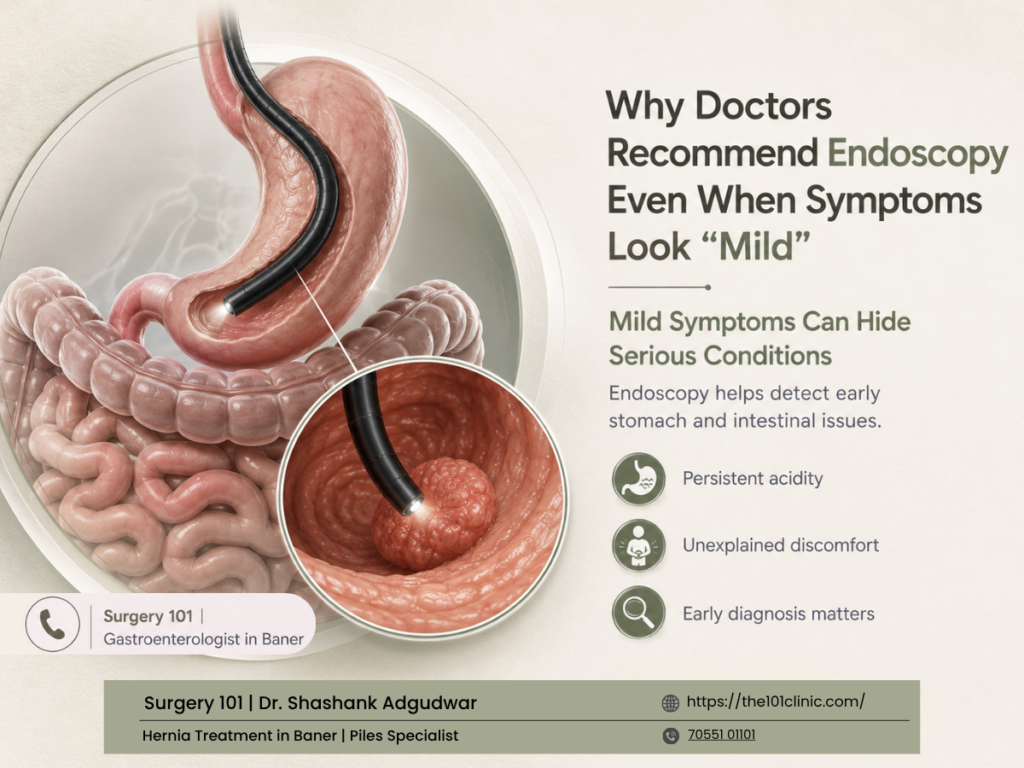
Many people experience occasional digestive discomfort and choose to ignore it. A little acidity after meals, mild stomach pain, occasional bloating, or heartburn may seem harmless at first. However, what appears to be a minor digestive issue can sometimes indicate an underlying condition that requires medical attention. This is one of the main reasons doctors often recommend endoscopy even when symptoms seem mild.
Early diagnosis plays a crucial role in preventing digestive diseases from progressing into more serious health concerns. Through endoscopy, doctors can closely examine the digestive tract and identify conditions that may not be visible through routine physical examinations or blood tests.
If you are experiencing persistent digestive symptoms, consulting an experienced gastro- and laparoscopic surgeon like Dr. Shashank Adgudwar can help determine whether an endoscopy is necessary. Individuals searching for a stomach specialist in Baner often discover that many digestive conditions can only be accurately diagnosed through this advanced procedure.
What Is Endoscopy and Why Is It Important?
Endoscopy is a minimally invasive diagnostic procedure that allows doctors to examine the inner lining of the digestive tract using a thin, flexible tube equipped with a camera and light. The procedure provides real time images of the esophagus, stomach, and upper part of the small intestine.
According to the American Society for Gastrointestinal Endoscopy (ASGE), endoscopy is considered one of the most effective methods for diagnosing gastrointestinal disorders because it allows direct visualization of the digestive tract and enables tissue biopsy when required.
Unlike imaging tests that provide indirect views, endoscopy helps doctors identify abnormalities with greater accuracy. It can detect inflammation, ulcers, infections, bleeding, polyps, and even early signs of cancer.
Mild Symptoms Can Sometimes Signal Bigger Problems
Many digestive disorders develop gradually. The initial symptoms may be subtle, making patients believe they are dealing with simple indigestion or dietary issues.
Doctors may recommend endoscopy when symptoms persist, recur frequently, or fail to improve despite medication. Conditions that often begin with mild symptoms include:
- Gastroesophageal Reflux Disease (GERD)
- Gastric ulcers
- Esophagitis
- Barrett’s esophagus
- Helicobacter pylori infection
- Stomach polyps
- Early-stage stomach cancer
Research published by the National Institute of Diabetes and Digestive and Kidney Diseases (NIDDK) highlights that chronic acid reflux and untreated digestive conditions can increase the risk of long term complications if left undiagnosed.
This is why doctors focus not only on symptom severity but also on symptom duration and frequency.
Warning Signs That May Lead to an Endoscopy Recommendation
While severe symptoms often require immediate evaluation, doctors may also advise endoscopy when seemingly mild symptoms continue for weeks or months.
Some examples include:
- Frequent heartburn
- Persistent indigestion
- Recurrent stomach pain
- Difficulty swallowing
- Chronic bloating
- Nausea without a clear cause
- Feeling full quickly after eating
Even if these symptoms do not significantly affect daily activities, they can indicate underlying digestive disorders that deserve investigation.
Early Detection Can Prevent Serious Complications
One of the biggest advantages of endoscopy is its ability to detect diseases at an early stage.
The World Gastroenterology Organisation emphasizes that early diagnosis of gastrointestinal conditions improves treatment outcomes and reduces the risk of complications.
For example, an untreated stomach ulcer may eventually lead to bleeding. Chronic acid reflux can cause damage to the esophagus over time. In some cases, precancerous changes may develop without producing noticeable symptoms.
When these conditions are identified early through Endoscopy, treatment is often simpler, less invasive, and more effective.
Endoscopy Is Not Just for Diagnosis
Many patients assume endoscopy is only used to find the cause of symptoms. In reality, the procedure can also be used for treatment.
During endoscopy, doctors may:
- Remove certain polyps
- Stop internal bleeding
- Collect tissue samples for biopsy
- Dilate narrowed areas of the digestive tract
- Monitor previously diagnosed conditions
This makes endoscopy both a diagnostic and therapeutic tool, reducing the need for multiple procedures.
Is Endoscopy Safe?
A common concern among patients is whether endoscopy is painful or risky.
According to the National Health Service (NHS), endoscopy is generally considered a safe procedure with a low risk of complications when performed by trained specialists.
Most procedures are completed within a short time, and patients typically return home the same day. Sedation is often used to improve comfort, and many patients remember little or nothing about the procedure afterward.
The benefits of obtaining an accurate diagnosis usually outweigh the minimal risks associated with the procedure.
Why Doctors Prefer Not to Wait
Waiting for symptoms to become severe can sometimes delay the diagnosis of important digestive conditions.
Doctors often recommend endoscopy because
- Symptoms alone do not always reveal the true cause of a digestive problem.
- Early diagnosis allows treatment before complications develop.
- Certain serious conditions may initially present with only mild symptoms.
- The procedure provides direct visualization for accurate diagnosis.
- Early intervention often leads to better long term outcomes.
A proactive approach helps patients avoid unnecessary suffering and gives healthcare providers the opportunity to address problems before they become more difficult to treat.
When Should You Consult a Specialist?
If digestive symptoms continue despite dietary changes or medication, it is important to seek professional evaluation. Recurring discomfort should never be ignored simply because it feels mild.
Dr. Shashank Adgudwar carefully evaluates digestive symptoms and recommends appropriate investigations based on each patient’s condition. Early assessment can provide clarity, reassurance, and timely treatment when needed.
Expert Endoscopy Care at Surgery 101
If you are experiencing persistent digestive symptoms, Surgery 101 offers expert evaluation and advanced digestive care under the guidance of Dr. Shashank Adgudwar. The clinic focuses on accurate diagnosis, patient comfort, and evidence-based treatment approaches for a wide range of gastrointestinal conditions.
Whether you are dealing with chronic acidity, stomach discomfort, swallowing difficulties, or unexplained digestive issues, professional assessment can help identify the underlying cause. For reliable and comprehensive endoscopy in Baner, Surgery 101 provides personalized care designed to support early diagnosis and better digestive health outcomes.
#Endoscopy #EndoscopyInBaner #DigestiveHealth #Gastroenterology #DrShashankAdgudwar #Surgery101 #AcidityTreatment #StomachHealth #GERD #PreventiveHealthcare