
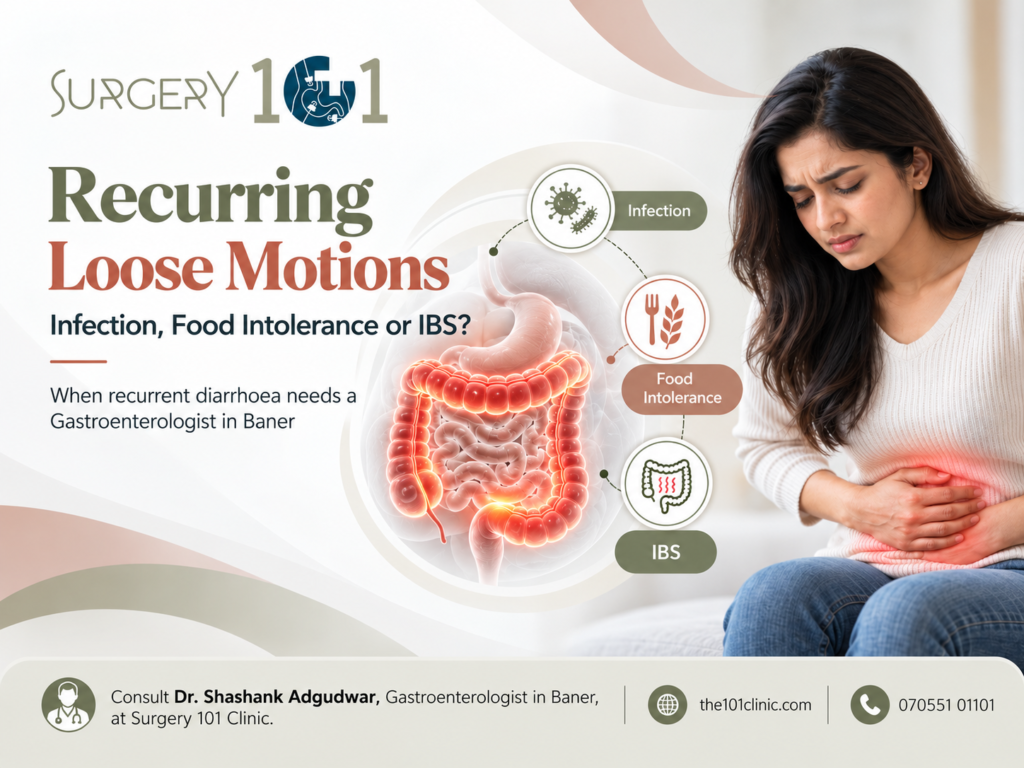
When recurrent diarrhoea needs a Gastroenterologist in Baner
An isolated day of loose motions often follows a short-lived infection or food exposure. When episodes keep returning, last for weeks, wake you at night or come with weight loss or blood, the explanation may be different. Persistent infection, lactose intolerance, coeliac disease, medication effects, inflammatory bowel disease and irritable bowel syndrome can all cause recurrent diarrhoea.
The pattern is more useful than a single episode. Track duration, frequency, stool appearance, pain, urgency, travel, food triggers and recent antibiotics. Avoid repeatedly taking antibiotics or anti-diarrhoeal medicine without a diagnosis, because treatment for one cause can worsen or mask another.
How long is too long?
The NIDDK defines diarrhoea as loose, watery stools three or more times a day or more often than normal for the person. Acute diarrhoea lasts a short time. Persistent symptoms continue longer, while chronic diarrhoea is generally present for four weeks or more.
Recurring short attacks also deserve assessment when they follow a pattern or affect hydration, work, sleep or weight. Night-time stools and symptoms that continue despite fasting can point away from simple dietary triggers and should be mentioned.
Could an infection keep returning?
Some infections last longer than expected, especially after contaminated water, travel or immune suppression. Giardia and other parasites may cause prolonged diarrhoea and bloating. Recent antibiotics or hospitalization raises concern for Clostridioides difficile. A routine “stomach infection” does not justify repeated antibiotics without stool testing or clinical review.
After an infection clears, temporary difficulty digesting lactose or other carbohydrates can prolong loose stools. Some people develop post-infectious IBS, where bowel sensitivity and altered movement continue even though the infection is gone.
Food intolerance, coeliac disease or malabsorption
Lactose intolerance often causes diarrhoea, gas and cramps after milk or dairy, with severity depending on the dose. Fructose, sorbitol and other poorly absorbed carbohydrates can also trigger symptoms. A food diary and structured trial guided by a clinician is more reliable than removing many foods indefinitely.
Coeliac disease is an immune reaction to gluten that can cause diarrhoea, weight loss, anaemia, bloating or few obvious symptoms. Do not start a gluten-free diet before testing because avoiding gluten can make blood tests and biopsy less accurate. Pancreatic disease and bile-acid diarrhoea are other causes of malabsorption that need specific treatment.
Clues that help separate common causes
- Infection: Sudden onset, fever, recent travel, sick contacts, unsafe food or water, recent antibiotics, or blood and mucus may be clues.
- Intolerance or malabsorption: Symptoms linked repeatedly to a food, bloating, pale or greasy stools, weight loss or nutritional deficiency may point in this direction.
- IBS or inflammation: IBS usually includes recurrent abdominal pain related to bowel movements and altered stool pattern. Blood, fever, anaemia, night-time symptoms and progressive weight loss are not typical IBS features and require investigation.
The NIDDK review of chronic diarrhoea causes includes infections, food allergies and intolerances, coeliac disease, inflammatory bowel disease, pancreatic problems, surgery, medicines, IBS and functional diarrhoea.
Warning signs for urgent or prompt assessment
Seek urgent care for signs of dehydration such as very little urine, marked thirst, dizziness, confusion or fainting; inability to keep fluids down; severe abdominal pain; heavy blood; or black stool. Fever with bloody diarrhoea also needs prompt review. Infants, older adults, pregnant people and those with weakened immunity can deteriorate faster.
Arrange a gastroenterology appointment for symptoms lasting several weeks, repeated night-time diarrhoea, unexplained weight loss, anaemia, a family history of inflammatory bowel disease or bowel cancer, or episodes beginning after surgery or long-term medicine use.
How a Gastroenterologist in Baner investigates recurrent loose motions
The evaluation begins with history, examination and medication review. Blood tests may assess anaemia, inflammation, thyroid function, coeliac antibodies, liver health and electrolytes. Stool tests can look for infection, parasites, inflammation or hidden blood based on the clinical picture.
Colonoscopy with biopsies may be recommended when inflammatory bowel disease, microscopic colitis, bleeding or another structural problem is suspected. Imaging, breath tests or pancreatic tests are used selectively. IBS can be diagnosed positively from a typical symptom pattern after appropriate screening rather than through endless exclusion.
What to do while waiting for review
Replace lost fluids and salts with an appropriate oral rehydration solution, especially after frequent watery stools. Eat tolerable, balanced food rather than fasting for prolonged periods. Wash hands carefully and avoid preparing food for others if infection is possible.
Avoid anti-diarrhoeal medicine when there is blood, high fever or suspected severe infection unless a clinician advises it. Do not self-start antibiotics. Keep a symptom and food record and bring all medicine names to the appointment.
Frequently asked questions
- Can IBS cause loose motions every day?
IBS with diarrhoea can cause recurrent loose stools and urgency, usually with abdominal pain related to bowel movements. Blood, fever, weight loss, anaemia or night-time symptoms need evaluation for another cause.
- How do I know if dairy is causing diarrhoea?
A consistent relationship between lactose-containing foods and symptoms provides a clue, but it is not proof. A clinician-guided elimination and reintroduction or breath test can help while avoiding unnecessary long-term restriction.
- When should stool tests be done?
Testing may be appropriate for persistent symptoms, blood or fever, recent travel, unsafe water exposure, immune suppression, recent antibiotics or suspected inflammation. Your clinician will select tests based on the pattern.
Consult a gastroenterologist in Baner at Surgery 101 Clinic.
For loose motions that keep returning, consult Dr. Shashank Adgudwar, a gastroenterologist in Baner, at Surgery 101 Clinic. The clinic can evaluate infection, intolerance, inflammation and IBS using a focused history and appropriate tests. Treatment is based on the identified or most likely cause.
#Diarrhoea #IBS #FoodIntolerance #GutHealth #Gastroenterologist #Surgery101Clinic