
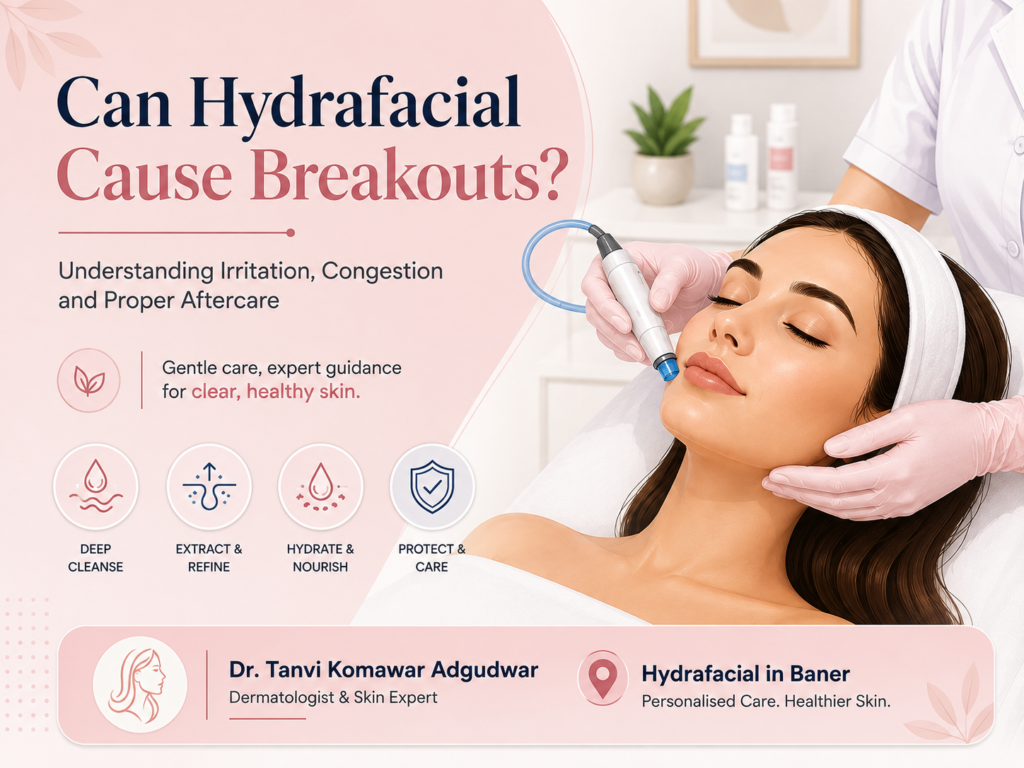
What to Know Before Choosing Hydrafacial in Baner
You book a facial expecting refreshed skin but notice redness or small bumps the next day. The first thought is often, “Did the treatment make me break out?”
A Hydrafacial Treatment cleanses, exfoliates, extracts debris and applies selected serums. Many people tolerate it well, but temporary redness, irritation, acne like bumps or a product reaction can occur.
Not every bump is acne, and not every reaction is “purging.” Understanding the difference can prevent irritated skin from becoming worse.
What Happens During a Hydrafacial Treatment?
Hydrafacial is a form of hydradermabrasion that combines controlled exfoliation, suction and topical serums. Steps vary according to the device, booster and skin concern.
A randomized Journal of Cosmetic Dermatology study evaluated six hydradermabrasion sessions in 20 women. Researchers reported improvements in measured skin features and no complications. The study is indexed on PubMed.
Another open label study enrolled 20 adults with mild to moderate acne. Six clarifying treatments were generally well tolerated and acne assessments improved. The study is available through PubMed Central.
Both studies were small, and the acne study lacked a blinded comparison group. They cannot rule out individual reactions when treatment intensity, serums and skin conditions differ.
Why Might Bumps Appear After Hydrafacial Treatment?
The timing and appearance of the bumps offer useful clues. Possible explanations include:
- Temporary irritation: Exfoliating solutions, suction or several active ingredients may irritate a sensitive barrier, causing redness, tightness, stinging or small uniform bumps.
- Contact dermatitis: Fragrance, preservatives or another serum ingredient may cause itching, burning, swelling or a rash. The American Academy of Dermatology identifies fragrance as a common trigger.
- Pre existing congestion: Closed comedones may already be developing. Exfoliation can make some more noticeable, but every new lesion is not a healthy cleansing response.
- Occlusive products: Heavy makeup, oily creams or unsuitable sunscreen may clog acne prone skin. Choose products labelled non comedogenic.
- Folliculitis: Inflamed follicles can resemble sudden acne and may be itchy, tender and uniform. The American Academy of Dermatology explains that folliculitis often looks like acne but is different.
- An underlying condition: Rosacea, perioral dermatitis, active acne or eczema may worsen after an unsuitable procedure or product.
Is It Really Skin Purging?
“Purging” is widely used for any post facial breakout. Some ingredients that increase cell turnover can bring pre existing microscopic comedones to the surface sooner. A prolonged, painful or spreading breakout, however, is not proof that toxins are leaving the skin.
If bumps appear in unusual areas, itch, multiply or persist, irritation, contact dermatitis, folliculitis or acne may be more likely explanations.
Calling every reaction purging can delay appropriate care or lead to repeating an unsuitable treatment.
Normal Short Term Reaction or a Concerning Breakout?
Mild effects that may settle shortly after treatment include:
- Light redness or warmth
- Mild tightness or temporary sensitivity
- Slight dryness or flaking
- A small number of superficial bumps without pain or significant itching
Contact the clinic or a dermatologist for increasing pain, marked swelling, intense itching, blistering, pus filled bumps or worsening redness. Seek advice if symptoms do not settle within a few days or recur after each session.
Grouped painful blisters, facial swelling, eye symptoms or difficulty breathing require prompt medical attention.
Who May Be More Prone to Irritation?
People with a damaged barrier, sensitive skin, rosacea, eczema, inflamed acne or sunburn may be more reactive. Retinoids, acids, scrubs or recent procedures may increase sensitivity.
Dr. Tanvi Komawar Adgudwar may postpone or modify Hydrafacial Treatment for active infection, open wounds, herpes, severe irritation or dermatitis. Pregnancy, medicines, allergies and recent procedures should be disclosed.
A proper consultation is important because the same protocol should not be used for dry sensitive skin, congested oily skin and inflamed acne.
Proper Aftercare Following Hydrafacial Treatment
Aftercare should protect the skin barrier and avoid unnecessary irritation.
- Wash with a mild, fragrance free cleanser and lukewarm water. Do not scrub, use cleansing brushes or repeatedly wash the face.
- Apply a simple, non comedogenic moisturiser suited to your skin type.
- Use broad spectrum sunscreen with SPF 30 or higher and reduce direct sun exposure. The American Academy of Dermatology emphasises sun protection after cosmetic treatments because unprotected exposure can increase side effects.
- Pause retinoids, exfoliating acids, scrubs and strong acne products for the period advised by your dermatologist. The appropriate interval depends on the products used and your skin’s response.
- Avoid picking, squeezing or scratching bumps. Manipulation can increase inflammation, infection risk and post inflammatory pigmentation.
- Delay heavy makeup, facial waxing, steam, sauna and other facial procedures until the treating professional says your skin is ready.
- Do not introduce several new skincare products immediately after treatment. If a reaction occurs, identifying the responsible product becomes difficult.
The American Academy of Dermatology advises that over washing, scrubbing and frequently changing acne treatments can irritate skin and worsen breakouts. Gentle, consistent care is usually the safer approach after a facial procedure.
What Should You Do If You Break Out?
Keep the routine simple and pause newly introduced active products until advised. Avoid multiple spot treatments, steroid creams or home remedies. Photograph the reaction and tell the clinic which products were used.
A dermatologist can distinguish acne, dermatitis, allergy and folliculitis. Treatment differs, so diagnosis matters more than drying the bumps quickly.
Hydrafacial in Baner at Skin 101 Clinic
At Skin 101 Clinic, Dr. Tanvi Komawar Adgudwar assesses skin type, active concerns, medical history and current skincare before recommending hydrafacial treatment. This personalised approach helps determine whether the procedure is suitable and which products or treatment intensity should be avoided.
If you are considering Hydrafacial in Baner or have developed an unexpected reaction after a facial, Skin 101 Clinic can provide a dermatology-led evaluation, individualised aftercare and appropriate treatment when required.
Frequently Asked Questions
1. Is a breakout after Hydrafacial Treatment normal?
A few temporary bumps can occur, but a breakout is not a required or guaranteed part of the treatment. It may represent irritation, existing congestion, folliculitis or a product reaction. Painful, itchy, spreading or persistent bumps should be assessed rather than dismissed as purging.
2. How long should redness or small bumps last after Hydrafacial?
Mild redness or sensitivity often settles within several hours to a day, although individual responses vary. If bumps worsen, become painful or itchy, contain pus or remain for several days without improvement, contact the treating clinic or a dermatologist.
3. Can acne prone skin undergo Hydrafacial Treatment?
Some people with mild to moderate acne may tolerate a customised clarifying treatment, and a small published study reported improvement after a series of sessions. However, active inflamed acne, sensitive skin or another acne like condition requires assessment first. Hydrafacial is not a universal replacement for evidence based acne treatment.
#hydrafacialtreatment #hydrafacialinbaner #acneproneskin #skincareaftercare #skinirritation #facialaftercare #skin101clinic #drtanvikomawaradgudwar