
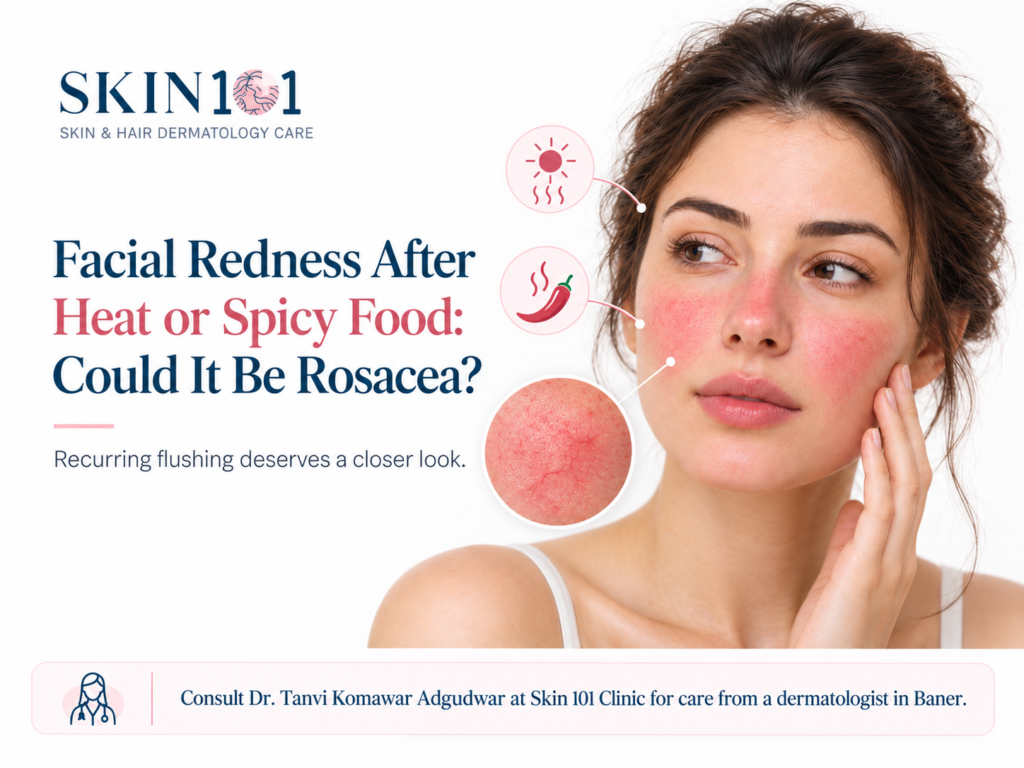
Yes, repeated facial flushing after heat exposure or spicy food could be a sign of rosacea, especially when it comes with burning, visible small blood vessels or acne-like bumps. However, flushing alone does not confirm the condition. If the redness keeps returning or lingers between episodes, a dermatologist in Baner can assess whether rosacea or another skin problem is responsible. NHS
When is redness more than an occasional flush?
Rosacea is a long-term inflammatory skin condition that mainly affects the central face. The cheeks, nose, forehead and chin are common areas. Symptoms may settle and flare again, rather than remain equally noticeable every day.
Some people first notice that their face feels unusually hot or that skincare products sting. Others develop lingering redness, small visible vessels or inflamed bumps. You do not need to have every feature for rosacea to be considered.
Rosacea can affect Indian and darker skin tones too. Redness may be less obvious, so warmth, tenderness, sensitivity and changes in skin texture also deserve attention. Comparing your skin with photographs of rosacea on very fair skin can be misleading. DermNet
Why do heat and spicy food trigger a flare?
Heat, sunlight, hot drinks and spicy meals can trigger rosacea symptoms in susceptible people. Stress, exercise and certain skincare products may also contribute. These are potential flare triggers, not proof that a particular food caused the underlying condition.
Triggers differ between people. Someone may react to chilli-heavy food but tolerate a mildly seasoned meal. Another person may notice flushing after very hot tea even when the drink contains no spices.
Avoid cutting out long lists of foods based only on someone else’s experience. Identifying your own pattern makes daily changes more practical. aad.org
A simple way to identify your triggers
Keep a brief diary for at least two weeks. Record what happened before a flare, how your skin felt and how long the symptoms lasted. Include meals, drink temperature, sun exposure, exercise and newly introduced products. aad.org
A photograph during a flare can help explain what happens when your skin looks calmer at the appointment. Bring your skincare products or photographs of their ingredient labels.
Make small changes based on repeated patterns. Let hot drinks cool, try milder versions of meals and avoid overheating during showers. If exercise triggers flushing, try a cooler environment or lower intensity rather than giving up activity altogether. aad.org
Could it be acne, an allergy or irritation instead?
Several conditions can resemble rosacea, including acne, contact dermatitis and seborrhoeic dermatitis. A reaction to a cosmetic product can also make the face red and uncomfortable. The appearance, distribution and timing help a dermatologist distinguish them. DermNet
Do not assume that every red bump needs a strong acne treatment. Some acne products can irritate rosacea-prone skin. Similarly, do not use a steroid-containing cream for facial redness unless your dermatologist specifically recommends it. These creams can worsen rosacea. bad.org.uk
What skincare is helpful while you seek advice?
A simple routine is often easier for sensitive skin to tolerate:
- Cleanse gently: Use a mild cleanser and lukewarm water. Avoid scrubbing brushes, rough towels and vigorous rubbing.
- Moisturise regularly: Choose a fragrance-free product suitable for sensitive skin. Test new products on a small area before wider use.
- Protect against sunlight: Use a broad-spectrum, water-resistant sunscreen with SPF 30 or higher, alongside shade and a hat outdoors. A fragrance-free mineral sunscreen may be better tolerated if other sunscreens sting.
- Avoid harsh exfoliation: Scrubs, strong exfoliating acids and irritating toners can aggravate sensitive skin.
Skincare can improve comfort and support treatment, but persistent symptoms may still need medical care. An expensive routine is not a substitute for identifying the cause. aad.org
How is rosacea diagnosed and treated?
Diagnosis usually depends on the history and examination of your skin and eyes. Tests are not routinely needed, although a doctor may request them when another condition is suspected.
Treatment targets the features you have. Prescription creams or gels may help inflammatory bumps, while some patients need oral treatment. Persistent redness and visible blood vessels may require a different approach, including selected laser or light treatments.
These procedures need careful assessment because burns, pigment changes and scarring are possible. Ask about suitability for your skin tone, expected improvement and aftercare. aad.org
Improvement is usually gradual. Rosacea can be controlled, but there is no permanent cure, and maintenance care may be needed. bad.org.uk
Do not ignore eye symptoms
Rosacea can also affect the eyes, causing dryness, redness, gritty discomfort or irritated eyelids. Seek prompt medical advice for these symptoms.
Eye pain, blurred vision or sensitivity to light needs urgent assessment, ideally the same day. These symptoms can indicate inflammation affecting the eye surface. Do not wait for a routine skincare appointment. NHS
Frequently asked questions
Does spicy food cause rosacea?
Spicy food may trigger a flare in some people, but it is not established as the cause of rosacea. Adjust foods that consistently worsen your symptoms rather than removing all spices automatically. bad.org.uk
Is rosacea contagious or caused by poor hygiene?
No. Rosacea is not contagious and does not mean your face is unclean. Washing harder or more aggressively can increase irritation. NHS
Can I wear makeup if I have rosacea?
Usually, yes, if the product does not irritate your skin. Test new makeup first and remove it gently. Concealer may reduce the appearance of redness, but it does not treat the condition. aad.org
When to visit a dermatologist in Baner
Repeated flushing, lingering redness or persistent facial sensitivity deserves an assessment. At Skin 101 Clinic, Dr. Tanvi Komawar Adgudwar can evaluate your concerns and discuss appropriate care. If you are looking for a dermatologist in Baner, bring your flare photographs, trigger diary and current skincare details to the consultation.
#rosaceaawareness #facialredness #sensitiveskin #dermatologistinbaner #skin101clinic