
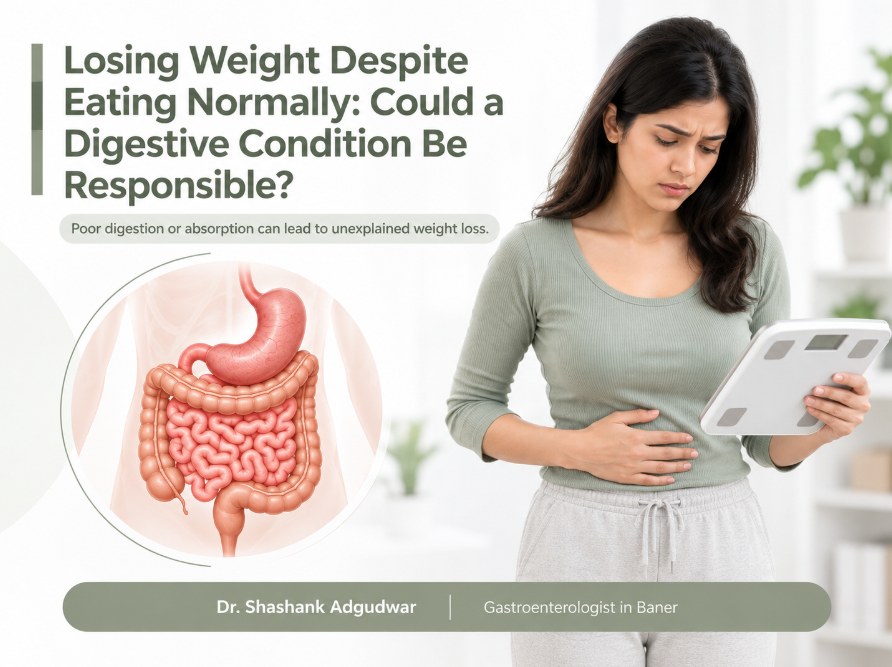
Unexplained Weight Loss and When to Consult a Gastroenterologist
Losing weight is usually expected when you intentionally reduce calories, exercise more or make major lifestyle changes. But what if your diet has not changed, your appetite seems normal, and the number on the weighing scale keeps dropping?
Unintentional weight loss should not automatically be ignored, particularly when it continues or occurs with digestive symptoms such as diarrhea, abdominal pain, bloating, oily stools, vomiting or difficulty swallowing.
Digestive diseases can sometimes affect how food is digested, how nutrients are absorbed or how much energy the body receives from what you eat. Conditions involving the intestine, pancreas and other parts of the digestive system may therefore cause weight loss even when someone feels they are eating reasonably well.
A Gastroenterologist in Baner can help determine whether the weight change is connected to digestion or whether another medical cause needs consideration.
Why Can You Lose Weight Even If You Are Eating Normally?
Body weight depends on more than how much food reaches your plate.
Food first needs to be broken down into nutrients and then absorbed through the intestine. The body also requires digestive enzymes and bile to process certain nutrients effectively.
If digestion or absorption becomes impaired, you may consume a normal amount of food while absorbing fewer calories and nutrients than expected.
Some digestive conditions can also increase inflammation, change bowel habits or cause subtle reductions in food intake that are not immediately obvious.
Unintentional weight loss has many possible causes outside the digestive system too, so it is important not to self-diagnose based on weight loss alone.
Could Malabsorption Be Responsible?
Malabsorption means the intestine is not absorbing nutrients properly.
Depending on the underlying condition, someone may have difficulty absorbing fat, carbohydrates, vitamins, minerals or several nutrients.
Clues suggesting malabsorption can include:
- Persistent loose or greasy stools
- Bloating and excessive gas
- Oily or difficult-to-flush stools
- Unexplained weight loss
- Nutritional deficiencies or anemia
- Persistent tiredness
These symptoms do not identify one specific disease. They simply suggest that further digestive evaluation may be worthwhile.
Could Celiac Disease Cause Weight Loss?
Yes.
Celiac disease is an immune-mediated condition in which consuming gluten causes damage to the small intestine in genetically susceptible individuals.
Because the small intestine plays a major role in nutrient absorption, untreated celiac disease can sometimes cause diarrhea, abdominal symptoms, nutrient deficiencies and weight loss. However, symptoms vary considerably, and some people do not have classic diarrhea.
The National Institute of Diabetes and Digestive and Kidney Diseases (NIDDK) includes celiac disease among important digestive disorders affecting the small intestine and nutrient absorption.
Diagnosis should be properly established rather than starting a strict gluten-free diet based only on symptoms because changing your diet before testing may affect diagnostic results.
Can Pancreatic Problems Cause Weight Loss?
The pancreas produces enzymes that help digest fats, proteins and carbohydrates.
When the pancreas does not produce enough digestive enzymes, a condition called exocrine pancreatic insufficiency, or EPI, can develop.
NIDDK notes that EPI may cause diarrhea, bloating, abdominal discomfort, loose greasy foul-smelling stools and weight loss. It can occur in association with conditions such as chronic pancreatitis and after certain pancreatic or upper gastrointestinal surgeries.
In this situation, someone may continue eating normally but fail to digest and absorb enough nutrients effectively.
Persistent oily stools combined with weight loss are therefore worth discussing with a gastroenterologist.
What About Inflammatory Bowel Disease?
Inflammatory bowel diseases such as Crohn’s disease and ulcerative colitis involve chronic inflammation within the digestive tract.
Symptoms depend on the type and location of disease but may include persistent diarrhea, abdominal pain, blood in the stool, reduced appetite and weight loss.
NIDDK notes that ulcerative colitis can affect appetite and nutritional intake, while inflammatory digestive diseases can interfere with normal nutrition in different ways.
Weight loss associated with persistent diarrhea or blood in the stool should not simply be blamed on stress or a fast metabolism.
Could Chronic Diarrhea Cause Weight Loss?
Yes.
Frequent diarrhea can result in loss of fluid and may be associated with conditions that interfere with nutrient absorption.
For example, microscopic colitis can cause chronic watery diarrhea, urgency, fatigue and weight loss. NIDDK also notes that diarrhea can occur at night in this condition.
The cause of chronic diarrhea cannot be determined by stool frequency alone. A detailed history and appropriate testing may be needed.
What If You Are Eating Normally but Getting Full Quickly?
Some people believe they are eating the same amount but gradually start leaving part of each meal unfinished because they feel full unusually quickly.
This is called early satiety.
Conditions affecting the stomach, including delayed gastric emptying and several other upper gastrointestinal disorders, can produce early fullness, nausea or discomfort after food.
Keeping a short food and symptom diary can help reveal whether your meal size has unintentionally changed.
How Much Weight Loss Should Concern You?
There is no single number that applies to everyone.
A small fluctuation in body weight over a few days can occur because of hydration, meal timing and other normal factors.
The situation deserves medical attention when weight loss is persistent, clearly unintentional or accompanied by other symptoms.
It is particularly important not to delay assessment if unexplained weight loss occurs with:
- Blood in the stool or black stools
- Persistent vomiting or difficulty swallowing
- Recurrent abdominal pain
- Chronic diarrhea
- Fever or night sweats
- Significant weakness or anemia
- Yellowing of the skin or eyes
These symptoms do not necessarily indicate a serious disease, but they warrant appropriate investigation.
How Does a Gastroenterologist Investigate Unexplained Weight Loss?
Evaluation starts with understanding the pattern.
Your doctor may ask how quickly you have lost weight, whether your appetite has changed and whether you have bowel symptoms, abdominal pain, reflux, swallowing problems or vomiting.
Blood tests may be recommended to look for anemia, inflammation, nutritional problems or other medical conditions.
Depending on symptoms, stool investigations, abdominal imaging, endoscopy or colonoscopy may be considered.
Testing is selected according to the clinical picture rather than ordering every investigation for every patient.
Should You Just Eat More Calories?
Increasing food intake may seem like an obvious response, but it does not solve a condition that is preventing adequate digestion or absorption.
If pancreatic enzyme deficiency, intestinal inflammation or another digestive disorder is responsible, simply eating larger portions may not correct the underlying problem.
Likewise, taking protein powders or nutritional supplements without establishing the cause may delay diagnosis.
The priority should be understanding why the weight loss is happening.
Could Weight Loss Have a Non-Digestive Cause?
Absolutely.
Thyroid disorders, diabetes, chronic infections, medications, mental health conditions and several other medical problems can cause unintentional weight loss.
This is why a gastroenterologist does not assume every weight change is gastrointestinal.
Your digestive symptoms, physical examination and initial investigations help determine whether further gastrointestinal evaluation is appropriate or whether another specialist should be involved.
Do Not Ignore a Pattern Simply Because Your Appetite Is Normal
A normal appetite can be reassuring, but it does not completely rule out a digestive problem.
Persistent weight loss tells you that something has changed in the balance between what your body receives and what it uses or absorbs.
Early assessment can help distinguish a temporary weight fluctuation from a condition that needs treatment.
Consult Dr. Shashank Adgudwar, Gastroenterologist in Baner
If you are losing weight without deliberately changing your diet or exercise routine, especially when weight loss occurs with diarrhea, abdominal discomfort, oily stools or other digestive symptoms, consider getting evaluated.
At Surgery 101 Clinic, Dr. Shashank Adgudwar, a gastroenterologist in Baner, provides assessment for unexplained digestive symptoms and persistent changes in weight or bowel habits.
A structured evaluation can help determine whether a gastrointestinal condition is affecting digestion or nutrient absorption and guide appropriate treatment.
Frequently Asked Questions
1. Can digestive problems cause weight loss even if I eat normally?
Yes. Conditions that interfere with digestion or nutrient absorption can cause unintentional weight loss despite apparently normal food intake. Pancreatic enzyme insufficiency, for example, can cause greasy stools, diarrhea and weight loss.
2. Are weight loss and loose stools a concerning combination?
Persistent unexplained weight loss combined with chronic diarrhea deserves medical evaluation because several intestinal and pancreatic conditions can cause both symptoms.
3. Which digestive problems can cause unexplained weight loss?
Possible causes include malabsorption disorders, celiac disease, inflammatory bowel disease, pancreatic enzyme insufficiency and some chronic diarrheal disorders. The correct diagnosis depends on the associated symptoms and appropriate investigations.
#gastroenterologistinbaner #unexplainedweightloss #digestivehealth #malabsorption #guthealth #weightloss #pancreashealth #bowelhealth #surgery101clinic