
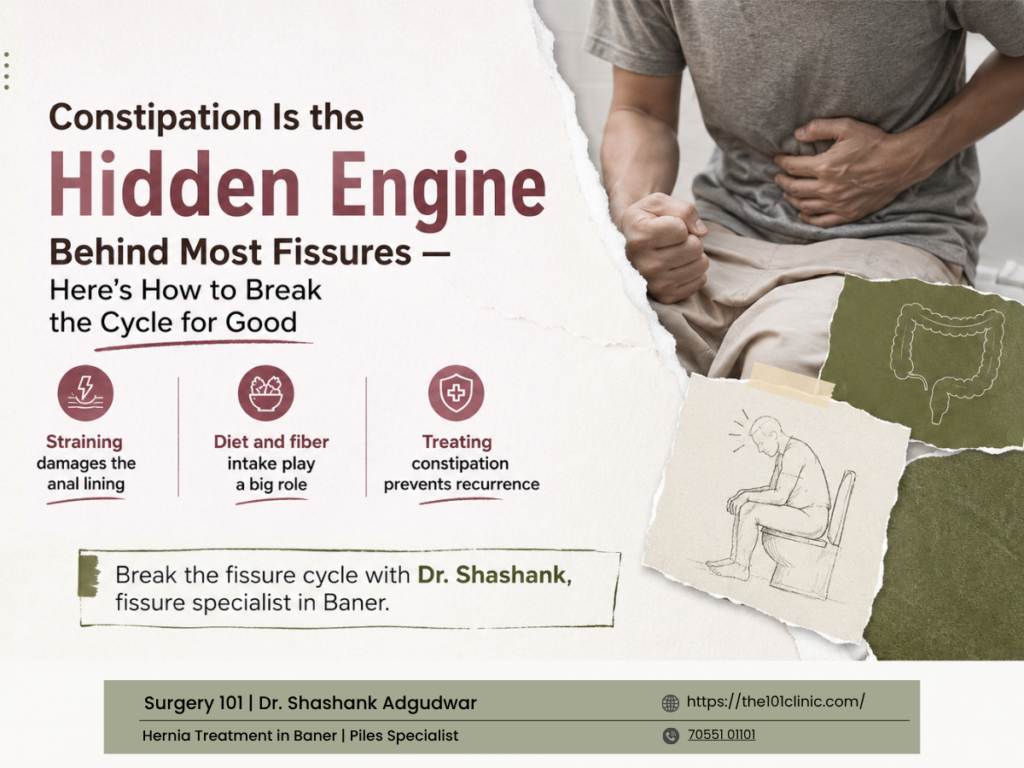
If you have ever dealt with an anal fissure, you already know the story. A hard, painful bowel movement causes a small tear, the area becomes sore, and then the fear of the next bowel movement makes you tense up and hold back, which only makes the next stool harder and more painful to pass. Most people treat the fissure as the problem. In reality, the fissure is usually just the symptom. The real engine driving it, in the majority of cases, is chronic constipation.
As a practicing surgeon, one of the first things I check in any patient with a fissure is their bowel habit, not just the wound itself. Treating the tear without fixing the constipation behind it is why so many fissures keep coming back even after creams and ointments seem to help for a while. Real fissure treatment has to address both the injury and the reason it happened in the first place.
The Link Between Constipation and Fissures
Anal fissures are small tears in the lining of the anal canal, and they are far more common than most people realize. According to a review published on NCBI’s StatPearls, anal fissures are frequently encountered across primary care, urgent care, and emergency settings, and are considered a highly prevalent condition despite being generally benign. A separate clinical study focused on anorectal complaints found that fissure-in-ano ranks third in prevalence among anorectal disorders, right after chronic constipation and haemorrhoids.
The connection between the two is not coincidental. A large population-based cohort study published in BMC Gastroenterology found that chronic constipation was present in 14.2 percent of anal fissure patients compared to just 3.6 percent in matched controls, a statistically significant difference. The same study also linked obesity and hypothyroidism to higher fissure rates, but constipation stood out as one of the strongest associated factors.
Here is the mechanism behind it:
- Hard stools stretch and tear the anal lining, especially when there is straining involved during a bowel movement.
- The internal anal sphincter goes into spasm after the tear occurs, which reduces blood flow to the area and slows down healing, a detail confirmed in fissure research published on NCBI.
- Reduced blood flow keeps the wound open longer, so even a minor tear can turn into a chronic, recurring fissure if the underlying constipation is not corrected.
- Fear of pain leads to stool withholding, which allows more water to be reabsorbed in the colon, making the next stool even harder, and the cycle repeats.
Breaking the Constipation-Fissure Cycle
Since constipation is often the root cause, effective fissure treatment usually starts with fixing bowel habits rather than jumping straight to procedures. Current clinical guidance, including recommendations noted in the StatPearls review, supports managing most acute fissures in primary care through dietary changes, lifestyle adjustments, and laxatives before considering surgery.
A few practical steps make a real difference here:
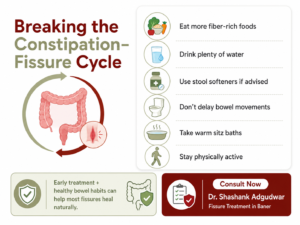
- Increase fiber gradually. Whole grains, fruits, vegetables, and legumes help bulk up stool and make it easier to pass without straining.
- Stay genuinely hydrated. Fiber without enough water can worsen constipation, so both need to increase together.
- Use stool softeners when needed. Sources including the Mayo Clinic list stool softeners and proper hygiene as standard first-line measures for anal fissures.
- Avoid delaying the urge to go. Holding back bowel movements out of fear of pain only feeds the constipation and re-injury cycle.
- Warm sitz baths. Soaking the area in warm water for ten to fifteen minutes a few times a day helps relax the sphincter spasm and supports healing.
- Stay physically active. Regular movement supports healthy bowel motility, which lowers the chances of the hard stools that start this whole cycle.
Most acute fissures, when caught early and paired with these changes, heal within a few weeks. The challenge is chronic fissures, generally defined as those lasting more than six weeks, which often need a more structured medical approach.
When Fissures Need More Than Home Care
Not every fissure resolves with diet and lifestyle changes alone, especially if constipation has been an ongoing issue for months or years. In these cases, a proper clinical evaluation becomes important, because chronic fissures are frequently tied to persistent sphincter spasm that home remedies alone cannot fully resolve.
Depending on severity, treatment options may include topical medications to relax the sphincter and improve blood flow, botulinum toxin injections, or in more resistant cases, a minor surgical procedure such as lateral internal sphincterotomy. Data from the BMC Gastroenterology cohort study noted that while topical prescriptions were the most common treatment prescribed, surgical intervention was needed in a smaller subset of patients whose fissures did not respond to conservative care.
This is exactly why self-diagnosing and self-treating a fissure for months on end is not the best strategy. A doctor can confirm whether constipation, an underlying condition like Crohn’s disease, or something else entirely is driving the problem, and build a fissure treatment plan around the actual cause rather than just the symptom.
Read More –
- Understanding Anal Fissure – Causes, Symptoms & Treatment
- How to Get Rid of Anal Fissure?
- Healthy Foods to Help Heal Fissures Naturally
How Surgery 101 Clinic Can Help
If you have been dealing with recurring anal fissures and have started to notice that the pain returns every time your bowel habits slip, that pattern is worth taking seriously rather than managing quietly on your own. At Surgery 101 Clinic, led by Dr. Shashank Adgudwar, every fissure case begins with understanding the underlying cause, whether that is chronic constipation, diet, or a lifestyle factor, before recommending any treatment.
Surgery 101 Clinic provides comprehensive fissure treatment in Baner, ranging from conservative management and medication-based healing to advanced, minimally invasive procedures for chronic or recurring fissures that have not responded to home care. Dr. Shashank Adgudwar focuses on identifying and correcting the root cause so that patients do not just heal once, but actually break the cycle for good. If constipation and painful bowel movements have become a recurring part of your life, it is worth getting a proper evaluation instead of waiting it out again.
Frequently Asked Questions
- Can constipation alone cause an anal fissure? Yes. Passing hard or large stools due to constipation is one of the most common causes of anal fissures, since straining stretches and tears the delicate lining of the anal canal. Research shows chronic constipation is significantly more common in fissure patients than in the general population, which is why addressing constipation is a core part of effective fissure treatment.
- How long does it take for a fissure to heal with constipation management? Acute fissures often heal within a few weeks once stool consistency improves through fiber, hydration, and stool softeners. If a fissure persists beyond six weeks despite these changes, it is considered chronic and usually needs additional medical or minor surgical treatment to heal fully.
- Do anal fissures come back after treatment? Fissures can recur if the underlying cause, most often constipation, is not properly managed. This is why long-term fissure treatment focuses as much on sustainable bowel habits and diet as it does on healing the initial tear, to prevent the same cycle from repeating.
#FissureTreatment #ConstipationRelief #DigestiveHealth #GutHealth #ColorectalHealth #AnalFissure #SurgeryClinic #BanerPune #Surgery101Clinic