
The skincare world has evolved massively in the last few years. With the rise of retinols, AHAs, BHAs, toners, peels, and strong actives, people are experimenting more than ever. But along with this excitement comes an unexpected downside — a damaged skin barrier. Redness, burning, dryness, flaking, acne flare-ups, and dullness are now extremely common. And that’s why skin-barrier repair has become the newest (and most essential) trend in skincare.
According to experts like Dr. Tanvi Komawar Adgudwar, a leading Dermatologist in Baner, skin health always starts with a strong, intact barrier. Before chasing glow, anti-aging, or pigmentation solutions, you must ensure your barrier is healthy. Let’s understand why it matters and how to fix it the right way.
What Exactly Is the Skin-Barrier Repair?
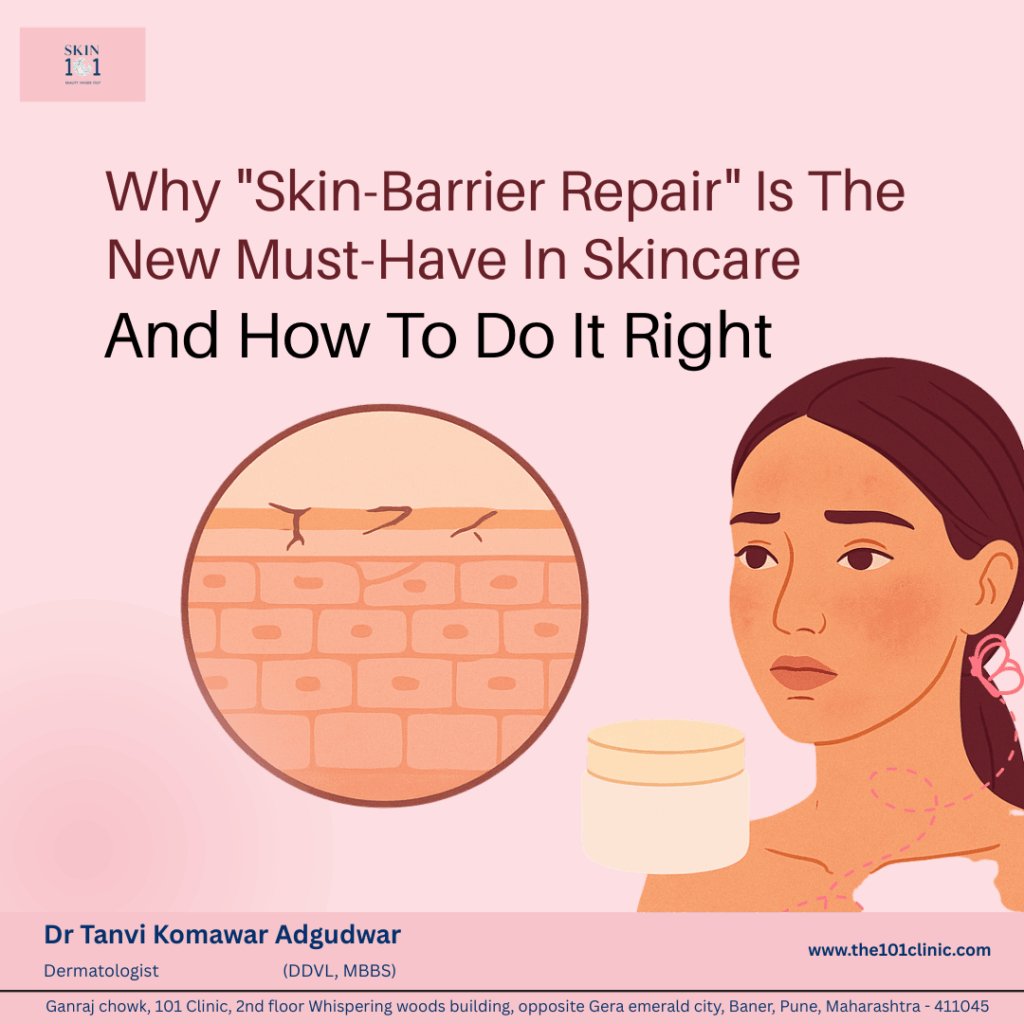
Your skin barrier is the outermost layer of your skin—also known as the stratum corneum. Imagine it like a wall:
- Skin cells = bricks
- Lipids (ceramides, cholesterol, fatty acids) = cement
This protective “wall” keeps good things inside (like moisture) and harmful things outside (like pollution, bacteria, irritants). When this wall is strong, your skin looks:
✔ Plump
✔ Smooth
✔ Hydrated
✔ Even-toned
✔ Naturally glowing
But when it’s damaged, the wall develops cracks — leading to sensitivity, dryness, redness, itching, and breakouts.
Signs Your Skin Barrier May Be Damaged
You might be dealing with barrier damage if you notice:
- Constant dryness or tightness
- Increased sensitivity to products
- Burning or stinging sensation
- Rough texture
- Sudden dullness
- More breakouts than usual
- Flaky or peeling skin
- Red patches
If these symptoms sound familiar, it’s time to focus on barrier repair instead of adding more actives to your routine. A quick consultation with a Skin specialist in Baner like Dr. Tanvi can help diagnose it accurately.
Common Mistakes That Damage the Skin Barrier
In today’s skincare culture, these mistakes happen more often than you think:
1. Over-Exfoliation
Using AHAs, BHAs, scrubs, or exfoliating toners too frequently strips away essential oils and weakens the protective layer.
2. Layering Too Many Actives
Retinol + Vitamin C + Acids + Peptides — all in one routine?
This cocktail overload often leads to irritation and inflammation.
3. Harsh Cleansers
Foaming or high-pH cleansers remove natural lipids, making your skin vulnerable.
4. Skipping Moisturiser
Even oily or acne-prone skin needs moisture. Without it, the barrier becomes dry and compromised.
5. Environmental Stress
Pollution, sun exposure, cold weather, and AC all damage your natural skin defenses.
6. Using Wrong Products for Your Skin Type
Self-prescribing strong products without expert guidance is one of the biggest culprits.
How to Repair Your Skin Barrier (The Right Way)
Barrier repair is not complicated — it simply requires consistency and gentle, nourishing ingredients. Here’s how to start:
1. Go Back to Basics
Cut down your routine to 3–4 essential steps:
- Gentle cleanser
- Hydrating serum
- Barrier-strengthening moisturiser
- Sunscreen (AM)
This “skin diet” allows your skin to reset.
2. Choose Barrier-Supporting Ingredients
Look for products containing:
- Ceramides – replenish lost lipids
- Niacinamide – calms redness and improves resilience
- Hyaluronic Acid – boosts hydration
- Centella Asiatica (Cica) – soothes irritation
- Squalane – mimics natural skin oils
- Colloidal Oatmeal – great for sensitive skin
These ingredients strengthen the skin wall and restore balance.
3. Moisturize More Often
A rich, non-fragrant moisturizer is the core of barrier repair. If your skin feels tight midday, reapply.
4. Reduce Actives Temporarily
Pause acids and retinol for 2–3 weeks until your barrier stabilizes. Reintroduce them slowly afterward.
5. Protect Your Skin From the Sun
UV damage weakens the barrier more than any product.
Use a broad-spectrum sunscreen daily — even indoors.
6. Avoid Hot Water on the Face
Hot water strips the barrier. Use only lukewarm water while cleansing.
7. Stay Consistent
Barrier healing takes 2–6 weeks. Be patient — your skin will thank you.
When to See a Dermatologist?
If irritation, redness, or breakouts continue even after simplifying your routine, consult a professional. A Dermatologist in Baner, like Dr. Tanvi Komawar Adgudwar, can customize treatments such as:
- Barrier-repairing prescription creams
- Hydrating dermatologist-approved facials
- Anti-inflammatory treatments
- Customized skincare routines
Professional guidance ensures you avoid further barrier damage and achieve long-term healthy skin.
Final Thoughts
Skin-barrier repair isn’t just a skincare trend — it’s the foundation of beautiful, healthy skin. With the rise of over-exfoliation and strong actives, taking a gentle, barrier-first approach has never been more important. By choosing soothing ingredients, simplifying your routine, and avoiding harsh habits, you can rebuild your skin’s strength and achieve a natural, healthy glow.
At Skin 101 Clinic, Dr. Tanvi Komawar Adgudwarprovides personalized advice and safe treatments that can make a world of difference.