
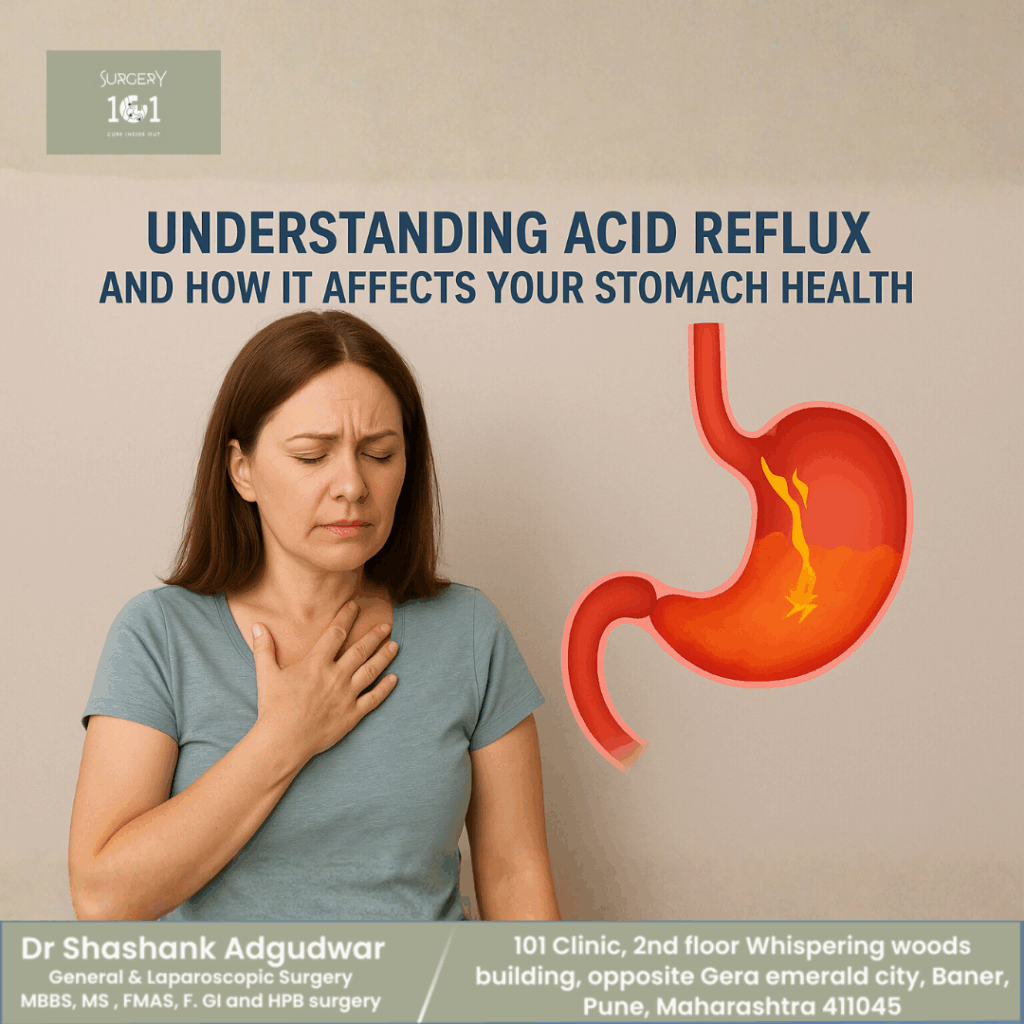
If you’ve ever experienced a burning sensation in your chest after eating or a sour taste in your mouth, you’ve likely encountered acid reflux. While it may seem like a minor digestive issue, frequent acid reflux can signal a more serious condition known as Gastroesophageal Reflux Disease (GERD). Understanding how acid reflux affects your stomach health is crucial to finding long-term relief and preventing complications.
As a leading Gastroenterologist in Baner, Dr. Shashank Adgudwar emphasizes the importance of early diagnosis and proper management of acidity-related issues to protect your digestive system.
What Is Acid Reflux?
Acid reflux occurs when stomach acid flows back into the esophagus — the tube connecting your mouth and stomach. Normally, a muscular valve called the lower esophageal sphincter (LES) prevents this backward flow. However, when the LES weakens or relaxes abnormally, acid escapes, leading to symptoms like:
- Heartburn (burning in the chest or throat)
- Regurgitation of food or sour liquid
- Bloating and burping
- Difficulty swallowing
Occasional reflux is normal, but frequent episodes could mean GERD, which requires medical attention.
How Acid Reflux Affects Stomach Health
While reflux primarily impacts the esophagus, it can also harm your stomach health over time. Here’s how:
- Chronic Inflammation:
Persistent reflux causes inflammation in the stomach lining and esophagus, leading to discomfort, pain, and irritation. If untreated, this can result in gastritis or ulcers. - Impaired Digestion:
Acid reflux often disrupts normal digestion by altering acid production levels. Low stomach acid can delay food breakdown, causing gas, heaviness, and bloating. - Increased Sensitivity:
Repeated acid exposure can make your stomach more sensitive to certain foods — like spicy, oily, or acidic meals — worsening symptoms over time. - Complications if Ignored:
Chronic GERD can cause esophagitis, Barrett’s esophagus, and in rare cases, even increase the risk of esophageal cancer. That’s why timely Acidity Treatment in Baner is essential to avoid severe digestive issues.
Common Causes and Risk Factors
Several lifestyle and dietary habits can trigger acid reflux:
- Eating large meals or lying down immediately after eating
- High intake of spicy, fatty, or citrus foods
- Excessive caffeine, alcohol, or smoking
- Obesity or pregnancy (which increase abdominal pressure)
- Certain medications (like painkillers and blood pressure drugs)
Understanding your triggers and making small lifestyle changes can go a long way in managing reflux naturally.
When to See a Stomach Specialist
If you experience heartburn more than twice a week or notice symptoms like chest discomfort, bloating, or unexplained nausea, it’s time to consult a Stomach specialist in Baner. Ignoring these warning signs can lead to chronic inflammation or even complications like ulcers.
Dr. Shashank Adgudwar, an experienced Gastroenterologist in Baner, uses advanced diagnostic tools such as endoscopy and pH monitoring to accurately assess the severity of GERD and recommend personalized treatment options.
Effective Treatment Options for Acid Reflux
Treatment for acid reflux or GERD Treatment in Baner usually involves a combination of medication, dietary changes, and lifestyle modification.
- Lifestyle Adjustments:
- Eat smaller, frequent meals instead of heavy portions.
- Avoid lying down immediately after eating — wait at least 2-3 hours
- Elevate the head of your bed slightly while sleeping.
- Limit spicy, oily, and acidic foods.
- Maintain a healthy weight through exercise and balanced eating.
- Medications:
- Antacids to neutralize existing stomach acid.
- H2 blockers or proton pump inhibitors (PPIs) to reduce acid production.
- In severe cases, your gastroenterologist may suggest surgical procedures to strengthen the LES.
- Regular Monitoring:
Chronic GERD requires ongoing care and monitoring. Regular check-ups with your doctor help ensure your treatment remains effective and that no complications develop.
Preventing Acid Reflux Naturally
Simple daily habits can make a big difference in preventing acid reflux:
- Stay hydrated throughout the day.
- Avoid tight clothing that puts pressure on your abdomen.
- Manage stress through yoga, meditation, or breathing exercises.
- Get sufficient sleep and avoid eating right before bedtime.
By following these preventive steps, you can significantly reduce acidity episodes and protect your stomach health in the long run.
Conclusion
Acid reflux may start as a mild digestive issue, but without proper attention, it can affect your stomach and overall digestive health. Understanding its causes, symptoms, and prevention strategies can help you take control of your well-being.
If you’re struggling with frequent heartburn, indigestion, or acidity, don’t ignore the symptoms. Consult Dr. Shashank Adgudwar, an experienced Gastroenterologist in Baner, for expert Acidity Treatment in Baner. His comprehensive approach ensures long-term relief and a healthier digestive system.