
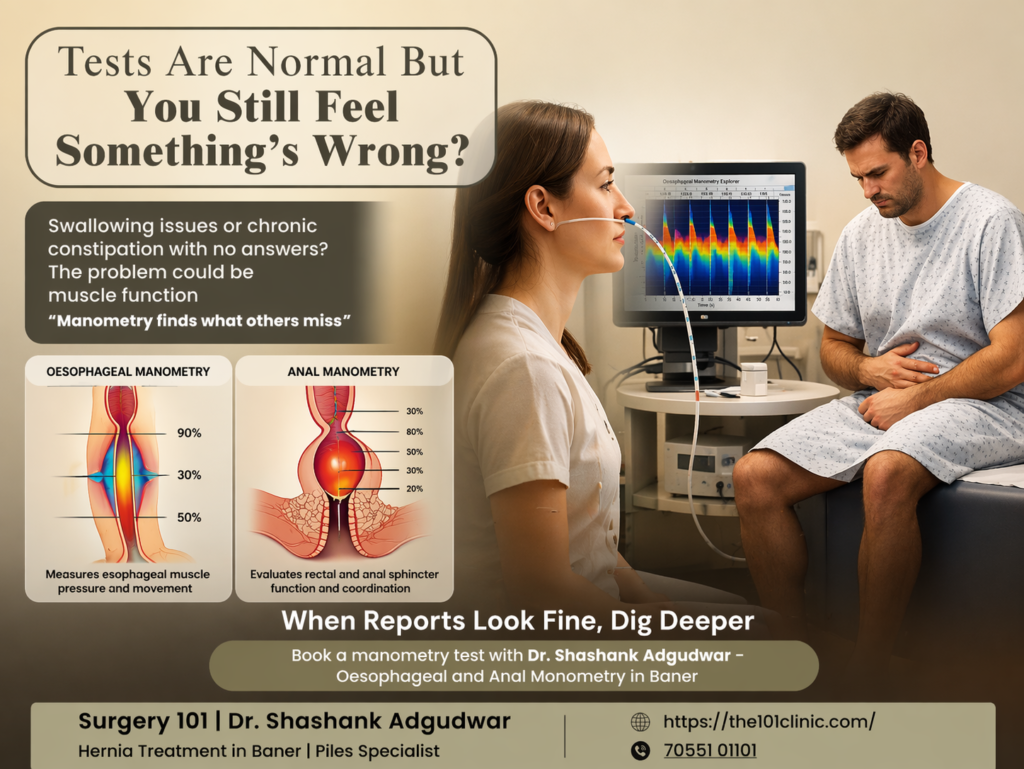
Many patients face a frustrating situation—medical tests come back normal, yet symptoms persist. Whether it’s difficulty in swallowing, chronic constipation, or unexplained digestive discomfort, the absence of clear answers can be distressing. In such cases, advanced diagnostic techniques like manometry can help uncover hidden issues that routine tests may miss.
At Surgery 101, Dr. Shashank Adgudwar specializes in Oesophageal and Anal Manometry in Baner, offering precise diagnosis for patients struggling with unexplained gastrointestinal problems.
Why Do Symptoms Persist Despite Normal Reports?
Standard tests such as endoscopy, ultrasound, or blood tests primarily evaluate structural abnormalities. However, many digestive issues are related to functional problems, particularly how muscles in the digestive tract work.
If the muscles of the esophagus or rectum are not functioning properly, symptoms can occur even when everything appears normal on conventional tests.
What Is Manometry?
Manometry is a specialized diagnostic test that measures the strength, coordination, and pressure of muscles in the digestive system.
There are two main types:
1. Oesophageal Manometry
This test evaluates how well the esophagus moves food from the mouth to the stomach. It is useful for diagnosing conditions like:
- Difficulty swallowing (dysphagia)
- Acid reflux not responding to treatment
- Esophageal motility disorders
2. Anal Manometry
This test assesses the function of the rectum and anal sphincter muscles. It helps identify causes of:
- Chronic constipation
- Difficulty passing stools
- Fecal incontinence
At Surgery 101, these advanced tests are conducted with precision and patient comfort in mind.
When Should You Consider Manometry?
You may benefit from Oesophageal and Anal Manometry in Baner if you experience:
- Persistent swallowing difficulties
- Chronic constipation with no clear cause
- Incomplete bowel movements
- Unexplained abdominal discomfort
- Ineffective results from standard treatments
If routine investigations fail to explain your symptoms, manometry can provide deeper insights into muscle function.
How Does the Procedure Work?
Manometry is a minimally invasive procedure. A thin, flexible tube is gently inserted into the esophagus or rectum to measure pressure and muscle activity.
- The procedure is quick and usually completed within 30–45 minutes
- It provides real-time data on muscle coordination
- Patients can typically resume normal activities soon after
This test is safe, accurate, and highly effective in diagnosing functional disorders.
Benefits of Manometry

- Identifies problems missed by standard tests
- Helps in accurate diagnosis of motility disorders
- Guides targeted treatment plans
- Improves patient outcomes and quality of life
With the right diagnosis, treatment becomes more effective and personalized.
Why Choose Surgery 101?
At Surgery 101, Dr. Shashank Adgudwar provides expert care backed by advanced diagnostic technology.
- Specialized expertise in gastrointestinal disorders
- Advanced facilities for Oesophageal and Anal Manometry in Baner
- Patient-focused approach with detailed evaluation
- Accurate diagnosis leading to effective treatment
Patients receive comprehensive care aimed at identifying the root cause—not just managing symptoms.
Final Thoughts
If you’re experiencing ongoing digestive issues despite normal test results, it’s important not to ignore your symptoms. Functional disorders can significantly impact your quality of life but often require specialized tests for diagnosis.
Manometry offers a deeper understanding of how your digestive system functions and can uncover issues that other tests cannot detect.
For those seeking reliable diagnosis and expert care, Oesophageal and Anal Manometry in Baner at Surgery 101 with Dr. Shashank Adgudwar can provide the answers you’ve been looking for.