
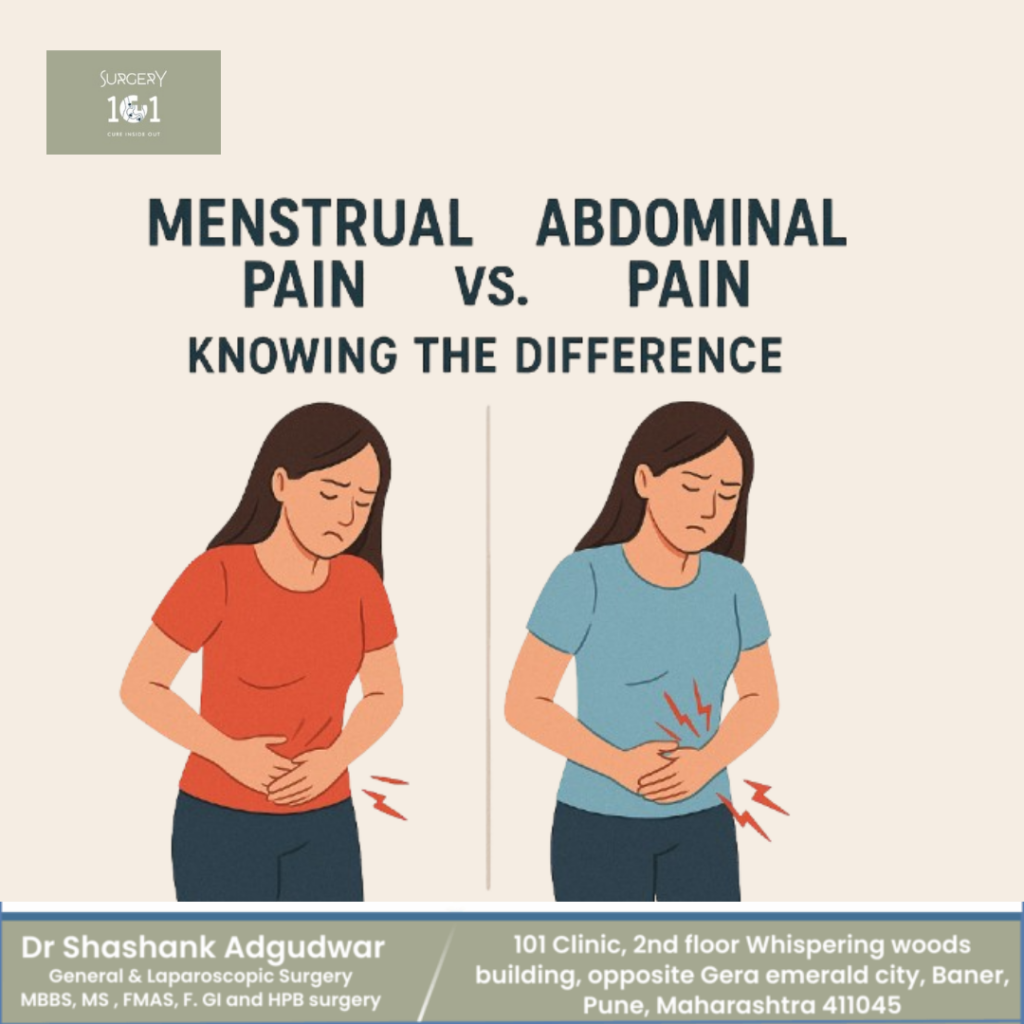
Experiencing pain in the lower abdomen can be uncomfortable and worrying, especially when it’s difficult to tell whether it’s menstrual pain or something more serious. Understanding the difference between Menstrual Pain vs. Abdominal Pain is essential to manage symptoms effectively and seek timely medical help when needed. Dr. Shashank Adgudwar, a leading stomach specialist in Baner, shares insights on how to differentiate between these types of pain and when to consult a doctor.
Understanding Menstrual Pain
Menstrual pain, also known as dysmenorrhea, is a common symptom experienced by women before or during their periods. It is typically caused by the contraction of the uterus as it sheds its lining. Hormones called prostaglandins trigger these contractions, which can result in cramping and discomfort in the lower abdomen.
Key characteristics of menstrual pain include:
- Cramping sensation in the lower abdomen or pelvic region
- Pain that starts a day or two before menstruation and lasts 2–3 days
- Discomfort that may radiate to the lower back or thighs
- Possible accompanying symptoms like bloating, fatigue, mood swings, and headaches
Menstrual pain is usually cyclical, predictable, and occurs around the same time each month. Mild pain can often be managed with over-the-counter painkillers, heat therapy, or lifestyle adjustments.
Understanding Abdominal Pain
Abdominal pain, on the other hand, can stem from a variety of causes unrelated to menstruation. The abdomen houses multiple organs, including the stomach, intestines, liver, kidneys, and appendix, so pain in this region may indicate an issue with any of these organs.
Common causes of abdominal pain include:
- Gastrointestinal issues: Gastritis, indigestion, constipation, or irritable bowel syndrome (IBS)
- Infections: Urinary tract infections or stomach infections
- Organ-related issues: Gallstones, kidney stones, appendicitis, or liver problems
- Other causes: Hernias, inflammation, or chronic conditions like Crohn’s disease
Unlike menstrual pain, abdominal pain may not follow a predictable pattern and can vary in intensity, duration, and location. It may also be accompanied by symptoms such as nausea, vomiting, fever, diarrhea, or changes in bowel habits.
How to Tell the Difference
Distinguishing between menstrual pain and other abdominal pain requires careful observation of symptoms:
- Timing: Menstrual pain usually occurs in sync with the menstrual cycle. Abdominal pain can happen at any time, unrelated to periods.
- Location: Menstrual pain is often centralized in the lower abdomen and may radiate to the lower back or thighs. Abdominal pain may appear anywhere in the abdomen, including the upper abdomen or sides.
- Duration and pattern: Menstrual cramps tend to last a few days and resolve with the end of menstruation. Persistent or worsening abdominal pain may indicate an underlying medical condition.
- Associated symptoms: Menstrual pain may come with bloating, mood swings, or mild nausea. Severe pain with fever, vomiting, or blood in stool/urine needs immediate medical attention.
When to Consult a Stomach Specialist
While mild menstrual cramps are normal, certain warning signs suggest it’s time to consult a Stomach specialist in Baner like Dr. Shashank Adgudwar:
- Pain that is sudden, severe, or persistent
- Pain accompanied by fever, vomiting, or unusual bleeding
- Pain that interferes with daily activities
- Changes in bowel habits or unexplained weight loss
- History of digestive disorders or abdominal surgeries
A stomach specialist can perform a thorough evaluation, including physical examination, imaging, and laboratory tests, to identify the underlying cause of abdominal pain and provide appropriate treatment. Early consultation can prevent complications and improve overall digestive and reproductive health.
Managing Menstrual Pain at Home
For mild menstrual cramps, lifestyle modifications can be highly effective:
- Heat therapy: Using a heating pad on the lower abdomen relaxes uterine muscles and reduces cramps.
- Exercise: Light physical activity like walking or yoga improves blood flow and decreases pain intensity.
- Hydration: Drinking water and herbal teas can help reduce bloating and discomfort.
- Diet: Incorporating anti-inflammatory foods such as fruits, vegetables, and omega-3 rich foods may alleviate symptoms.
However, these remedies are supportive and not a substitute for medical evaluation if the pain is severe or unusual.
Conclusion
Understanding the difference between menstrual pain and abdominal pain is crucial for effective self-care and timely medical intervention. While menstrual cramps are often harmless and manageable, abdominal pain can signal serious underlying conditions that require professional attention. If you are experiencing persistent, severe, or unusual abdominal pain, consult Dr. Shashank Adgudwar, a trusted stomach specialist in Baner, for expert guidance and personalized treatment.
Taking proactive steps to monitor your pain, recognizing warning signs, and maintaining a healthy lifestyle can go a long way in ensuring your digestive and reproductive health remain in check.