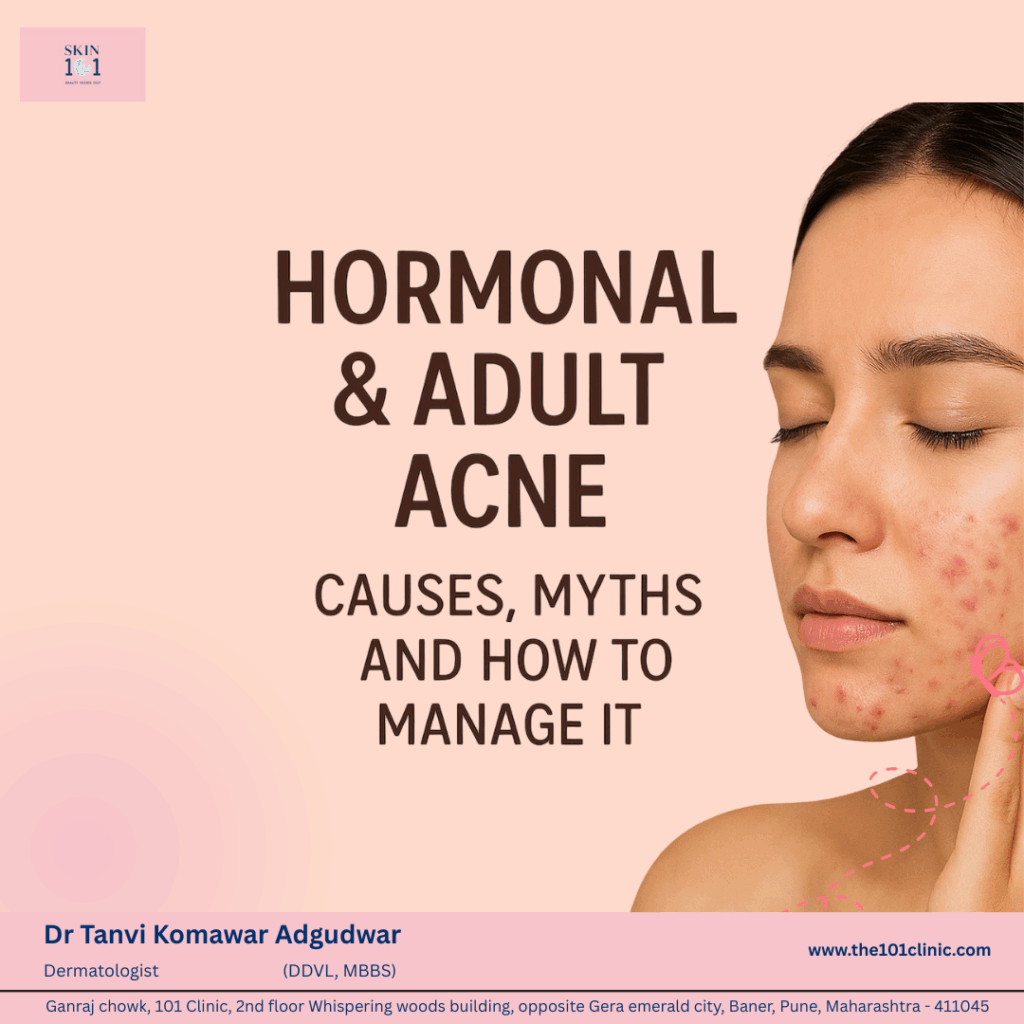
“Acne is not just for teens anymore.”
More adults—especially women in their late 20s, 30s, and even 40s—are experiencing persistent breakouts. According to experts at Rose + Honey Skincare, adult acne and hormonal breakouts are among the most trending skin concerns today. If you’ve been wondering why acne suddenly shows up even after your teenage years, you are definitely not alone.
As a trusted dermatologist in Baner, Dr. Tanvi Komawar Adgudwar regularly sees adults struggling with pimples, painful cysts, blackheads, and stubborn marks that refuse to fade. The key to managing adult acne is understanding the true causes, debunking myths, and choosing the right treatment approach. Let’s dive deeper.
What Causes Hormonal & Adult Acne?
1. Hormonal Fluctuations
Hormonal imbalance is one of the biggest drivers of adult acne. Changes in estrogen, progesterone, and androgens stimulate excess oil (sebum) production, leading to clogged pores and inflammation.
Common triggers:
- Menstrual cycle fluctuations
- PCOS
- Pregnancy and postpartum changes
- Starting or stopping birth control
- Perimenopause and menopause
Women often notice breakouts on the jawline, chin, and lower cheeks—classic signs of hormonal acne.
2. Stress
Stress doesn’t directly cause acne, but it significantly worsens it. When you’re stressed, your adrenal glands release cortisol, which increases oil production and inflammation. This is why many adults observe sudden flare-ups during busy work phases, emotional stress, or lack of sleep.
3. Diet & Gut Health
You are what you eat—and your skin reflects your dietary choices.
Foods that may trigger acne include:
- High-glycemic foods (white rice, sweets, junk food)
- Dairy products
- Excess whey protein
- Processed snacks
A diet rich in antioxidants, fruits, vegetables, lean proteins, and omega-3 fats supports healthier skin and reduces inflammation.
4. Lifestyle & Daily Habits
Certain daily habits unknowingly contribute to acne, such as:
- Sleeping with makeup on
- Not washing pillowcases regularly
- Using comedogenic skincare or hair products
- Touching the face frequently
- Excessive phone contact with the skin
Even workouts can cause breakouts if you sweat and do not cleanse your face immediately afterward.
5. Wrong Skincare Routine
Many adults use overly harsh cleansers or scrubs thinking they will “remove acne.” But this strips your skin barrier, leading to irritation and more breakouts. Consulting a skin specialist in Baner can help you create a personalised routine based on your skin type.
Common Myths About Adult Acne — Debunked
Myth 1: Acne Happens Only in Teenagers
Fact: Adult acne is increasingly common, especially among women aged 25–45.
Myth 2: Washing Your Face More Will Reduce Acne
Fact: Over-cleansing irritates the skin and triggers more oil production. Twice a day is enough.
Myth 3: Makeup Causes Acne
Fact: Not true—only comedogenic or expired makeup causes clogged pores. Using non-comedogenic, dermatologist-approved products is perfectly safe.
Myth 4: Popping Pimples Makes Them Heal Faster
Fact: This leads to scarring, pigmentation, and infection. Always avoid squeezing pimples.
Myth 5: Acne Will Go Away on Its Own
Fact: Adult acne often needs medical treatment, especially if it’s hormonal. Delaying treatment leads to deeper scars and marks.
How to Manage Adult & Hormonal Acne Effectively
1. Follow a Consistent Skincare Routine
A simple, dermatologist-recommended routine works best:
- Gentle cleanser twice a day
- Non-comedogenic moisturiser
- Sunscreen SPF 30+ every morning
- Night treatment such as retinoids, niacinamide, or salicylic acid as suggested by your dermatologist
Avoid over-exfoliation or using too many active ingredients at once.
2. Choose Your Diet Wisely
Healthy, acne-friendly food choices include:
- Leafy vegetables & fruits
- Nuts and seeds
- Whole grains
- Anti-inflammatory foods like turmeric, green tea, and berries
Hydration also plays a huge role—drink at least 2–3 liters of water daily.
3. Manage Stress
Stress management techniques can help reduce acne flare-ups:
- Meditation
- Yoga
- Deep-breathing exercises
- Maintaining a sleep routine
A calm mind leads to calmer skin.
4. Avoid Self-Medication
Using random creams without guidance can worsen acne. Steroid creams, especially, can cause severe flare-ups and side effects.
Always consult a qualified dermatologist in Baner before starting treatments.
5. Professional Dermatology Treatments
Dermatologists offer various advanced treatments for adult and hormonal acne, such as:
- Chemical peels to unclog pores and lighten marks
- Laser treatments for acne scars and pigmentation
- Oral medications for moderate to severe acne
- Hormonal therapy for PCOS or chronic hormonal imbalances
- Medical facials for deep cleansing and oil control
These treatments provide long-lasting results and prevent scarring.
6. Maintain Hygiene & Healthy Habits
- Clean your phone screen regularly
- Change pillowcases twice a week
- Remove makeup properly
- Avoid touching your face unnecessarily
Small changes can make a big difference.
When to See a Dermatologist?
If your acne is:
- persistent
- painful
- leaving dark marks
- affecting your confidence
…it’s time to consult a qualified skin specialist in Baner like Dr. Tanvi Komawar Adgudwar for a personalised, evidence-based treatment plan.
Final Thoughts
Hormonal and adult acne are entirely manageable with the right guidance. Understanding your triggers, following a healthy lifestyle, and using dermatologist-approved treatments can help you achieve clearer, healthier skin. With expert care from a trusted acne and scar treatment in baner, you can regain control over acne and feel confident again.