
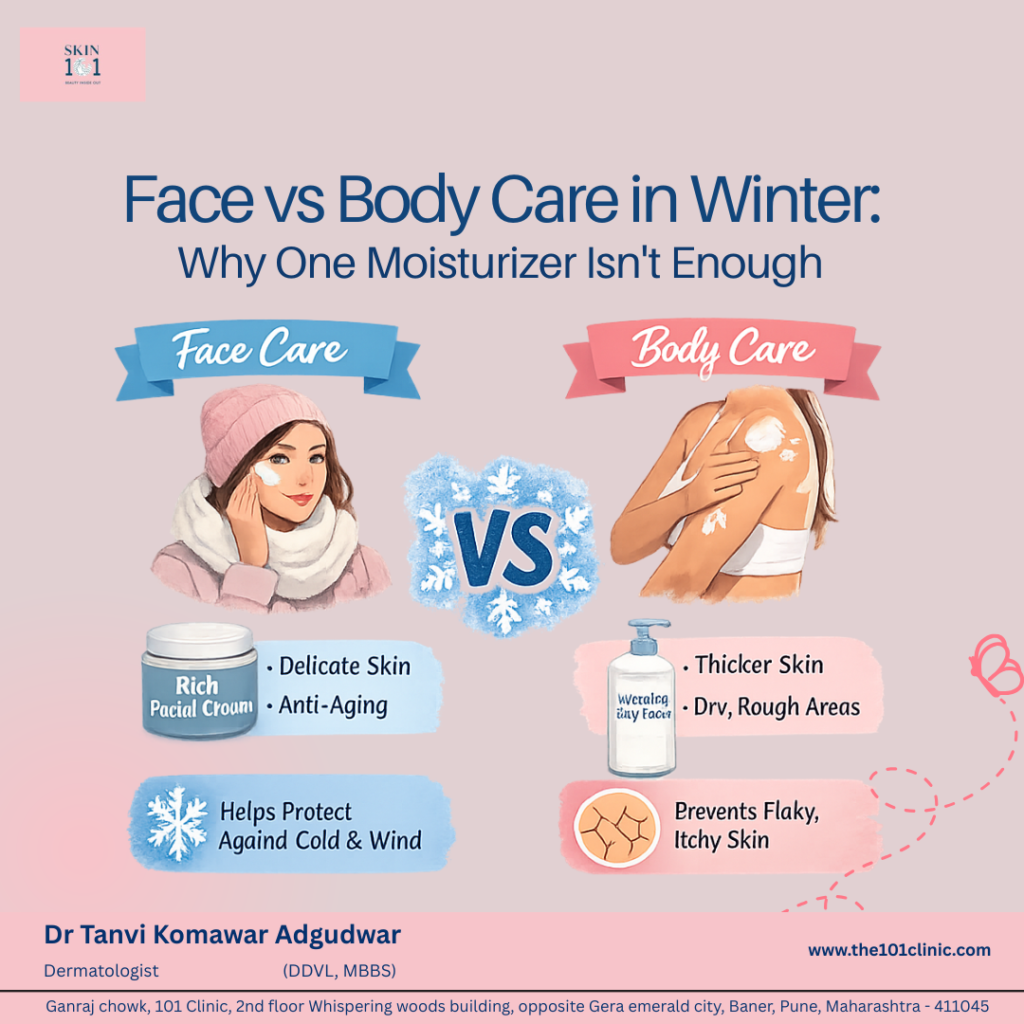
Winter brings cozy sweaters and pleasant weather, but it also introduces a common skincare dilemma — dryness. Many people assume that using a single moisturizer for both face and body is enough during colder months. However, Face vs Body Care in Winter needs are more complex than that. According to Dr Tanvi Komawar Adgudwar, understanding the difference between facial and body skin is key to maintaining healthy, glowing skin in winter.
Why Winter Affects Skin Differently
Cold air, low humidity, and indoor heating strip natural moisture from the skin. This leads to dehydration, flakiness, itching, and even sensitivity. While the entire body feels the effects of winter dryness, not all skin is created equal. The face and body have different textures, oil gland densities, and exposure levels — which means they need different types of care.
Facial Skin vs Body Skin: The Real Difference
Facial skin is thinner and more delicate than the skin on the rest of the body. It also contains more sebaceous (oil-producing) glands, making it prone to acne, sensitivity, and redness. On the other hand, body skin — especially areas like elbows, knees, and heels — is thicker and more prone to roughness and scaling.
Using the same moisturizer for both areas may not provide the targeted nourishment each part needs. A heavy body cream may clog pores on the face, while a lightweight facial moisturizer may not be rich enough for dry body areas.
Why One Moisturizer Isn’t Enough
- Different Hydration Needs
Facial skin needs lightweight, non-comedogenic hydration that won’t block pores. Body skin, however, benefits from thicker creams with ingredients like shea butter, cocoa butter, or ceramides. - Breakouts vs Dryness Balance
Applying body lotion on your face can lead to breakouts or dullness, especially if you already have oily or acne-prone skin. A Dermatologist in Baner often sees winter acne caused by using unsuitable moisturizers. - Exposure to Environmental Stress
The face is constantly exposed to cold winds and pollution, making it more vulnerable to damage. This requires protective ingredients like hyaluronic acid, niacinamide, and antioxidants. - Special Care Areas on the Body
Body parts like feet and hands lose moisture faster in winter. These areas require intensive moisturization, which facial creams cannot provide effectively.
Choosing the Right Moisturizer for Your Face
For winter facial care, opt for moisturizers that are:
- Lightweight but hydrating
- Non-greasy and non-comedogenic
- Rich in ceramides or hyaluronic acid
- Suitable for your skin type (oily, dry, combination)
If you notice increased sensitivity or winter breakouts, consulting a skin specialist in Baner can help you choose the right formulation.
Choosing the Right Moisturizer for Your Body
Body moisturizers should focus on deep nourishment and long-lasting hydration. Look for:
- Thick creams or body butters
- Ingredients like urea, glycerin, or shea butter
- Fragrance-free formulas for sensitive skin
- Repairing lotions for cracked skin
Applying body moisturizer immediately after a shower helps lock in moisture and prevents dryness throughout the day.
Winter Skincare Tips for Balanced Hydration
- Use lukewarm water instead of hot showers
- Apply moisturizer within 3 minutes after bathing
- Use a humidifier indoors if possible
- Avoid harsh soaps that strip natural oils
- Don’t skip sunscreen, even in winter
When to See a Dermatologist
Persistent dryness, redness, itching, or flaky patches may indicate conditions like eczema or dermatitis. If over-the-counter products aren’t helping, it’s best to consult an expert. Personalized skincare guidance from a qualified professional ensures your skin stays healthy all season long.
Final Thoughts
Winter skincare isn’t just about applying more moisturizer — it’s about using the right moisturizer in the right place. Your face and body have unique needs, and treating them differently can make a visible difference in your skin’s health and glow. By following expert advice and choosing tailored skincare solutions, you can enjoy soft, hydrated skin all winter long.
If you’re unsure about your winter skincare routine, consulting a trusted Dermatologist in Baner can help you build a regimen that works perfectly for your skin type and lifestyle.