
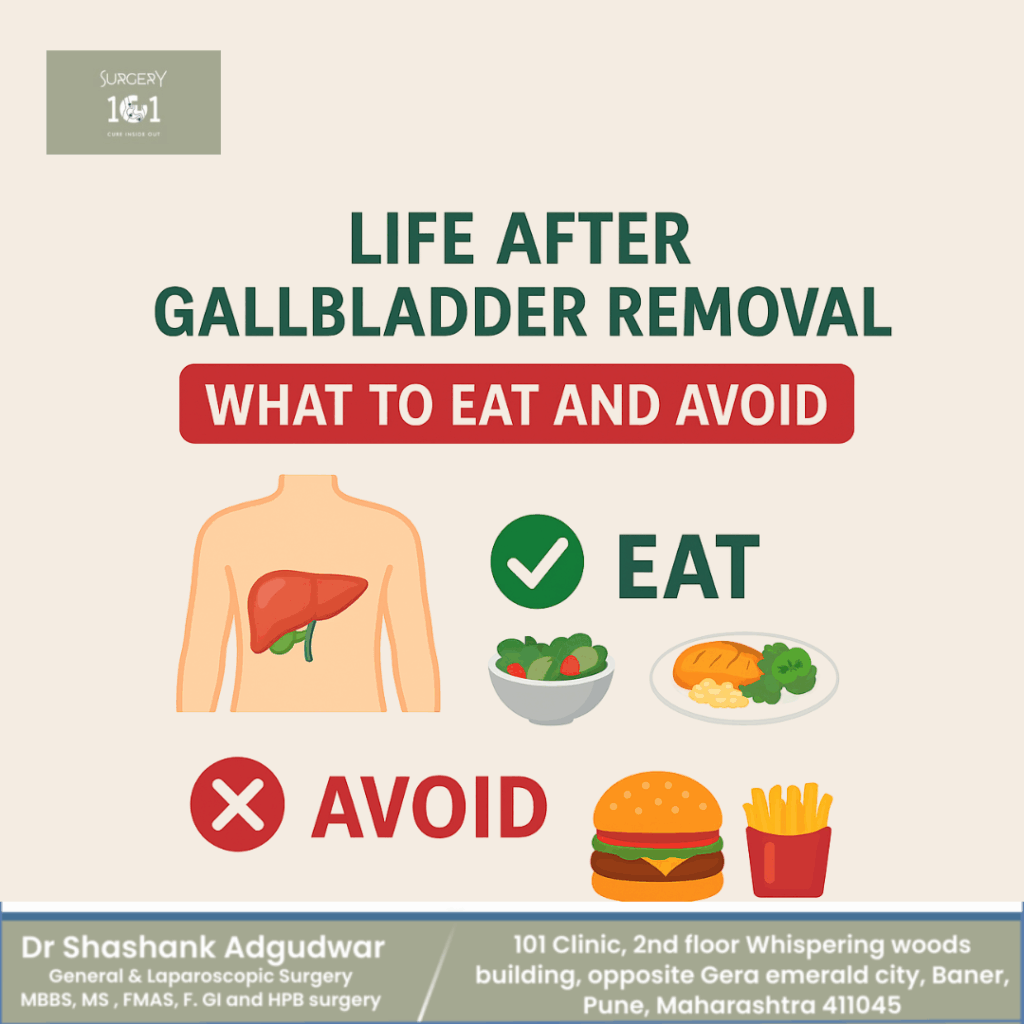
Gallbladder removal, also known as cholecystectomy, is a common and safe procedure performed when patients suffer from gallstones, inflammation, or repeated gallbladder infections. While most people recover well, the biggest concern after surgery is diet. Since the gallbladder is no longer storing bile, your digestive system needs time to adjust—especially when it comes to breaking down fats.
If you’ve recently undergone Gallbladder treatment in Baner, understanding what to eat (and what to avoid) can help you heal faster, prevent discomfort, and return to your normal lifestyle smoothly. Here’s a detailed guide to help you navigate life after gallbladder removal.
Why Diet Matters After Gallbladder Removal
The gallbladder’s main role is to store bile and release it when you eat fatty foods. After its removal:
- Bile drips continuously into the intestine
- Fat digestion becomes slower
- Some people may experience loose stools, bloating, indigestion, or mild abdominal discomfort
A proper diet helps reduce these symptoms and supports better digestion as your body adapts to the new bile flow.
Foods You Should Eat After Gallbladder Removal
1. Low-Fat Foods
Your body takes time to adjust to digesting fats without the gallbladder’s bile storage. Start with low-fat meals to avoid discomfort.
Best options:
- Steamed vegetables
- Low-fat dairy
- Skinless chicken or fish
- Soups and khichdi
- Poha, idli, upma
These foods keep digestion smooth and avoid overwhelming your digestive system.
2. High-Fiber Foods (Introduce Gradually)
Fiber helps regulate bowel movements, especially if you experience loose stools post-surgery. However, add fiber slowly to avoid bloating.
Good choices:
- Oats
- Whole grains
- Fruits like bananas, apples, papaya
- Vegetables like carrots, beans, spinach
Gradual increase in fiber ensures comfort and avoids gas formation.
3. Lean Proteins for Recovery
Protein helps your tissues heal faster after surgery. Stick to low-fat protein sources.
Include:
- Lean chicken
- Egg whites
- Fish
- Lentils, dal
- Tofu/Paneer (low-fat)
These foods help rebuild strength without irritating your stomach.
4. Hydrating Foods & Plenty of Fluids
Hydration is essential as some people may experience mild diarrhea after gallbladder removal.
Drink/Include:
- Water
- Coconut water
- Lemon water
- Herbal teas
- Clear soups
Avoid sugary drinks as they may worsen bloating and acidity.
Foods to Avoid After Gallbladder Removal
1. High-Fat & Fried Foods
Fatty foods are the biggest trigger for digestive issues like indigestion, cramping, and loose stools.
Avoid:
- Fried items (pakoras, chips, samosas)
- Butter-heavy dishes
- Cheese-loaded meals
- Creamy gravies
These foods need more bile for digestion, making them hard to tolerate.
2. Spicy Foods
Chillies and heavy spices can irritate the gut and slow recovery.
Avoid overly spicy curries, pickles, chutneys, Chinese food with sauces, etc.
3. Caffeine, Alcohol & Carbonated Drinks
These beverages stimulate the digestive tract and may increase gas or diarrhea.
Limit:
- Coffee
- Cola
- Energy drinks
- Alcohol
You can slowly reintroduce caffeine in moderation after your doctor’s approval.
4. Gas-Producing Foods
Certain foods may cause bloating or discomfort soon after surgery.
Avoid or reduce:
- Beans
- Cabbage
- Cauliflower
- Broccoli
- Excess dairy
You can slowly reintroduce them once your digestion stabilizes.
Tips to Make Recovery Easier
- Eat small, frequent meals instead of large portions.
- Avoid lying down immediately after eating.
- Keep a food diary to track what triggers discomfort.
- Maintain a balanced diet with the right mix of protein, fiber, and carbohydrates.
- Gradually return to normal eating habits after 4–6 weeks.
If you experience persistent pain, diarrhea, or severe bloating, consult your doctor immediately.
When to See a Specialist
Life after gallbladder removal becomes easier with the right guidance. If you continue to experience digestive issues or discomfort, consult a Stomach Specialist in Baner for a proper evaluation. Dr. Shashank Adgudwar offers advanced and patient-friendly Gallbladder treatment in Baner, ensuring a smooth recovery and long-term digestive wellness.