
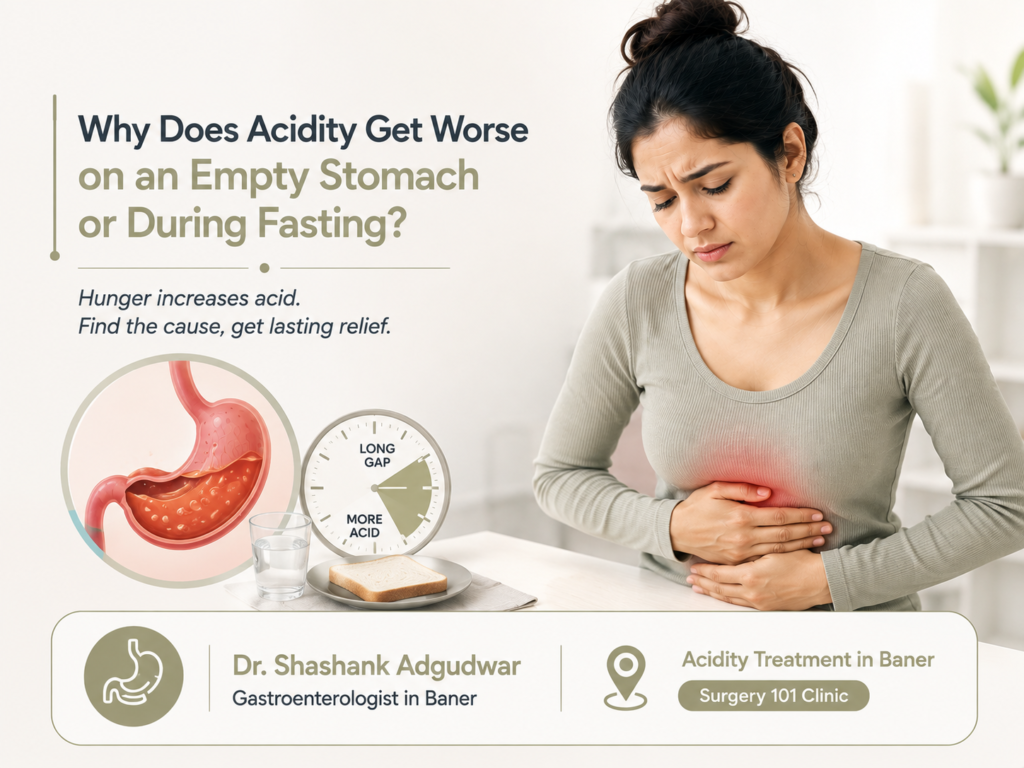
Empty Stomach Burning and When to Seek Acidity Treatment in Baner
You skip breakfast or go several hours without eating and begin feeling burning, nausea or discomfort in the upper abdomen. Eating something seems to calm it temporarily.
Many people describe this as “acidity because my stomach was empty.”
Although acid is involved in digestion, symptoms that develop during fasting are not always simply ordinary acid reflux. Peptic ulcer disease, gastritis-like symptoms, functional dyspepsia and other upper digestive problems can produce similar discomfort.
NIDDK notes that peptic ulcer pain can be dull or burning and that, in some people, it occurs when the stomach is empty or at night and temporarily improves after eating.
If this pattern happens repeatedly, proper acidity treatment in Baner should focus on identifying the cause rather than simply eating every time discomfort starts.
Does Your Stomach Produce Acid When You Have Not Eaten?
Yes.
The stomach does not completely stop producing digestive secretions just because you are fasting.
Normally, the stomach lining is protected from these secretions by several defense mechanisms. Symptoms may become more noticeable when the upper digestive tract is irritated or when a condition such as an ulcer is present.
However, feeling burning while fasting does not prove that your stomach is producing “too much acid.”
The cause must be considered in context.
Is Empty-Stomach Acidity the Same as GERD?
Not necessarily.
GERD occurs when stomach contents repeatedly flow backward into the oesophagus and cause troublesome symptoms. Typical complaints include heartburn and regurgitation.
Pain centered in the upper abdomen that becomes noticeable when hungry may have another explanation.
This is why telling your gastroenterologist exactly where the burning occurs matters. Burning behind the breastbone and burning in the upper central abdomen are not always the same problem.
Could a Stomach or Duodenal Ulcer Cause Hunger Pain?
Yes.
Peptic ulcers develop in the lining of the stomach or duodenum.
NIDDK specifically notes that ulcer pain can sometimes occur when the stomach is empty or during the night and may temporarily improve after eating. For other people, eating can actually worsen the discomfort.
This variation means symptoms alone cannot reliably confirm an ulcer.
Persistent or recurrent pain may require appropriate medical assessment.
What Causes Peptic Ulcers?
Two important causes are Helicobacter pylori infection and regular use of certain non-steroidal anti-inflammatory medicines.
Ulcers should not automatically be blamed on spicy food, stress or fasting.
Lifestyle factors can influence symptoms, but identifying the actual cause is important because treatment for H. pylori-related disease differs from simply taking occasional antacids.
Can Long Fasting Periods Make Symptoms More Noticeable?
For someone with a sensitive upper gastrointestinal tract, going a long time without food may make underlying discomfort easier to notice.
Fasting can also change eating patterns. Some people eventually compensate by eating a very large meal, which may provoke reflux symptoms afterward.
The problem may therefore involve both the long gap between meals and what happens when the fast is broken.
A gastroenterologist can assess the entire pattern rather than focusing on one meal.
Why Can Tea or Coffee on an Empty Stomach Feel Worse?
Some people notice burning, nausea or bowel urgency after drinking coffee when they have not eaten.
Individual sensitivity varies, and not everyone needs to avoid tea or coffee.
If one drink consistently triggers symptoms, however, reducing the amount or avoiding it on an empty stomach can be reasonable while the underlying digestive problem is being assessed.
Unnecessary restriction of multiple foods or beverages is usually less useful than identifying reproducible triggers.
Is Fasting Dangerous if You Have Acidity?
Not automatically.
Many people can fast without significant gastrointestinal problems.
However, people with active ulcers, significant reflux, diabetes, pregnancy or other medical conditions may need individualized advice about fasting and medication timing.
If you take prescribed acid-suppressing treatment, do not randomly change its timing during fasting without discussing this with your doctor.
What About Acidity During Intermittent Fasting?
Intermittent fasting changes the timing of food intake but does not affect everyone in the same way.
Some people report fewer reflux symptoms when eating fewer late-night meals, while others experience more upper abdominal discomfort during long fasting periods or after eating a large meal when the fast ends.
Your symptom pattern matters more than assuming intermittent fasting is automatically good or bad for acidity.
Why Does Eating Sometimes Make the Burning Better?
Food can temporarily change the environment inside the stomach, which may reduce discomfort in some ulcer patterns.
However, temporary relief after eating does not mean repeatedly snacking is treating the underlying condition.
NIDDK’s description of peptic ulcer symptoms specifically notes that empty-stomach or night-time discomfort may improve briefly after eating in some people.
If the same pain returns every day, investigation may be more appropriate than managing it with food alone.
When Should You See a Gastroenterologist?
Persistent burning deserves medical assessment when it keeps recurring despite basic lifestyle adjustments or requires frequent over-the-counter medication.
Seek evaluation sooner if symptoms include difficulty swallowing, repeated vomiting, unexplained weight loss, persistent loss of appetite, black stool or vomiting blood.
These symptoms should not simply be labelled routine acidity.
How Is Persistent Acidity Investigated?
Your gastroenterologist may begin by asking about the location and timing of discomfort, relationship with food, medications and other symptoms.
Testing for H. pylori may be appropriate in selected patients.
Upper gastrointestinal endoscopy may be considered depending on age, symptoms, response to treatment and the presence of warning features.
The aim is to distinguish uncomplicated reflux or dyspepsia from ulcer disease and other causes of upper gastrointestinal symptoms.
Should You Keep Taking Antacids Whenever Your Stomach Burns?
Occasional antacid use may provide temporary symptom relief, but frequent self-treatment can mask a recurring problem.
Persistent symptoms deserve a diagnosis, particularly when you have been taking medication repeatedly without lasting improvement.
Treatment may involve acid-suppressing medicine, H. pylori treatment or another approach depending on the cause.
Simple Habits That May Help
If long gaps consistently trigger symptoms, maintaining a more regular eating pattern may help some people.
Avoid overeating when you finally break a long fast. If reflux occurs mainly at night, eating a large meal immediately before lying down may also worsen symptoms in susceptible individuals.
Lifestyle adjustments are most effective when tailored to your actual trigger pattern.
Acidity Treatment in Baner at Surgery 101 Clinic
If you repeatedly experience burning or discomfort when your stomach is empty, do not assume that hunger alone is responsible.
At Surgery 101 Clinic, Dr. Shashank Adgudwar provides evaluation and individualized acidity treatment in Baner for reflux, upper abdominal discomfort and related digestive concerns.
Proper assessment can help distinguish routine acid-related symptoms from ulcer disease or another gastrointestinal condition.
Frequently Asked Questions
1. Why does my stomach burn when I am hungry?
Empty-stomach burning can occur with several upper digestive conditions. Peptic ulcer pain, for example, may occur when the stomach is empty or at night in some people.
2. Does fasting increase stomach acid?
The stomach continues producing digestive secretions during fasting, but symptoms during fasting do not necessarily mean excessive acid production. The underlying condition and individual sensitivity matter.
3. Why does eating temporarily relieve my acidity?
Food may temporarily reduce certain forms of upper abdominal discomfort, including some patterns of ulcer pain. Recurrent symptoms should still be evaluated rather than managed only by frequent eating.
#aciditytreatmentinbaner #acidity #acidreflux #stomachburning #pepticulcer #digestivehealth #gastroenterologistinbaner #guthealth #surgery101clinic