

Gallstone Treatment in Baner by Dr. Shashank Adgudwar
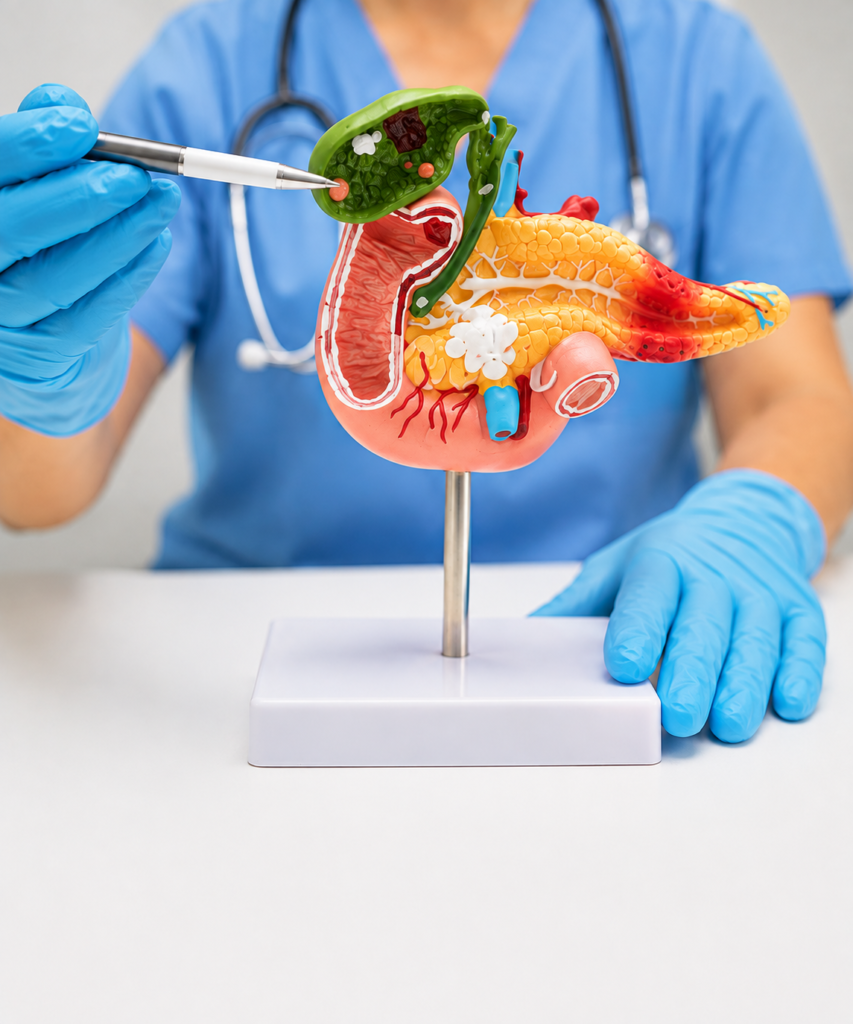
Pain below the right ribs, discomfort after meals, nausea or repeated episodes of upper abdominal pain can sometimes be related to gallstones. However, these symptoms may also occur with acidity, liver conditions, pancreatitis or other digestive problems. A proper assessment is therefore important before deciding on treatment.
At Surgery 101 Clinic, Dr. Shashank Adgudwar provides consultation, diagnosis and personalised gallstone treatment in Baner. The aim is to understand whether gallstones are actually causing the symptoms, check for inflammation or blockage, and recommend treatment according to the patient’s reports, overall health and clinical needs.
Suggested buttons: Book a Consultation | Call Surgery 101 Clinic
Gallstone Care Focused on the Cause, Not Only the Scan Report
Finding gallstones on an ultrasound does not automatically mean that every patient needs surgery. Some gallstones remain silent and are discovered during a scan performed for another reason. Others block the flow of bile and cause repeated pain, gallbladder inflammation, jaundice or pancreatitis.
This is why the decision about gallstone treatment should not be based only on the number or size of stones. Dr. Shashank Adgudwar evaluates the pattern of pain, examination findings, ultrasound report, blood test results, previous attacks and associated health conditions before discussing the most appropriate plan.
Patients looking for gallbladder stone treatment in Baner can consult at Surgery 101 Clinic for a clear explanation of their condition, available options and the circumstances in which surgery may or may not be advised.
What Are Gallstones?
The gallbladder is a small organ located beneath the liver. It stores bile, a digestive fluid made by the liver, and releases it into the intestine after food intake. Gallstones are hardened deposits that develop when substances within bile become imbalanced or concentrated.
Gallstones may be made mainly of cholesterol or pigments. A person may have one stone, several stones or many very small stones. The size of a stone alone does not reliably show how serious the condition is. A small stone can sometimes move into the common bile duct, while a larger stone may remain inside the gallbladder. Symptoms, stone location, inflammation and duct blockage are more important when planning treatment.
Symptoms That May Suggest Gallstones
Gallstones that remain inside the gallbladder without blocking bile flow may not cause any symptoms. When a stone temporarily blocks the outlet of the gallbladder, it can cause biliary colic, commonly called a gallbladder attack.
Symptoms that need medical assessment include:
-
Sudden or increasing pain in the upper right abdomen
-
Pain in the upper middle abdomen, below the breastbone
-
Pain spreading to the back or right shoulder
-
Discomfort that starts after a heavy or fatty meal
-
Nausea or vomiting during an episode of pain
-
Repeated attacks that settle and return later
-
Persistent bloating or meal related discomfort accompanied by upper abdominal pain
These symptoms are not exclusive to gallstones. Clinical assessment helps distinguish a gallbladder problem from acidity, an ulcer, reflux, liver disease, pancreatitis or another abdominal condition.
When Gallstone Symptoms Need Urgent Medical Attention
A stone that remains lodged in a bile duct can lead to inflammation or infection. Seek urgent medical care if upper abdominal pain is severe, continues for several hours or occurs with any of the following:
-
Fever or chills
-
Yellowing of the eyes or skin
-
Dark urine or unusually pale stools
-
Repeated vomiting or inability to keep fluids down
-
Increasing tenderness in the upper right abdomen
-
Drowsiness, confusion, faintness or marked weakness
These warning signs may occur with acute cholecystitis, a common bile duct stone, cholangitis or gallstone related pancreatitis. Such conditions should not be managed only with home remedies or repeated painkillers.
How Gallstones Are Diagnosed at a Consultation
Good gallstone treatment in Baner begins with confirming whether the stones explain the patient’s symptoms and checking whether complications are present. The evaluation may include the following steps.
Medical History and Examination
Dr. Shashank Adgudwar may ask where the pain starts, how long it lasts, whether it follows meals, whether it spreads to the back or shoulder, and whether fever, vomiting or jaundice has occurred. Previous attacks, pregnancy history, recent weight loss, medicines and existing medical conditions may also be relevant.
Abdominal Ultrasound
Ultrasonography is usually the first imaging test used to look for gallstones. It can help identify stones, gallbladder wall thickening, fluid around the gallbladder and widening of the bile ducts. The National Institute of Diabetes and Digestive and Kidney Diseases identifies ultrasound as the preferred imaging test for finding gallstones.
Blood Tests
Blood tests may be advised to look for infection, inflammation or involvement of the liver and pancreas. Depending on the symptoms, these may include a complete blood count, liver function tests and pancreatic enzymes.
Additional Imaging When Required
If symptoms or blood reports suggest a stone in the common bile duct, further evaluation such as magnetic resonance cholangiopancreatography, commonly called MRCP, may be advised. Endoscopic ultrasound, CT scanning or other tests are used selectively rather than routinely for every patient.
Who May Need Gallstone Treatment?
Treatment is usually considered when gallstones are causing symptoms or complications. A surgical consultation may be appropriate for patients with repeated biliary pain, gallbladder inflammation, a stone in the common bile duct, gallstone related pancreatitis or other clinically significant complications.
Silent gallstones often do not require immediate treatment. However, the recommendation can differ in selected situations because of the patient’s health, gallbladder findings or risk profile. Monitoring or treatment should therefore be decided after an individual consultation rather than through a general rule found online.
Gallstone Treatment Options in Baner
The right treatment depends on whether the stones are silent or symptomatic, whether infection is present, and whether a stone has moved into a bile duct.
Observation for Silent Gallstones
If gallstones are discovered incidentally and are not causing symptoms, observation may be appropriate. The patient may be advised about warning signs and when to return for review. Routine surgery is not automatically necessary for every silent stone.
Medicines for Symptom Control
Pain relief, medicines for nausea, fluids and antibiotics may be used in selected situations. These measures can manage an acute episode or stabilise a patient, but they do not necessarily remove the source of repeated gallbladder attacks.
Medicines that dissolve certain cholesterol stones are suitable only for a limited group of patients. They can take a long time to work, may not clear all stones and stones can form again. They are not a standard substitute for surgery when symptomatic gallstones require definitive treatment.
Laparoscopic Cholecystectomy
For many patients with symptomatic gallstones, the usual definitive treatment is removal of the gallbladder through laparoscopic surgery. This operation is called laparoscopic cholecystectomy. The Society of American Gastrointestinal and Endoscopic Surgeons states that most patients with symptomatic gallstones can be considered for this procedure when they are fit for general anaesthesia and do not have conditions that make surgery unsuitable.
The operation removes the gallbladder rather than removing only the visible stones. If stones alone are removed and the gallbladder remains, new stones may form because the underlying environment that produced them is still present.
ERCP for a Stone in the Common Bile Duct
Endoscopic retrograde cholangiopancreatography, known as ERCP, may be needed when a stone is lodged in the common bile duct. It is an endoscopic procedure used to access the bile duct and remove or relieve an obstruction. ERCP does not replace gallbladder surgery in every case. The sequence and timing of ERCP and cholecystectomy depend on the clinical situation.
Open Gallbladder Surgery in Selected Cases
Laparoscopic surgery is commonly preferred, but an open operation may be safer or necessary when there is severe inflammation, complex anatomy, extensive scarring, suspected cancer or difficulty completing the procedure safely through laparoscopy. Conversion to open surgery is a safety decision, not a failure of treatment.
Laparoscopic Gallbladder Surgery in Baner
During laparoscopic cholecystectomy, the surgeon makes small incisions in the abdomen and uses a camera and specialised instruments to remove the gallbladder. The procedure is performed under general anaesthesia.
Potential advantages compared with a conventional open operation may include smaller incisions, less wound discomfort, a shorter hospital stay and an earlier return to routine activity. These benefits vary according to the severity of inflammation, the patient’s health and the complexity of the operation.
Every operation carries possible risks. These can include bleeding, infection, bile leakage, injury to a bile duct or nearby organ, blood clots, anaesthesia related complications and the need to convert to an open procedure. Dr. Shashank Adgudwar discusses the expected benefits, alternatives and patient specific risks before consent.
What to Expect During Your Treatment Journey
1. Detailed Consultation
Bring previous ultrasound reports, blood test results, prescriptions and discharge summaries. The consultation focuses on connecting the symptoms with the scan findings and identifying any warning signs.
2. Individualised Treatment Plan
Not every patient follows the same pathway. Observation may be appropriate for a silent stone, while repeated pain, inflammation or duct blockage may require a planned procedure. The reason for each recommendation should be clearly explained.
3. Preoperative Assessment When Surgery Is Advised
Fitness tests are selected according to age, medical history and anaesthesia requirements. Patients should inform the doctor about diabetes, heart or lung conditions, allergies, pregnancy, previous abdominal operations, and all medicines or supplements they use. Blood thinning medicines should never be stopped without medical instructions.
4. Surgery and Hospital Care
The length of stay depends on the timing and complexity of surgery, the presence of infection, associated conditions and recovery after anaesthesia. Some planned laparoscopic procedures may allow discharge the same day or the next day, while complicated cases may need longer observation.
5. Follow Up and Recovery Guidance
Before discharge, patients receive instructions about wound care, diet, medicines, activity and warning signs. Follow up allows the surgeon to review healing and address any concerns.
Recovery After Gallbladder Removal
Recovery is different for every patient. Many people begin walking soon after surgery and gradually return to routine activity. Heavy lifting and strenuous exercise should be resumed only after the surgeon confirms that healing is satisfactory.
Patients may find smaller, lighter meals more comfortable during the early recovery period. Fatty or very heavy foods can temporarily cause bloating or loose stools in some people. Most patients can gradually return to a normal balanced diet because bile continues to flow from the liver into the intestine even after the gallbladder is removed.
Contact the treating team if there is worsening abdominal pain, persistent vomiting, increasing wound redness, pus, fever, jaundice, breathing difficulty or any symptom that feels unusual after surgery.
Why Consult Dr. Shashank Adgudwar for Gallstone Treatment in Baner?
Dr. Shashank Shrikant Adgudwar is a laparoscopic GI and colorectal surgeon at Surgery 101 Clinic in Baner, Pune. His practice includes the assessment and surgical management of gastrointestinal conditions using a patient specific approach.
Care at Surgery 101 Clinic is centred on:
-
Reviewing symptoms and reports before recommending treatment
-
Explaining whether gallstones are silent, symptomatic or complicated
-
Considering nonsurgical care when it is medically appropriate
-
Planning minimally invasive surgery when it is suitable for the patient
-
Discussing possible benefits, limitations and risks before a procedure
-
Providing guidance from the first consultation through follow up
No treatment outcome can be guaranteed. The expected result and recovery depend on the patient’s condition, the severity of disease and other medical factors.
Gallstone Consultation for Baner and Nearby Areas
Surgery 101 Clinic is located in Baner and is accessible to patients from Balewadi, Aundh, Pashan, Sus, Mahalunge, Wakad, Hinjawadi and nearby parts of Pune. If you have repeated upper abdominal pain, gallstones on an ultrasound or questions about laparoscopic surgery, a consultation can help clarify the next step.
Our Services
Menu
About Surgery 101
Are you looking for a highly skilled surgeon with a wealth of experience in gastrointestinal and colorectal procedures? Look no further than Dr. Shashank Shrikant Adgudwar, a board-certified medical professional with a remarkable journey in the field of surgery.
Your Expert Laparoscopic and Laser GI and Colorectal Surgeon
About Surgery 101
Are you looking for a highly skilled surgeon with a wealth of experience in gastrointestinal and colorectal procedures? Look no further than Dr. Shashank Shrikant Adgudwar, a board-certified medical professional with a remarkable journey in the field of surgery. His commitment to excellence is evident in his single-attempt success in both degrees.
Contact Info
Address
Ganraj chowk, 101 Clinic, 2nd floor Whispering woods building, opposite Gera emerald city, Baner, Pune, Maharashtra 411045
Phone Number
+91-7055101101
Email
surgery101clinic@gmail.com
Quick Links
Menu