
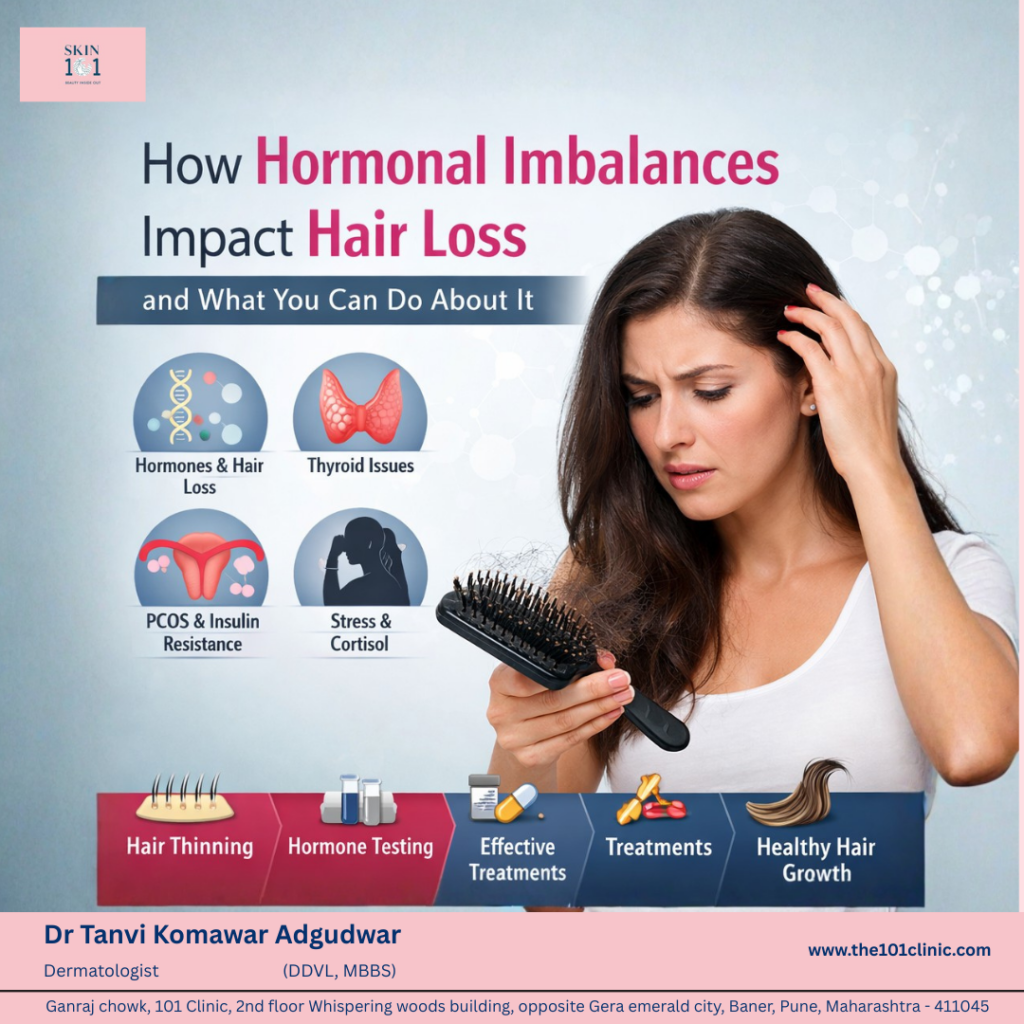
Hair fall is one of the most common concerns seen by dermatologists today, especially among women and young adults. While stress, pollution, and genetics play a role, hormonal imbalance is often the hidden trigger behind persistent hair loss. Understanding how Hormonal imbalance causes hair loss, can help you take the right steps early and prevent long-term thinning.
As a trusted Dermatologist in Baner, Dr Tanvi Komawar Adgudwar frequently helps patients identify hormonal causes of hair fall and restore healthy hair growth through personalised treatment plans.
Understanding the Hair Growth Cycle and Hormones
Hair grows in three main phases:
- Anagen (growth phase)
- Catagen (transition phase)
- Telogen (resting and shedding phase)
Hormones act as chemical messengers that regulate this cycle. When hormone levels are balanced, hair grows strong and healthy. But when they fluctuate, the growth cycle gets disrupted, leading to excessive hair shedding, thinning, or even bald patches.
Key Hormones That Influence Hair Loss
1. Androgens (Male Hormones)
Both men and women have androgens. Excess levels—especially DHT (dihydrotestosterone)—can shrink hair follicles, making hair thinner and weaker over time. This is a major cause of female pattern hair loss and androgenetic alopecia.
2. Thyroid Hormones
An underactive (hypothyroidism) or overactive thyroid (hyperthyroidism) can significantly affect hair health. Hair may become dry, brittle, and fall out in clumps. Thyroid-related hair loss often occurs months after hormone levels become abnormal.
3. Estrogen
Estrogen helps keep hair in the growth phase longer. During pregnancy, higher estrogen levels result in thicker hair. However, after childbirth, menopause, or sudden hormonal shifts, estrogen drops—leading to postpartum hair loss or menopausal hair thinning.
4. Cortisol (Stress Hormone)
Chronic stress raises cortisol levels, which can push hair follicles into the shedding phase. This condition, called telogen effluvium, is increasingly common due to fast-paced lifestyles.
5. Insulin
Insulin resistance, commonly seen in PCOS (Polycystic Ovary Syndrome), can trigger hormonal imbalance and excess androgens, causing hair thinning on the scalp and unwanted hair growth elsewhere.
Signs Your Hair Loss May Be Hormonal
- Sudden or excessive hair shedding
- Widening of the hair part
- Thinning near the crown
- Hair loss after pregnancy, illness, or stress
- Irregular periods with hair fall
- Acne and unwanted facial hair along with scalp hair loss
If you notice these symptoms, consulting a qualified Hair specialist in Baner can help pinpoint the root cause.
What You Can Do About Hormonal Hair Loss
1. Get the Right Diagnosis
Hormonal hair loss cannot be treated with oils or shampoos alone. Blood tests may be needed to check thyroid levels, PCOS indicators, iron levels, and vitamin deficiencies. Early diagnosis leads to better outcomes.
2. Medical Treatment
A dermatologist may recommend:
- Topical solutions to stimulate hair growth
- Oral medications to control hormone imbalance
- Treatment for thyroid disorders or PCOS
- Anti-androgen therapy when required
Under expert care, these treatments can significantly reduce hair fall and encourage regrowth.
3. Correct Nutritional Deficiencies
Hormonal imbalance often goes hand in hand with deficiencies in iron, vitamin D, biotin, and protein. A balanced diet combined with doctor-recommended supplements can strengthen hair from within.
4. Stress Management
Yoga, meditation, proper sleep, and regular exercise help regulate cortisol levels. Stress control plays a crucial role in preventing stress-induced hair loss.
5. Advanced Dermatological Solutions
As an experienced Dermatologist in Baner, Dr Tanvi Komawar Adgudwar also offers advanced treatments such as:
- PRP (Platelet-Rich Plasma) therapy
- Mesotherapy
- Medical-grade scalp treatments
These procedures help reactivate weak follicles and improve hair density safely and effectively.
When Should You See a Dermatologist?
If hair fall lasts longer than 6–8 weeks, worsens suddenly, or is accompanied by other hormonal symptoms, it’s time to seek professional help. Self-treatment often delays recovery and may worsen hair thinning.
Final Thoughts
Hormonal hair loss can feel overwhelming, but the good news is that it is treatable when addressed early. With proper diagnosis, medical care, lifestyle changes, and expert guidance, healthy hair growth is achievable.
Consulting a trusted Hair Specialist in Baner ensures a scientific, personalised approach to hair restoration—helping you regain both your hair and confidence.
At Skin 101 Clinic, Dr. Tanvi Komawar, provide trusted dermatology care with modern, result-driven solutions.