
An anal fissure is a small cut or tear in the lining of the anus. Although it may sound minor, it can cause intense pain, discomfort, and even bleeding during or after bowel movements. Anal fissures are common in both men and women and can affect people of all ages.
Causes of Anal Fissure
Anal fissures usually occur due to injury or excessive stretching of the anal canal. Common causes include:
-
Passing large or hard stools
-
Chronic constipation or diarrhea
-
Straining during bowel movements
-
Childbirth
-
Anal trauma or injury
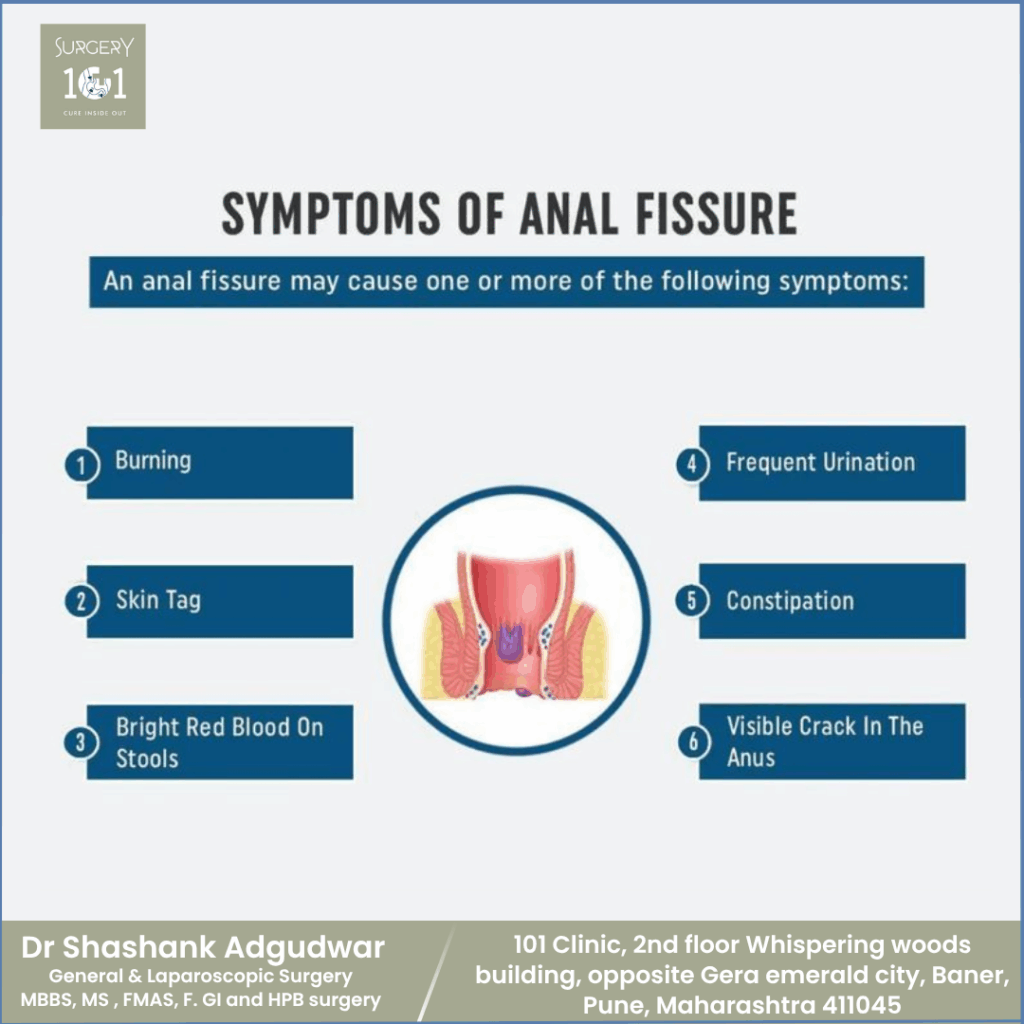
Signs & Symptoms
If you have an anal fissure, you might notice:
-
Sharp pain during or after passing stools
-
Bright red blood on toilet paper or in the stool
-
Itching or irritation around the anus
-
A visible crack near the anal opening
-
Muscle spasms in the anal area
Treatment Options
Mild fissures often heal with home care, but chronic fissures may require medical intervention. At Surgery 101, Dr. Shashank Adgudwar offers:
-
Lifestyle changes – Increasing fiber, drinking more water, avoiding straining
-
Medications – Topical creams, pain relief ointments, stool softeners
-
Minimally invasive procedures – For chronic or non-healing fissures, advanced surgical treatments like Lateral Internal Sphincterotomy (LIS) are performed to promote healing and prevent recurrence
Prevention Tips
-
Eat a fiber-rich diet
-
Stay hydrated
-
Exercise regularly to improve bowel function
-
Avoid prolonged sitting on the toilet
Conclusion
Anal fissures can be painful, but with timely treatment, they can heal quickly and effectively. If you are experiencing symptoms, don’t delay. Visit Surgery 101 in Baner for expert care and lasting relief.