
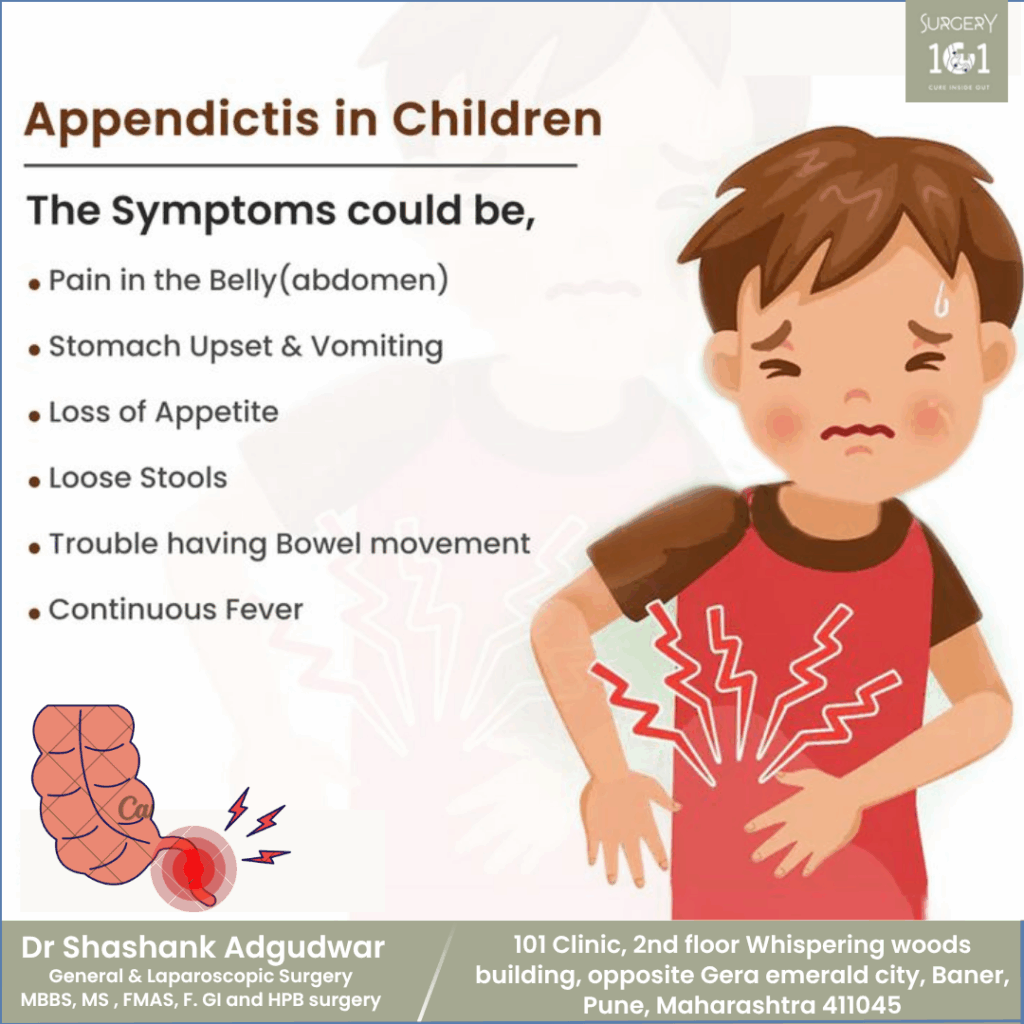
Appendicitis is a common yet serious condition that can affect children and often requires immediate medical attention. It occurs when the appendix—a small, finger-like pouch attached to the large intestine—becomes inflamed. In children, diagnosing appendicitis can be challenging as they may not clearly communicate their discomfort. As a parent, knowing the signs and symptoms can help ensure timely treatment and avoid complications.
Common Symptoms of Appendicitis in Children:
1. Abdominal Pain: The earliest and most prominent symptom is pain around the belly button that gradually shifts to the lower right side of the abdomen. The pain may become sharp and severe over time.
2. Nausea and Vomiting: Children with appendicitis often experience nausea or vomiting, which may follow the onset of abdominal pain.
3. Loss of Appetite: A sudden decrease in appetite is a frequent sign of appendicitis in children.
4. Fever: A low-grade fever may develop as the infection progresses. In advanced stages, the fever can become high.
5. Swelling and Tenderness: The child’s abdomen may appear swollen and feel very tender to touch, especially in the lower right area.
6. Difficulty Walking or Standing Straight: Children may hunch over or walk with difficulty due to pain. They may also refuse to move or play.
7. Constipation or Diarrhea: Changes in bowel movements can occur, sometimes accompanied by gas or bloating.
When to See a Doctor:
Appendicitis in children is a medical emergency. If your child shows any of the above symptoms—especially persistent abdominal pain—it’s essential to consult a surgeon or pediatrician without delay. Delaying treatment can lead to a ruptured appendix, which can be life-threatening.
Expert Care at Surgery 101:
At Surgery 101, Dr. Shashank Adgudwar provides expert surgical care for appendicitis in children using advanced laparoscopic techniques that ensure faster recovery and minimal discomfort. Early diagnosis and skilled treatment can make all the difference in your child’s health.
Your child’s well-being is our priority—get the right care, at the right time.